

Developing Talent, Suppliers to Advance Mexico's Aerospace Sector


STORY INLINE POST


 By Reneé Lerma | Journalist & Industry Analyst -
Tue, 09/24/2024 - 11:21
Q: What are FEMIA's key priorities and initiatives, and how do they align with the overall goals of Mexico’s aerospace sector?
A: FEMIA is a private non for profit association that focuses on serving Mexico’s aerospace industry, and our priority is to develop this industry. Our members are responsible for over 85% of aerospace exports from Mexico. FEMIA is addressing several key challenges, including supply chain development, training, and the integration of global trends. We are focused on expanding the number of national suppliers and enhancing their quality. This involves consolidating the supplier network within Mexico to better support the aerospace industry. The sector also needs to develop skilled human resources, including technicians and engineers with specialized knowledge in aerospace disciplines. This is crucial for meeting the industry's technical requirements. Finally, we aim to integrate into global megatrends. To do so, we stay up to date on global developments and incorporate these trends into our strategic initiatives.
Q: How is FEMIA helping to meet the talent needs of the aerospace sector, and what measures are being taken to retain this talent within the country?
A: Some time ago, graduates from Mexican universities were not specialized for the specific skills the aerospace sector requires, but educational institutions have enhanced their connections with the industry, improving their educational programs. Despite these advances, Mexico continues to face challenges, such as the complexity of the new operations that are being developed by the industry and the increasing numbers of talent required with these skills. To counter this, Mexico is actively working to improve opportunities and conditions within the country to develop its skilled workforce and continue developing its aerospace capabilities.
Q: How does FEMIA facilitate effective collaboration among the manufacturing, maintenance, engineering, and design sectors?
A: We facilitate collaboration through supplier development programs, seminars, and self-assessment platforms for companies. We also organize webinars and seminar cycles to provide relevant information and support new companies in the aerospace sector.
FEMIA also offers webinars and seminars, such as the Se Proveedor Aeroespacial (Become an Aerospace Supplier) program, to convey crucial information about the sector. We are also launching a self-assessment platform to help companies identify and address performance gaps.
Q: What areas is Mexico leading in the aerospace sector, and what role does the country play in it?
A: Mexico has world-class manufacturing capabilities. The country is moving toward higher value-added areas, such as design, engineering, and post-sales services, to diversify and create new value chains.
Mexico plays a significant role in the global aerospace sector, with contributions in areas such as engine manufacturing, aero structures, and components. Examples include the manufacturing of parts for the LEAP engine and components for the Starship rocket. Mexico is also gaining recognition for its technical capabilities and quality in the aerospace industry.
Q: What challenges do automotive companies face when transitioning to the aerospace industry?
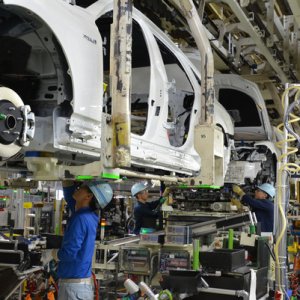
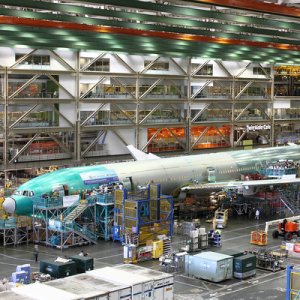
A: Mexico is the fourth-largest exporter of light vehicles in the world, with a well-developed automotive supply network. In comparison, the aerospace industry is more complex due to the large number of parts involved and lower production volumes, which demand high precision and quality. The aerospace industry has a much higher level of complexity than the automotive industry, as exemplified by the Boeing 777, which has around 6 million different parts.
The main challenge when entering the aerospace industry is the difference in scale and quality. In the automotive industry, production volumes are high and contracts are often shorter. In contrast, the aerospace industry has lower volumes and requires lengthy certification processes and extremely high quality, which can take several years before securing significant contracts. Companies that are successful in the automotive industry should consider applying their knowledge to the aerospace sector.
FEMIA is implementing programs to educate companies about the importance of certification and the processes necessary to enter the aerospace supply chain. Although the certification process takes time and other resources, once a contract is obtained, it is usually long-term and of high value.
Q: What key states show the most promise for advancing in the aerospace sector?
A: Some states like Queretaro, Chihuahua, Baja California and Sonora are central to Mexico's aerospace sector. Sonora, for example, is vital in producing key components for propulsion systems and components for the LEAP engines. Queretaro is recognized for its turbine construction expertise, housing a technical center with around 1,800 engineers. This facility plays a crucial role in analyzing and investigating global engine incidents, including those involving the widely used CFM56 engine. Chihuahua produces parts for various aircraft models and fiber-reinforced composites. The production of Boeing 737 MAX interiors in Chihuahua is a testament to the region’s high-precision capabilities.
Other states such as Guanajuato, Aguascalientes, and Yucatan also hold potential, but need to enhance their talent development frameworks to increase their impact in the sector.
Q: What are FEMIA’s plans for the aerospace industry in Mexico?
A: Our goal is to continue strengthening the aerospace sector and develop the space industry in Mexico. We are working in collaboration with space agencies and intend to leverage our manufacturing experience to venture into the space sector, developing new opportunities and capabilities.
Mexico has a significant advantage due to its ability to produce both vehicles and aircraft. However, we also face challenges related to industrial capacity and global competition, particularly in terms of intellectual property and security.
You May Like



Most popular



