

Driving Mexico’s Electric Future Through Policy, Access, Equity




STORY INLINE POST


 By Teresa De Alba | Jr Journalist & Industry Analyst -
Wed, 07/23/2025 - 17:29
Q: What strategies is EMA spearheading to advance electromobility in Mexico?
A: Our mission is to promote and unite companies committed to clean-mobility technologies. We had observed that Mexico was falling behind in access, promotion, regulation, and awareness regarding EVs, so we decided to bring together the main stakeholders who share the vision of advancing these technologies. We aligned ourselves with global treaties such as the Paris Agreement and COP declarations. We established two clear targets: for 100% of new car sales to be electric by 2035, and an intermediate goal of 50% by 2030. To achieve this, we built EMA around four strategic pillars: environmental impact (climate and air quality), regulatory advocacy, infrastructure development, and economic opportunity.
Q: What role does regulation play in advancing electromobility efforts?
A: Building industry momentum is essential, but the government plays a catalytic role. Mexico lacks binding national targets or a published, enforceable electric mobility strategy. Without these, coordination becomes challenging. Consider Colombia, which has established a clear target of 600,000 EVs by 2030. This allows for measurable progress. We propose the introduction of similar, specific, and achievable goals. A 10-year horizon is practical and enables present actions to have long-term impact.
When industry and government are aligned, we can develop the necessary policies, such as energy capacity planning for EVs, emissions standards, and infrastructure rollout. Defining a 100% target for 2035 provides annual benchmarks and policy tools, making public policy comprehensive and coherent. Without clear direction, stakeholders pursue conflicting objectives.
Q: What challenges, such as limited charging infrastructure and high costs, hinder the adoption of EVs?
A: EV prices have dropped significantly. The price of the Tesla Model 3, for example, decreased from over MX$1 million to about MX$750,000. Mexico offers close to 100 EV models, several priced under MX$500,000. Therefore, the idea that EVs are prohibitively expensive is outdated. The challenge in market perception and product offerings. Many traditional automakers have not introduced the right models or competitive pricing. They claim the market is not ready, but in reality, some are not responding to demand.
Charging infrastructure is also often cited as a barrier, though this is largely a perception issue. Most EV owners install home chargers, and with ranges of 500km, charging is infrequent. There are around 47,500 chargers in Mexico, with 36,000 located in homes. Growth in infrastructure follows demand.
Q: What measures are necessary to increase EV adoption in Mexico?
A: Official data from organizations such as AMIA and INEGI do not include the true number of EVs, as they often do not include sales from some players like Tesla and Chinese manufacturers. Among EMA’s eight member companies, over 70,000 EVs were sold last year, and 20,000 were sold in the first quarter of 2025. We project about 130,000 sales for this year. This implies that electric and plug-in hybrid vehicles account for about 6% of new vehicle sales, with pure EVs making up close to 3%.
To reach 100% EV sales by 2035, we require supply-side regulations similar to those in the European Union, which mandate automakers to meet specific EV targets and CO2 emission fleet averages. Without such regulations, manufacturers will export Mexico-made EVs to more regulated markets while continuing to sell outdated models locally. The country also needs targeted incentives. While broad consumer subsidies may be less necessary, business-oriented incentives remain vital. These include accelerated depreciation and support for charging infrastructure. Incentives should prioritize full EVs, with reduced benefits for hybrids that cannot be plugged.
Q: What would be the main benefits of electrifying high-usage fleets?
A: This is one of the most impactful strategies. When an individual switches to an EV, the benefit to the environment is limited as most people drive only about 30km per day. In contrast, a rideshare or taxi driver may drive 300km daily. Electrifying such vehicles significantly reduces emissions.
We are collaborating with companies like VEMO, which operates large electric fleets in Mexico City. These fleets include both owned and leased vehicles used by Didi and delivery services. We are also planning to work with the State of Mexico, which offers a subsidy program for taxi drivers to transition to EVs. These drivers can save up to MX$10,000 per month by switching from gasoline to electricity, directly improving their household income. This initiative not only benefits the environment but also promotes economic justice.
Q: What role does local manufacturing play in enhancing the adoption of electromobility?
A: It is critical to develop more than just EVs; Mexico needs an entire supply chain that includes battery precursors, cathodes, electrolytes, recycling systems, manufacturing platforms, and skilled labor. The objective is to build a sustainable and long-term industrial base. We must ensure that auto manufacturing plants in Mexico transition toward EV production. This requires industrial policies that encourage investment, allowing global original equipment manufacturers or new players to convert Mexican facilities into EV hubs.
Domestic demand is also crucial. If Mexico only produces EVs for export, it misses out on the environmental and health benefits locally. Policies must align production goals with domestic adoption to ensure electric mobility contributes to improved quality of life in Mexico.
Q: How could policy shifts in the United States influence EV adoption in Mexico?
A: The reduction of incentives in the United States could soften demand there, but global trends are more decisive. About 40% of global auto sales occur in Asia, mainly in China, 20% of sales occur in the European Union, and 20% in the United States. The rest occur in emerging markets. China remains fully committed to EV technology, from manufacturing and supply chains to consumer adoption. The European Union is reinforcing its combustion bans by 2035. Latin America is smaller but increasingly integrated into this global trend, as 80% of the global auto market is pushing toward electrification.
If Mexico slows its transition, both local and international automakers risk being shut out of major global markets like Asia and the European Union. Consumers and regulators elsewhere will demand EVs, and manufacturers that delay will fall behind. China’s leadership in EV production is already reshaping the global auto market. Even if the United States changes course, Mexico must remain competitive in the broader global context.
Q: How are tariffs expected to influence the EV market in Mexico and abroad?
A: Tariffs frequently protect companies that were unprepared or failed to innovate, even as others around the world advance. In Mexico, we want the best and cleanest vehicles available at the best prices, regardless of their country of origin. We are pro-electric. If a vehicle meets high standards for quality, cost, and sustainability, it should be welcomed, whether it originates from China, the United States, the European Union, or elsewhere. That is the foundation of a free market. Consumers and manufacturers should make these decisions. Our responsibility is to ensure the system is fair and aligned with environmental goals.
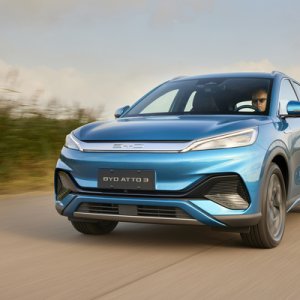
Mexico has an opportunity to redefine its role in the global auto industry. The leaders of today may not be the leaders of tomorrow. If in 10 years a company like BYD surpasses a legacy brand, we must ask ourselves if we want their investment in Mexico. The answer is probably yes. We are seeing three megatrends: the shift to EVs, changing dominant automakers, and the reorganization of supply chains due to geopolitical factors. The true risk is missing this shift because we are too focused on protecting players that fall behind or lack innovation.
Q: The United States is concerned that Chinese automakers might use Mexico as a backdoor into the country. How feasible is this scenario?
A: This scenario has not occurred. The only Chinese brand assembling vehicles in Mexico is JAC, and it does not export to the United States, focusing on the local market. If the United States wishes to restrict Chinese-made vehicles from entering its market via Mexico, it already has tools available, including tariffs, cybersecurity rules, and other trade mechanisms.
If a brand wants to invest in Mexico to serve Latin America or domestic customers, that is beneficial for us. The electric future is inevitable. Let us make sure Mexico is leading it, not sidelined by outdated priorities.
We must attract new industry players while preserving the strengths of the existing sector. We do not aim to dismantle the industry; we aim to evolve it. That means welcoming any company, whether new or established, that is serious about electric mobility. If some automakers refuse to produce EVs, that is their decision. But they must also accept the consequences: higher operating costs, shrinking demand, and eventual irrelevance.
You May Like




Most popular



