

Success Requires Profitable, Orderly, and Sustainable Growth



STORY INLINE POST


 By Óscar Goytia | Journalist & Industry Analyst -
Mon, 06/29/2026 - 09:29
Q: How will you capitalize on your recent MX$250 million (US$14.4 million) investment to expand your network?
A: We consider this investment a strategic step for the perception of both our current and future customers. Our Net Promoter Score (NPS) shows that the customer experience has been on the rise thanks to the investment we have made in branches, talent, square meters, and tools across the country, from Tijuana to Cancun.
Q: What competitive advantages does your modular system and your on-site workshop model offer over traditional brands?
A: This is a disruptive model in the freight industry that Scania had already been perfecting in the passenger segment. Beyond having technicians with tools at the customer's facilities, this model enables a fully integrated Scania branch operating inside the customer's company. This includes administration, management, systems, KPI tracking, and conducting consultative service meetings. In these sessions, we review performance and advise the customer on their areas of opportunity and their successes, operating practically as if we were an internal department of theirs. We achieve a maximum level of integration that goes far beyond basic maintenance, as we become an extension of their own structure, putting all our infrastructure at their disposal.
We expanded this model, which we have used since 2009 in the bus and coach sector, into the freight segment in 2020, where it has been well received. However, it requires a specific segmentation: a minimum fleet size is needed for the solution to be profitable and translate into a mutual benefit.
Q: How does Scania monetize uptime as a service, and what proportion of revenue is linked to these types of services compared to the sale of the vehicles themselves?
A: This is the core of our business model. Scania Mexico is one of the brand's business units that sells the most solutions of this type globally. Being a premium firm, our customer segment is not looking for a transactional sale. We sell a 360° solution that is monetized under a fee-per-kilometer-driven scheme. The strongest argument for the customer is very simple: "you pay for the kilometers you drive."
This way, the incentive is aligned for both parties. If the truck is on the road, the customer generates revenue through their trips and so do we, since we charge for maintenance for every kilometer covered. Conversely, if the fleet stops, we continue to absorb our fixed costs: salaries of technicians and workshop managers, the financial cost of the spare parts inventory, and the depreciation of tools and fixed assets. Consequently, downtime benefits neither party. By being focused on monetizing uptime, we share the same objective as the carrier, a synergy that proves highly attractive to the market.
Q: How is Scania helping to close the charging infrastructure gap for Mexican carriers?
A: In Mexico, Scania already offers CNG and LNG solutions, and has urban electric trucks operating with leading customers, as well as an electric semi-truck for freight.
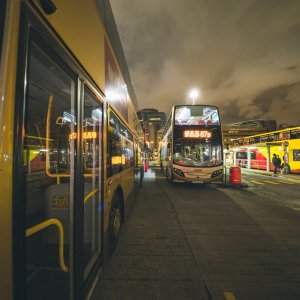
In addition to that, to address this challenge, the group presented a new transition concept late last year at Busworld in Brussels: the plug-in hybrid electric bus (PHEV), one of our most recent launches and part of our global portfolio. This is a long-distance bus equipped with our new internal combustion powertrain called Super, which already operates successfully in the freight segment. This system is highly efficient and reduces fuel consumption, and consequently CO2 emissions, by a minimum of 8%. It also incorporates a battery pack that can be recharged even with a conventional electric car charger.
This solution combines the best of both worlds through the use of geofencing and geolocation technology. Customers can program the vehicle to switch modalities automatically. For example, upon entering an urban area, the bus activates 100% electric mode, offering the necessary autonomy to operate for hours in city traffic without generating noise or polluting emissions. Once it hits the highway, the diesel engine kicks in and recharges the batteries in route. Being a plug-in model, it allows carriers to plan their infrastructure and recharge at intermediate stops, a process in which Scania provides a full consulting service to determine the ideal type of charger. With this proposal, which adds to our compressed natural gas (CNG) and liquefied natural gas (LNG) options, Scania strengthens its transition strategy toward more sustainable mobility.
Q: What has been the reception of the Super model among freight operators?
A: We divide the experience into three fundamental aspects. The first is Performance and Customer Satisfaction. Since introducing this technology at Expo Transporte in 2021, we already have hundreds of Super engines running across the country. Fuel performance has been outstanding; we are more than fulfilling the 8% promise, and in certain operations under special conditions, this savings has even reached up to 14%. Customers are highly satisfied with these tangible results.
The second is Component Durability. Due to the youth of the current fleet, whose first units were delivered in 2022, it is still too early to have definitive data that fully proves projections. However, in these four years of operation, no major engine or transmission repairs have been required.
The third is Technical Training and Compatibility. The Super powertrain maintains Scania's fundamental principle: high-technology engines at low RPMs, as well as the same operating principle in the retarder and transmission. The improvements in this new generation lie in a selection of more advanced materials, finer geometries, high-precision adjustments, and more efficient programming in the modules.
For the mechanic, daily work is still based on components they already know from previous generations. The main changes are concentrated in specific elements: for example, the engine now features a single cylinder head instead of six individual ones, and the common-rail injection system operates at a higher pressure to achieve that 8% efficiency. Although these variations require our staff to receive updates and accumulate thousands of hours of training, the high compatibility of the modular platform greatly facilitates the technical team's learning process.
Q: Looking ahead, how will Scania measure its success? Will it be through the sales volume of units or the increase in kilometers driven under your service scheme?
A: Corporate evaluates us under the principle of sustainable profitable growth. Volume and market share are fundamental for growth, but they are not pursued at any cost. The process must be financially profitable for both us and our customers, and solid in the long term. To achieve this, we are betting on an organic and structured scaling of the organization. For example, we are opening new branches directly and not through private dealerships. This allows us to ensure the same corporate culture, maintain a homogeneous service standard, and rigorously take care of the customer experience.
We consider that sustainability encompasses not only caring for the environment, but also institutional viability and solidity. Developing a robust organization requires maturation time to consolidate its foundations and ensure its quality. Therefore, we will measure our success to the extent that we maintain this rhythm of profitable, orderly, and sustainable growth in the Mexican market over the coming years.
Scania is a global leader in sustainable transport solutions, specializing in heavy trucks, buses, and industrial engines. By integrating cutting-edge technology with advance digital services and electrification, Scania optimizes fleet efficiency and reduces environmental impact. As a cornerstone of the global logistics industry, the company drives the transition toward decarbonized, autonomous, and connected infrastructure. |
You May Like


Most popular



