

Ideas From the Digital World to Address Educational Lags


STORY INLINE POST


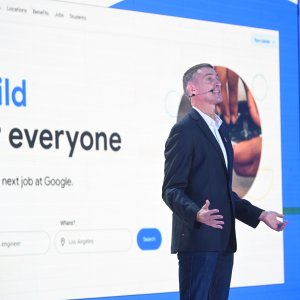


 By Julian Coulter | General Director at Google Mexico -
Thu, 07/04/2024 - 08:00
The world is entering one of its most important transitions in the last 30 years, resulting from the enormous access to information, the massification and access to platforms, the closing of digital gaps, and the adoption of new technologies, such as artificial intelligence. Modern societies will face increasingly drastic changes in how we inform and develop professionally and personally.
Simply put, we have the opportunity to learn everything and nothing at the same time right in front of us, a reality that even today has already questioned the value of educational systems as we know them. A recent analysis by Gallop in the United States detected that in the last decade, the value that Americans see in higher education has fallen from 57% to less than 36%, derived from the lack of job opportunities or the birth of new jobs related to higher education, digital economy, and driven by self-taught learning.
That window of opportunity that represents more personal learning, driven by passions and interest, is something that we have confirmed on YouTube: a recent Offerwise survey confirms that 83% of Mexicans surveyed agree that YouTube helps them to better understand topics that interest them. As if this was not enough, according to an Ipsos analysis, 92% of users in the country recognize that the platform helps them learn something new.
However, self-taught education does not represent a replacement or substitution for regular learning systems. On the contrary, for digital platforms like YouTube, this acceleration of the ease with which we obtain information implies the enormous responsibility of finding the appropriate mechanisms to strengthen the access, impact, and potential of educational and formative content whether it is created by educational institutions, international organizations, or educational creators, better known as edutubers.
This responsibility can play a central role in facing global challenges such as the delay of almost 20 years of educational progress caused by the pandemic, according to the United Nations. At a national level, the panorama is also complicated. According to the Mexican Institute for Competitiveness (IMCO), between 2020 and 2023 almost 1.2 million Mexican students left their classrooms indefinitely. Without a doubt, this is a priority issue for the national and international agenda.
In economic matters, this also represents a significant delay. According to statements made in 2022 by the Director General of UNESCO Audrey Azoulay, on a global scale, there exists “a cumulative loss of wealth for the current generation of schoolchildren of some US$21 billion.” Both in economic and educational terms, it is important to recover the lost ground in this sector that is key for the functioning of society. Using technology as more than just an attractive option is a necessity.
According to the most recent study on the habits of internet users in Mexico 2024, conducted by the MX Internet Association, there are 101.9 million users in the country with access to internet services. According to the last National Survey of Demographic Dynamics by the National Institute of Statistics and Geography (INEGI), there are more than 129 million people in Mexico. This is equivalent to 78.9% of the country’s population being connected. This information, complemented by the perception of learning within the platform, revealed by the Ipsos study mentioned above, creates a combination with great potential when seeking solutions to the problems previously stated.
Developing Educational Plug-ins
The challenges in the education sector are clear; however, a joint effort between society, institutions, and platforms can help reverse the situation. At YouTube, we have developed different tools to improve our ability to support people’s continuous learning, as well as being a complement to different educational systems. Users can range from professionals who want to develop job skills to get a promotion in their career or those who simply want to learn something new to expand their knowledge, to students or teachers who want to complement their learning in the classroom. Our commitment is to enhance the intrinsic interest in learning.
That’s why we recently introduced Courses, a feature that allows edutubers or institutions qualified by the platform to share, through courses that will be available on each creator's channel, their knowledge in their area of expertise, such as philosophy, history, science, mathematics, or geography, to exemplify a few. Courses are already in operation and, together with the Mexican Red Cross, we have launched one of the first materials available, which consists of eight modules so that users can learn from experts in the field on how to deal with medical emergencies.
The interest of users in online learning is increasingly greater and learning on digital platforms has become a reality. According to Statista, 83% of people connect to the internet to access educational content. This is undoubtedly a great opportunity since YouTube is the largest audiovisual library in the world; the implementation of Courses allows to support those who are seeking a new source of knowledge with structured experiences and complementary resources aligned with the main objective, learning.
The right to education is something that everyone has, and that is why for us it has become a priority task, which pushes us to work together toward the same goal, and to try to overcome the lags that this sector has suffered in recent times. Fortunately, we have a wide range of options, so it is our responsibility to use them effectively, helping educators and learners overcome this educational challenge. We seek to strengthen the recovery process that society increasingly is going through.
You May Like


Most popular



