

AI Won’t Kill Software. It Will Change Who Profits From It


STORY INLINE POST


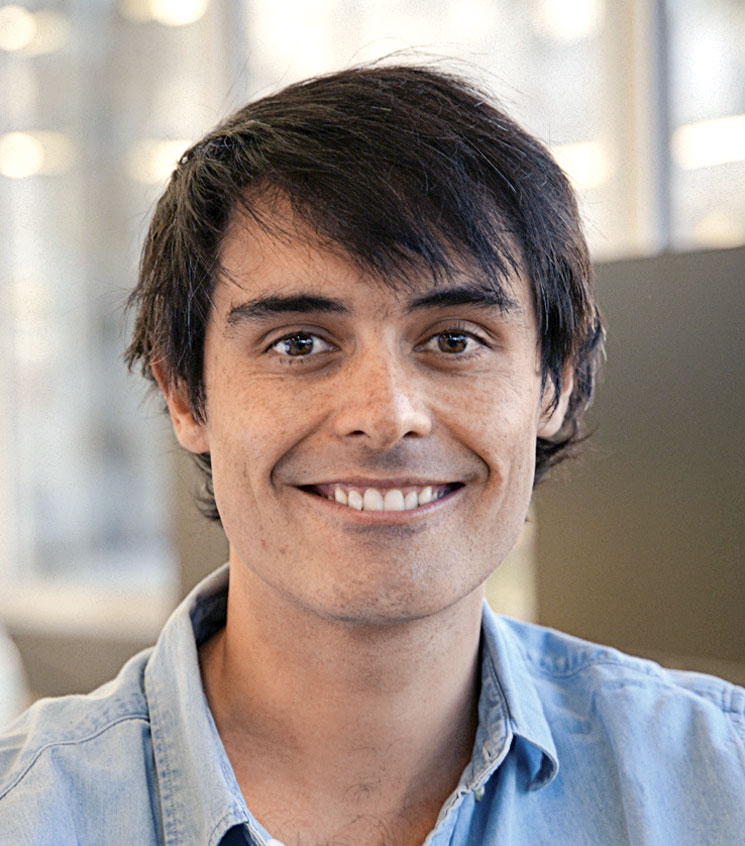
 By Fernando Suarez | Senior Portfolio Manager Fintual -
Mon, 03/16/2026 - 06:00
Markets have a talent for doing two things at once: spotting a real structural change, and then overreacting to it with theatrical speed. That’s basically what happened in early February, when software stocks sold off hard and the press rushed to coin a name for it: “SaaSpocalypse.” The story sounds dramatic (“software is dead”), but the underlying reality is more interesting: AI is not killing software demand. It’s rewriting who captures the economics of software, and under what pricing model.
That distinction matters, because 2026 is shaping up to be a year where AI simultaneously accelerates growth at the macro level and compresses margins in parts of the tech stack. Both can be true. In fact, they’re probably the same phenomenon seen from different angles.
Start with the macro picture. Our base case at Fintual is constructive: the big economies should re-accelerate in 2026, driven by a synchronized investment cycle tied to AI infrastructure (data centers, networking, energy, compute supply chains), easing trade-related uncertainty versus last year’s spikes, a manufacturing cycle that’s waking up, and the lagged effects of global monetary easing. In the United States, growth near 2% looks plausible, not because everyone is thriving equally but because consumption is increasingly carried by higher-income households whose spending tracks asset prices more than wage growth. That makes the economy resilient to mild labor cooling, but more fragile to equity drawdowns.
Now zoom back into markets and you see the paradox: If AI is a growth engine, why did software get hit so violently?
Because the market isn’t debating whether companies will use software. It’s debating whether legacy SaaS vendors can still charge like they used to.
The classic SaaS playbook is beautifully simple: charge per user (or per seat), increase seats as your customer grows, and enjoy predictability. It worked especially well in the 2010s, when the alternative to buying the software was doing the work manually, slowly, and expensively. Software vendors held the leverage: “pay or suffer.”
AI introduces a third option: automate or recompose.
If a customer can use agents to complete workflows with fewer humans in the loop, then “more productivity” doesn’t necessarily mean “more seats.” A company could grow output while keeping headcount flat — or even shrinking it — and suddenly per-seat pricing stops scaling with the customer’s success. The addressable market for “users” doesn’t disappear, but it becomes less tightly coupled to economic value created. And when the coupling breaks, pricing power fades.
That’s the core of the SaaSpocalypse narrative: not that software demand vanishes, but that the old monetization rails — especially per-seat billing — become less defensible. The market translated that into prices in a matter of hours.
The move didn’t stay contained. When investors fear software cash flows, they start looking for where those cash flows were used as collateral. That’s why parts of private credit and private equity also flinched: A lot of private-market lending has been underwritten on the assumption that SaaS companies generate durable, high-margin recurring revenue. If AI weakens pricing power, then the entire credit stack has to reprice risk: covenants, default probabilities, recovery rates. A software shock becomes a credit shock, at least in narrative form. You don’t need defaults to rise tomorrow; you only need the threat to be credible today.
But here’s where the “software is dead” headline becomes misleading.
Software doesn’t die when a new platform arrives. It migrates.
AI is a new platform. It shifts value from certain interfaces and packaging layers toward orchestration, data, distribution, and the ability to embed intelligence directly into workflows. Some SaaS vendors will lose leverage; others will reinvent themselves. Meanwhile, the total consumption of digital solutions can keep rising — faster than before — because AI lowers the cost of creating and deploying software-like functionality.
That’s why the macro outlook and the SaaSpocalypse can coexist. AI can fuel a broad CAPEX boom and productivity acceleration while simultaneously pressuring a subset of software business models.
In some ways, we’ve been watching this reordering since 2022. Higher rates ended the “money is free” era, and then ChatGPT went viral and made the new regime obvious. Since then, the center of gravity in tech funding and investor attention shifted away from “the next great SaaS” and toward models, compute, data center buildouts, and AI-native applications. The February sell-off didn’t create the transition, it dramatized the endpoint of a longer repricing process.
So what should investors take from this?
First, treat “SaaSpocalypse” like most market labels: useful as a signal, dangerous as a conclusion. When a phenomenon earns a catchy name, you’re often closer to the peak of the emotional cycle than the start of the structural one.
Second, separate demand from pricing power. The world will buy more software outcomes. But the winners may not be the same companies that dominated the last cycle — and the pricing unit may change. Per-seat pricing will survive in some contexts, but expect more experimentation: usage-based pricing, outcome-based pricing, workflow-level pricing, bundled “agent capacity,” and vertically integrated solutions where the software is no longer a standalone product but a component inside an AI-driven process.
Third, remember the lesson of every tech cycle: markets obsess over tickers, but history is built on infrastructure. The dot-com era looked like madness, yet it left behind global bandwidth, cheap compute, and the backbone of the modern internet. The AI cycle is doing something similar: hyperscale data centers, power generation investments, model-training networks, and the industrial supply chain of compute. Even if parts of the ecosystem are “absolutely boiling,” the boring physical buildout tends to outlast the hype.
Fourth, be careful about where exuberance actually sits. In public markets, the largest tech valuations can be supported by real earnings, scale, and balance sheets — even if multiples are rich. The froth tends to concentrate in the earliest, private end of the funnel, where capital is paying for talent and narrative more than for proven unit economics. That’s not necessarily “a bubble everywhere.” It’s exuberance localized in the option-like part of the market.
Finally, the implication for portfolios is the same one that shows up again and again: diversification is how you own the residue of technological change. The timing of AI-driven corrections is unknowable. The direction of long-run investment — more compute, more automation, broader adoption — is unmistakable. Indexes adapt. They drop the businesses whose economics deteriorate and gradually absorb the winners of the new stack. Rather than perfectly forecast which SaaS companies will successfully reprice value, the investor’s job is to avoid concentrating the portfolio in yesterday’s monetization model while the platform shifts underneath it.
The comfort of traditional SaaS may be dying. The need for software is not. AI is widening the gap between “people who sell seats” and “people who sell outcomes.” 2026, macroeconomically, may be a year of synchronized acceleration driven by AI capex and easing policy tailwinds. But within that acceleration, there will be micro-level disruption: margin compression here, pricing resets there, and a messy reallocation of value across the stack.
That’s what technological transitions look like in real time: euphoria and panic layered on top of the same underlying buildout. Software isn’t dead. The old bargain — predictable revenue for predictable seats — is what’s being renegotiated. And markets, doing what they always do, are negotiating loudly.
You May Like


Most popular



