

90% of Diets Fail. Here's the Real Reason Why



STORY INLINE POST


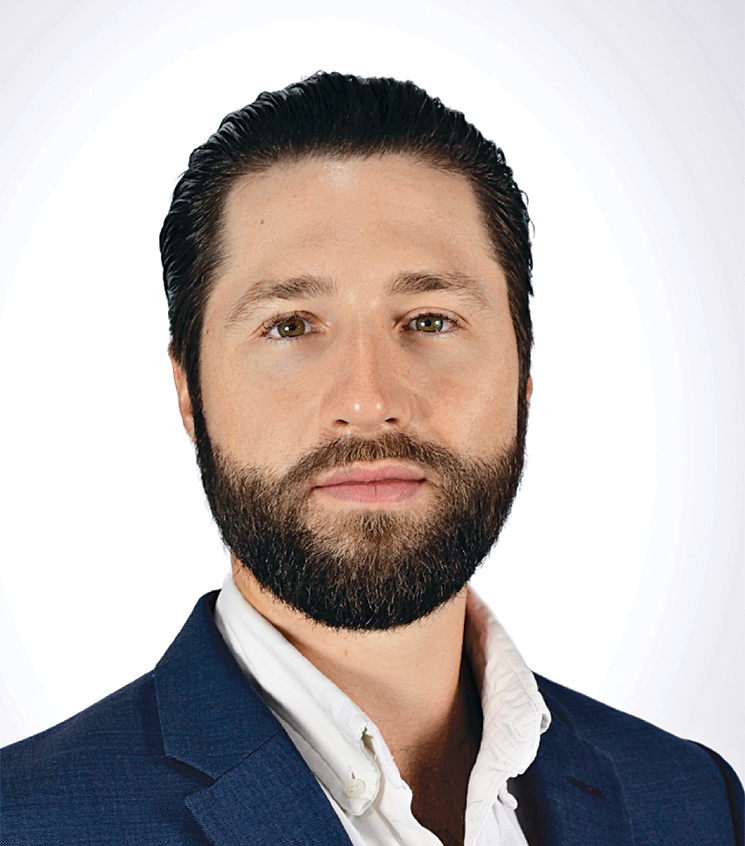
 By Gustavo Rodríguez Leal | Founder & CEO -
Fri, 09/04/2026 - 06:00
Recently, we publicly presented, for the first time, a model we had been building for almost a decade without fully realizing it. We call it RAICES (Roots). But before explaining what it is, I want to share the sentence that gave rise to it — not a sentence of my own, but one I have heard, almost word for word, in hundreds of first-time consultations over the past nine years:
"I've seen many doctors over many years. And I finally want to find out what is actually happening in my body."
That sentence, repeated by different patients, at different moments, with no connection to one another, is not a coincidence. It is a symptom. And it is the symptom of a health system that became expert at managing disease and forgot how to pursue its cause.

The Problem Isn't Willpower, It's the Absence of a Map
For years, we were taught to believe that when a treatment doesn't work, it's because the patient lacked discipline. The numbers tell a different story: 9 out of 10 diets fail, and 8 out of 10 people who successfully lose weight regain it within two years. Not because willpower was missing, but because there was never a real diagnosis behind the recommendation. The treatment addressed a generic body, not the specific body of that person.
The root of the problem is simple to name and hard to solve: No one has given people the correct instructions for their particular biology, let alone taught them how to sustain those instructions over time. That is not a patient failure. It is a gap in the model.
From the Branch to the Whole Tree

After nine years of clinical practice and thousands of patients, at nutriADN we identified a pattern that kept repeating: seemingly unrelated symptoms — fatigue that doesn't go away with sleep, inflammation that has been present for a decade, menstrual pain that's "already normal," brain fog, insomnia — converged on a small number of root causes. We found six: deficiencies in vitamins and minerals, imbalances in gut microbiota and food sensitivities, environmental toxicity, hormonal imbalance, genetics and metabolism that were never accounted for, and an epigenetic profile that shapes how we age.
That is the principle behind RAICES: find the root that triggers the symptoms, rather than treat the branch that's visible. When the right root is resolved, several branches shut off at once. When only the symptom is treated, the root keeps growing underneath, silently, until it produces the next symptom.
A Change in Standard, Not Just in Protocol
What we presented is not simply a new catalog of tests. It's a shift in the question being asked. The inherited standard of conventional medicine asks "are you sick?" and acts only when the answer is yes. The standard we propose asks something different: "Are you functioning?" Sustained energy, proper digestion, regular hormonal cycles, restorative sleep, mental clarity — that is the reference point, not the absence of a diagnosis.
This shift connects directly to where medicine is heading globally: a 4P model — predictive, preventive, personalized, and participatory. Predictive because it identifies risk before the symptom appears. Preventive because it acts while the damage is still reversible. Personalized because the protocol is built for a unique biology, not a population average. And participatory because the patient stops being a passive recipient of an instruction and becomes the protagonist of their own process — we, as the clinical team, are the guide; the patient is the hero of that story.
Science First, Then the Plan

It's easy to misread a model like this as a collection of lab tests. It isn't. Before indicating any test, we listen to the patient's full story — for most, no one had ever heard the complete version before — and we evaluate every pillar of their lifestyle: nutrition, physical activity, rest, environmental exposure, supplementation. Only from that assessment does a dominant root emerge, and only then is the diagnostic tool chosen to answer that specific question.
The full process runs 120 days, because the body doesn't change in a single consultation: it changes when someone sustains the process alongside the person. Initial assessment, functional testing, active follow-up with adjustments based on how the body responds, and a graduation in which the patient leaves with their own user manual — knowing what to eat, what to supplement, and how to sustain it without depending on anyone else.
The Future Is Now

Mexico currently ranks among the lowest in the OECD for healthy life expectancy, with preventable death rates nearly double the international average. This isn't a problem of access to treatment. It's a problem of reactive culture: we wait to get sick before we act.
What we witnessed when we presented RAICES, in a room full of healthcare professionals who have spent years looking for exactly this kind of model, wasn't the launch of a product. It was the validation of a conviction we've held at nutriADN for nearly a decade: Every person's biology is unique, and the best medicine is the one practiced from that starting point — preventive, personalized, precise.
We are not looking for the absence of disease. We are looking for people to thrive. That remains, and will continue to be, our root.
You May Like





Most popular



