


Contracts Matter-Wonderfully!
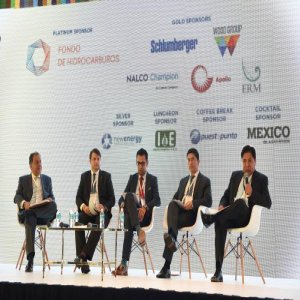
Mexico Petroleum Company (MPC) has proposed a new contractual framework for the development of Mexico’s unconventional oil and gas resources, arguing that simpler, more stable and transparent terms could attract private investment while preserving state ownership of oil resources. “Contracts are the main issue Mexico is facing,” said William Waggoner, CEO, MPC, at Mexico Oil & Gas Summit 2026. “If oil is in the ground, it does not feed and it does not benefit anybody.”
Mexico’s crude oil production has fallen to approximately 1.2MMb/d, compared with a peak of 3.4MMb/d in 2004, while 70% of the country’s natural gas is imported from the United States. MPC identifies the decline of the Cantarell and Ku-Maloob-Zaap fields, limited development of deepwater resources, and the underdevelopment of shale resources as key elements of the country’s upstream challenge. He argues that the Tampico-Misantla Basin, which it describes as a geological analogue to the Permian Basin, contains significant recoverable shale gas resources that remain largely undeveloped. MPC also attributes difficulties in the 2024–25 mixed contract regime to structural ambiguity, mandatory PEMEX participation without corresponding capital and a political risk premium associated with the 2019 moratorium.
Contract Simplicity as an Investment Driver
MPC’s central argument is that contractual simplicity, fiscal stability, and transparency are key to attracting upstream investment. “Good policy has no politics,” said Waggoner. He argues that contract simplicity drives participation because operators have greater clarity over their fiscal obligations.
MPC recommends a Federal/PEMEX Hybrid Incentive Contract (HIC) as its preferred instrument for unconventional development in the Tampico-Misantla Basin. “Mexico needs a new contract or lease that resembles the old CEE licenses, and preference should be given to Mexican companies,” he said.
MPC calls for immediate action in establishing a legislative framework for the new contracts. Waggoner concludes that Mexico’s unconventional resources could play a significant role in changing the country’s energy balance if they are developed. He argues that the central issue is not ownership of Mexico’s petroleum resources, which would remain with the state, but the contractual structure used to enable their development.
“My only request is for professionals like me to sit with the Senate to come up with solutions that benefit the country and generations to come,” he concluded.



Most popular



