


Grupo Carolo Marks 19 Years, Formalizes Inclusion Model
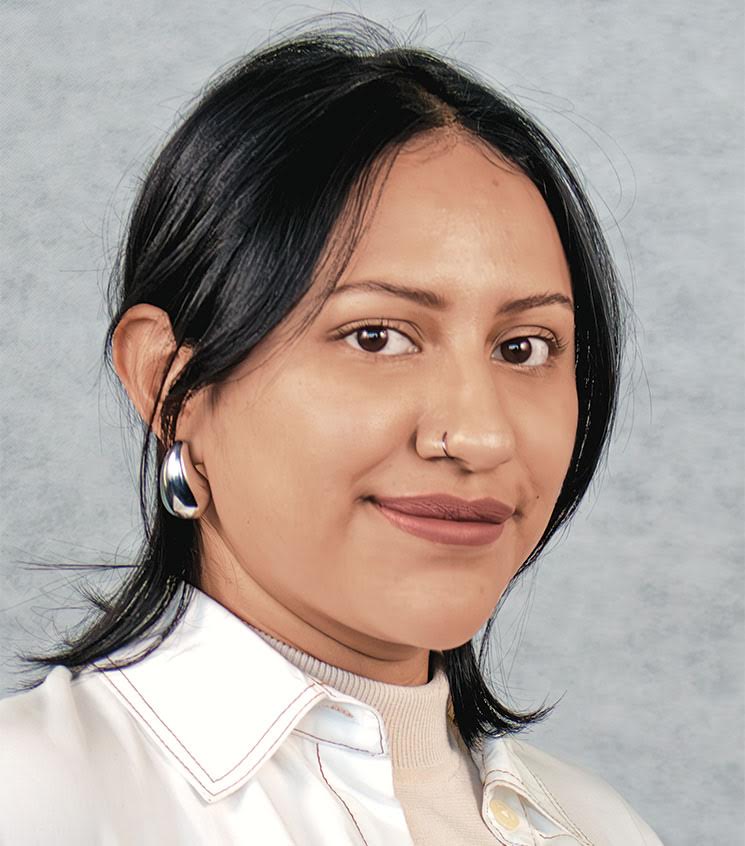 By Aura Moreno | Journalist & Industry Analyst -
Thu, 04/30/2026 - 16:20
Grupo Carolo turns 19 and celebrates with a brand manifesto, a new alliance with the Fundación John Langdon Down, and a renewed commitment to inclusive hiring.
Grupo Carolo gathered media and industry stakeholders in Mexico City to commemorate 19 years of operations, unveiling a brand manifesto and formalizing a partnership with the Fundación John Langdon Down. The event reaffirmed the group's founding purpose, rooted in the story of Carlos "Carolo" Gómez, a young man with Down syndrome whose professional aspirations led his family to open a bakery in 2007.
Lucía Senderos and Carlos Gómez Sr. launched the first bakery to provide their son a professional environment where he could develop. What began as a single concept has since expanded into a portfolio of 16 restaurant brands, more than 60 locations across Mexico and the United States, and a workforce of over 3,000 employees.
Two moments anchored the gathering. The first was the presentation of a brand manifesto, a document the group describes as a declaration of identity that consolidates the values guiding its operations. The second was a formal tribute to Carlos Gómez, recognized not only as the origin of the company's name but as the ongoing reference point for how the organization understands hospitality, labor practices, and community engagement.
Diego Gómez, CEO, Grupo Carolo in Mexico, framed the event as both a historical milestone and a strategic signal. "The pillars of Grupo Carolo are love, inclusion, and the conviction that dignified work transforms lives. Today we are celebrating a historic moment for three reasons: recognizing Carlos Gómez as the heart of the group, telling our story with pride, and articulating it, because our message must carry the same force as our origin," he says.
Inclusion as Operational Model, Not Initiative
A distinguishing characteristic of the group's labor model is its approach to hiring persons with Down syndrome. Eduardo Gómez, CEO, Grupo Carolo for Mexico and the United States, described the employment criteria as productivity-driven rather than symbolic. "We have not wanted to add positions just to add them. What they contribute has real value — that is why they receive a salary — because it is work that any other person would have to do," he says. The group has identified bakery operations as the area of highest fit, given the repetitive and manual nature of the tasks.
Beyond output metrics, Eduardo Gómez noted an observed effect on organizational culture. "Everyone who works alongside these individuals — I can tell you it has changed their lives, their way of seeing the world. It makes people more sensitive. It brings out the best in people. And it gives a little more meaning to work," he says.
He highlighted the scalability of the model, acknowledging that growth in inclusion programs must remain proportional to the group's internal capacity to support and integrate workers effectively.
Alliance With Fundación John Langdon Down
In conjunction with the event, Grupo Carolo formalized a collaboration with the Fundación John Langdon Down, an organization specializing in support services for persons with Down syndrome in Mexico and internationally. The agreement includes a series of activities, including dining events, workshops, and the sale of art and tableware produced by students of the Escuela Mexicana de Arte Down.
The partnership gives structural form to an approach the group has pursued informally since its founding. It also provides a channel for the group's stated goal of expanding employment and economic opportunities for persons with disabilities, particularly in lower-income households where a family member with Down syndrome may represent an untapped source of income.

Expansion Context and Market Position
Grupo Carolo operates several brands including Blanco Castelar, Blanco Colima, Cachava, Emilio, Casa Ó, Aromas, Mood, Carolo, La Popular, El Aduanero, Farina, Le Macarón, Eureka!, The Amalfi Llama, and Electric Pickle, spanning casual dining, bakery, and experiential food concepts.
Eduardo Gómez, says that the group has recently shifted its focus inward, back toward the social responsibility dimensions of the business, after a period of prioritizing geographic and brand expansion. "We have put a lot of effort into growing, but what is right is to return to the roots of why we exist and put a lot of energy into that dimension of social responsibility," he says.
For decision-makers across sectors evaluating inclusion programs, Eduardo Gómez offered a direct assessment: "These are highly productive, hardworking people. What you pay them generates a good return, it creates a good work environment, and it benefits your company. It is a project that sells itself, because it is not forced — it has real value, the value of a person's work."

You May Like


Most popular



