


1X Launches Neo Humanoid Pre-Orders to Rival Tesla’s Optimus
 By Diego Valverde | Journalist & Industry Analyst -
Fri, 10/31/2025 - 10:00
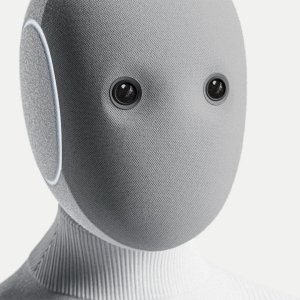
The robotics and AI company 1X has launched the pre-order phase for its humanoid android Neo. The launch positions 1X ahead of direct competitors, such as Tesla and its Optimus project in the commercialization of humanoid robots for autonomous operation in domestic and corporate environments. The pre-sale price is set at US$20,000.
The early commercialization aims to accelerate Neo’s AI development by collecting data from real-world use. Bernt Børnich, CEO, 1X, told The Wall Street Journal that the robot's neural network "still needs to learn from more real experiences," emphasizing that product optimization depends on daily user data. Developers add that “Neo is designed for total autonomy. Over time, it learns and unlocks new capabilities.”
Neo's launch comes amid intense competition in the humanoid robotics sector. Companies and research centers, including Honda and Boston Dynamics (a Hyundai subsidiary), are racing to develop androids with human-like capabilities to optimize productive, logistical, and domestic tasks.
The sector is viewed as a high-value emerging market. Tesla CEO Elon Musk has publicly stated that robotics will be “the biggest product ever created.” Tesla projects a price range of US$20,000–US$30,000 for its Optimus model similar to Neo’s, although a mass production launch date has not been confirmed.
Hardware Technical Specifications
Neo is designed for safe and efficient interaction in unstructured environments. According to 1X, the android stands 1.65 meters tall, weighs 30 kilograms, and features the patented Tendon Drive technology. This system replaces traditional gears and rigid mechanisms with flexible “polymer tendons” that transform motor power into natural, precise movement, mimicking biological muscle-tendon systems. The structure is covered with a soft-touch material.
The robot’s hands offer 26 degrees of freedom (DoF) for precise object manipulation. Neo has a payload capacity of 20 kilograms, making it suitable for B2B applications such as light logistics, warehouse picking, or retail inventory replenishment. Its bipedal mobility system allows dynamic locomotion.
AI Architecture and Operating Model
Neo’s core is its “Embodied AI” system, trained with real-world data and human demonstrations. It combines visual and spatial awareness with memory to learn from its environment and acquire new skills incrementally. Neo can perform programmed tasks and adapt to unforeseen situations using contextual learning.
Full autonomy has not yet been achieved. For complex or unfamiliar tasks, Neo relies on a “human-in-the-loop” teleoperation model. “Neo operates autonomously by default, but for any task it doesn’t know, users can request assistance from a 1X expert,” the company explains. During teleoperation, the human expert executes the task while Neo’s AI observes and learns, refining its generative action models.
B2B Security and Privacy Considerations
The teleassistance model introduces privacy and data security concerns. To mitigate risks, 1X developed a control application to manage human intervention. Teleoperator requests must be explicitly approved by the user, and the platform includes features to blur images of people and restrict visual access to sensitive areas.
Despite safeguards, Børnich acknowledges that “the system could present failures,” but affirms that multiple protections are in place “to protect users and avoid major damage.”
Most popular



