

The Biggest Investing Mistake: Not Asking


STORY INLINE POST


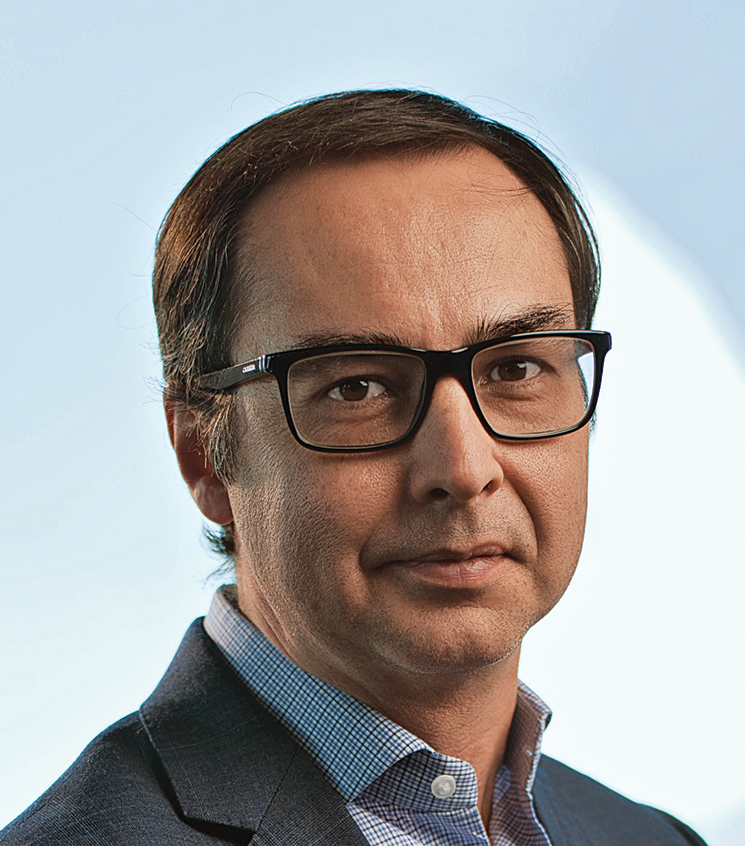
 By Luis Felipe Madrigal Mier y Terán | Director GBM Advisors -
Fri, 05/15/2026 - 06:00
Speaking with a financial adviser is often perceived as a technical exercise, defined by figures, portfolios, and projections that seem to belong more to the realm of mathematics than to daily experience. However, this perception is misleading. At its core, every investment decision is intimately linked to much more human questions: What do I want to achieve? What am I willing to risk? What does stability mean to me? Therefore, failing to ask questions during a meeting with an adviser is not an act of trust — it is a silent surrender of one’s own judgment.
The first major question that should guide any conversation is: Does this strategy truly align with my objectives? It is not enough to speak of growth or attractive returns. These concepts must be grounded in concrete goals. Are you investing for the short term or for retirement? Do you require liquidity, or can you afford to keep your capital tied up for years? A professional adviser will not only provide answers but will help you clarify objectives that perhaps you haven't even fully defined yourself.
From there, a second essential question arises: What risks am I taking? Financial discourse often masks risk with technicalities or makes it appear harmless through historical averages. But when the market falls, no average cushions the loss. Asking about risk should not be limited to "Can I lose money?" but rather: "How much could I lose, and under what specific scenario?" This question allows for the setting of realistic expectations and prevents impulsive decisions during times of volatility.
Directly linked to risk and security is a technical yet vital inquiry: Who is the custodian of my money? It is fundamental to confirm that your funds do not reside in the personal or business account of the adviser, but rather in an independent, regulated financial institution. This separation of duties is not a mere administrative detail; it is the primary safeguard against fraudulent schemes and a guarantee of institutional transparency.
The fourth key question is: What is this investment actually costing me? Management fees, performance charges, and even the internal costs of the instruments — such as the Total Expense Ratio (TER) — impact the final return. From an adviser's perspective, explaining these net costs is not a defensive act, but a demonstration of honesty. A strategy that only works on paper by ignoring real expenses will hardly stand the test of time.
Furthermore, it is imperative to question capital availability: What happens if I need to withdraw my money tomorrow? Liquidity is a backbone of financial planning. The adviser must be able to explain if there are early withdrawal penalties or if the assets have a secondary market that allows for immediate sale.
Another fundamental question is: What alternatives exist, and why is this option the most suitable? The world of investing rarely offers a single solution. By asking for comparisons, the investor compels the adviser to justify their recommendation and reveals whether it stems from a comprehensive analysis or a predetermined preference.
No less important is addressing the logistics of the relationship: How often and in what way will we communicate? A lack of clarity regarding service is the root of most frustrations. Defining whether there will be monthly reports or quarterly reviews aligns expectations and builds a channel of trust. Likewise, we must ask: What would have to happen for us to change this strategy? This introduces the discipline of review and prevents us from reacting out of fear or euphoria to market swings.
Finally: How will we measure the success of this investment? Whether in terms of absolute return or against a benchmark, establishing these criteria prevents success from becoming a matter of subjective perception.
All of these questions elevate the conversation. A client who questions is not a "difficult" client; they are an engaged client. When the investor actively participates, the adviser stops being a product provider and becomes a true strategist. Ultimately, clarity does not emerge from listening in silence, but from asking with intention. In a world of complex financial decisions, the best tool is not a sophisticated formula, but the ability to ask the right questions at the right time.
You May Like


Most popular



