


AICM Needs Long-Term Solutions Beyond Temporary Fixes: ALTA
 By Teresa De Alba | Jr Journalist & Industry Analyst -
Tue, 07/01/2025 - 14:03
By Teresa De Alba | Jr Journalist & Industry Analyst -
Tue, 07/01/2025 - 14:03
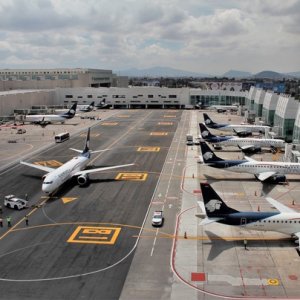
The Mexico City International Airport (AICM) is grappling with structural challenges that cannot be resolved through its ongoing renovations, according to Peter Cerdá, Director General, Latin American and Caribbean Air Transport Association (ALTA) and IATA vice president for the Americas. Speaking to El Financiero, Cerdá emphasized that “AICM has been overwhelmed for years” and stressed the need for long-term investment and planning beyond the temporary fixes currently in progress.
While AICM is expected to handle short-term demands during the FIFA World Cup from June 11 to July 19, 2026, Cerdá pointed out that the current repairs will not address the airport’s fundamental infrastructure issues. “It needs upgrades to runways and terminals,” he said, citing operational instability since the cancellation of the Texcoco airport project and broader systemic changes to Mexico’s airport network.
Renovations at AICM, which began on April 1, will be paused from May 31 to July 31, 2026, to accommodate World Cup operations. According to airport authorities, the construction and supervision contracts were directly awarded through limited-invitation processes. Work is scheduled to resume on Aug. 1 and conclude by Nov. 17.
AICM director José Padilla acknowledged delays, partly due to resource allocation to the Felipe Ángeles International Airport (AIFA), which will handle charter flights during the World Cup. However, Cerdá characterized the improvements at AICM as largely cosmetic. “The investments being made will take longer and won’t resolve critical issues before the World Cup,” he noted.
Cerdá underscored the need for a 20- to 25-year master plan to transform AICM into a regional hub, while also emphasizing the importance of developing the broader airport system, including AIFA and Toluca. Although AIFA is experiencing growing demand, its connectivity remains limited.
The Mexican government plans to use the World Cup as an opportunity to boost international tourism, aiming to position Mexico among the top five global destinations. However, airport infrastructure limitations and delays in aircraft deliveries—due to ongoing engine issues affecting Airbus models—are constraining domestic capacity.
Padilla detailed that the major remodeling project, which includes modernizing both terminals, is part of an MX$8 billion investment covering 75 initiatives. These include updates to waiting areas, security systems, and the construction of new taxiways.
Despite the scale of the project, authorities have yet to present a comprehensive plan to minimize passenger disruptions during construction. Airlines such as Aeroméxico and Viva Aerobus have already advised travelers to arrive earlier than usual. AICM, which handles 46 million passengers annually, has long struggled with overcrowding and maintenance issues. While the remodeling seeks to address structural and aesthetic deficiencies, the airport’s history of delays and technical failures has raised concerns about its successful execution.
Meanwhile, AICM is seeking to increase its maximum hourly operations—known as slots. The Federal Civil Aviation Agency (AFAC) recently approved one additional operation per hour, raising the total to 44 takeoffs and landings per hour.
AICM had requested the increase months ago, prompting AFAC to conduct a capacity review before granting the modest expansion. AFAC emphasized that any further increases depend on AICM meeting requirements outlined in its master development plan, airspace analysis, and infrastructure readiness on both the airside and landside. Raising flight numbers remains a priority, as SECTUR anticipates 5 million tourists during the World Cup.
You May Like







Most popular





