US Lets GE Resume Jet Engine Exports to China’s COMAC
 By Teresa De Alba | Jr Journalist & Industry Analyst -
Tue, 07/08/2025 - 13:36
By Teresa De Alba | Jr Journalist & Industry Analyst -
Tue, 07/08/2025 - 13:36
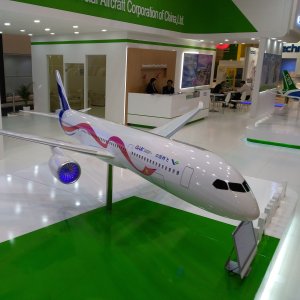
The US government has informed GE Aerospace that it may resume shipments of jet engines to China's state-owned aerospace manufacturer COMAC, according to a source cited by Reuters. The decision reverses recent license suspensions and comes amid broader shifts in US-China trade relations, including new US export approvals and rare earth concessions from Beijing.
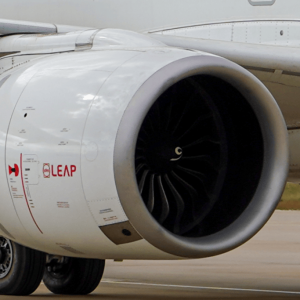
The restored licenses allow GE to export LEAP-1C engines—developed through a joint venture with France’s Safran—for COMAC’s C919 narrow-body aircraft. The authorization also includes GE’s CF34 engines, which power the C909 regional jet. Both models are central to COMAC’s efforts to compete globally with industry leaders such as Airbus and Boeing.
The export restrictions, imposed several weeks ago, were part of measures introduced by President Donald Trump’s administration in response to China’s April curbs on exports of rare earths and related magnets. Those restrictions disrupted key supply chains in aerospace, semiconductors, automotive manufacturing, and defense.
A spokesperson for China’s Ministry of Commerce told Reuters, “Dialogue and cooperation are the right path forward, while threats and coercion lead nowhere,” urging the U.S. to “continue to meet China halfway.”
Despite Chinese assembly, the C919 aircraft relies heavily on foreign components. In addition to the LEAP engines, COMAC sources equipment from Honeywell Aerospace, including the auxiliary power unit, wheels and brakes, flight control systems, and navigation systems.
At least one other aerospace company reportedly received a similar license reinstatement, though it was not publicly identified. Meanwhile, the United States continues to block certain exports, including nuclear equipment bound for China. Companies affected by those restrictions include Westinghouse and Emerson, which supply technology to Chinese power plants.
The decision to restore GE’s export licenses reflects a broader easing of trade measures. Earlier this week, the United States lifted restrictions on chip design software and ethane exports. While these developments suggest progress in bilateral talks, deep structural tensions remain.
Boeing also resumed aircraft deliveries to Chinese airlines on June 6, following a suspension in early April due to escalating trade tensions. Boeing CEO Kelly Ortberg had confirmed in late May that deliveries would restart in June, following a May 12 agreement between the United States and China to pause most tariffs for 90 days.
Since mid-May, Chinese airlines have benefited from this “buffer period,” which allows them to continue paying the original import tariffs—5% for narrow-body aircraft and 1% for wide-body planes. China remains Boeing’s largest international market; in 2018, about 25% of the company’s global aircraft deliveries were to Chinese carriers. According to Cirium fleet data, Boeing has delivered 20 aircraft to China so far in 2025, with 29 more scheduled before year-end.
You May Like



Most popular