Bean Fair Highlights Nutrition, Food Sovereignty
 By Eliza Galeana | Junior Journalist & Industry Analyst -
Fri, 11/21/2025 - 10:48
By Eliza Galeana | Junior Journalist & Industry Analyst -
Fri, 11/21/2025 - 10:48
The government held the Bean Fair in Mexico City, highlighting the health benefits of this food and its importance to national identity. The event aims to boost the trade and consumption of beans, which has declined by nearly 50% among the Mexican population over the past 40 years.
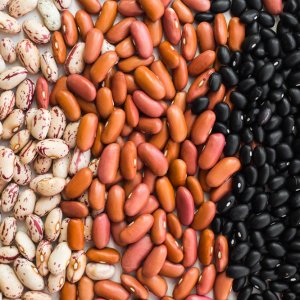
The fair took place at the Monument to the Revolution on November 14 and 15, bringing together major bean producers from Zacatecas, Durango, Nayarit, the State of Mexico, Tlaxcala, Morelos and Mexico City. Hundreds of attendees sampled dishes made with beans, including enfrijoladas, gorditas, sopes and huaraches. Several varieties of the 50 bean species produced in Mexico were also available for purchase, including Frijoles Bienestar, part of the federal government’s Alimentación Bienestar (Food for Wellbeing) program.
The national bean brand, promoted in its black and pinto varieties, seeks to ensure seed preservation and support producers’ livelihoods. To meet this goal, authorities purchase harvests at fair prices and distribute them through the Tiendas Bienestar (Bienestar Stores) at MX$30/kg (US$1.6) As part of the Producción para el Bienestar (Production for Wellbeing) program, beans are purchased directly at collection centers in the main producing states at MX$27,000/t and later distributed to the final consumer below market prices, which can reach up to MX$40/kg.
Attendees also took part in cultural and artistic activities, and several booths showcased scientific projects. In this regard, students from the Zacatecas State College of Scientific and Technological Studies (Cecytez) represented their state with a biotechnology project focused on agricultural sustainability.
Their project, Bio-Mix, is a sustainable fertilizer and organic soil amendment derived from guayule, a plant native to the semidesert region. The students explained that when combined with elements such as humus and eggshell, this compound can strengthen plants and improve their resilience to drought and adverse weather, while also reducing pollution by reusing organic materials that would otherwise be discarded.
During the fair’s inauguration, Clara Brugada, Head of Government of Mexico City, reaffirmed her administration’s commitment to ensuring fair prices in the commercialization of beans. She also said her government is working to strengthen local bean production through the Altepetl program.
“Continuing to support the Altépetl program will ensure greater bean production in Mexico City. This is a major commitment, one that must be reflected in the fields and in the city’s Conservation Zone. And the other commitment is to guarantee fair trade in the city—this great city that consumes tons and tons of beans every day. Because beans and corn are the foundation of our diet,” she said.
In her remarks, Brugada noted that programs such as Del Campo a la Ciudad (From the Country to the City) supply more than 150 sales points daily with direct agricultural products, in addition to the Mercados de la Tierra (Soil Markets). She therefore urged the public to recognize the importance of supporting those who work the land and to advance toward food sovereignty.
María Luisa Albores, Director, Alimentación para el Bienestar, called for improvements in eating habits and a return to consuming staple foods. She warned that bean consumption in Mexico has dropped significantly in recent years. According to the 2021 Agri-Food Outlook from the Ministry of Agriculture and Rural Development (SADER), per capita bean consumption fell by 44%, from 16 kg in 1980 to 9 kg in 2021.
Amanda Gálvez, Researcher, UNAM, noted that one of the main reasons for the decline in bean consumption is the stigma surrounding it as protein for the poor. She stressed that eating tortillas and beans, foundational elements of the traditional Mexican diet, provides protein free of the cholesterol found in animal products, low in fat, and nutritionally comparable to meat when combined with cereal-based proteins.
Similarly, Elvira Sandoval, Coordinator of the Bachelor’s Degree in Human Nutrition Science at UNAM’s Faculty of Medicine, explained that beans, lentils, fava beans and chickpeas are stigmatized because they are considered low-cost protein sources. However, she argued that legumes are essential for a rich, varied and nutritious diet, and that beans are the most representative of these foods in the Mexican diet. “When we combine cereals with legumes, we obtain a protein of quality equal to that of animal origin. The best part is that we avoid saturated fats,” she emphasized.

Most popular