The Key to Profitability: Digitalization of Financial Processes
 By Adriana Alarcón | Journalist & Industry Analyst -
Thu, 04/25/2024 - 11:31
By Adriana Alarcón | Journalist & Industry Analyst -
Thu, 04/25/2024 - 11:31
Mexico’s intricate fiscal regulations surrounding the report of work-related travel expenses pose management challenges, especially concerning tax deductions. Moreover, insufficient control over these expenses can result in fraudulent activities, such as the submission of false or non-compliant expenses. Digitizing these expenses can greatly simplify their administration, saving employees’ time and facilitating tax compliance, says Luis López Albajara, Country Manager, Okticket Mexico.
“Applying technology can help improve all these processes. After marketing, one of the areas where companies invest the most is in technology to facilitate billing, allowing them to improve processes and digitize them,” says López.
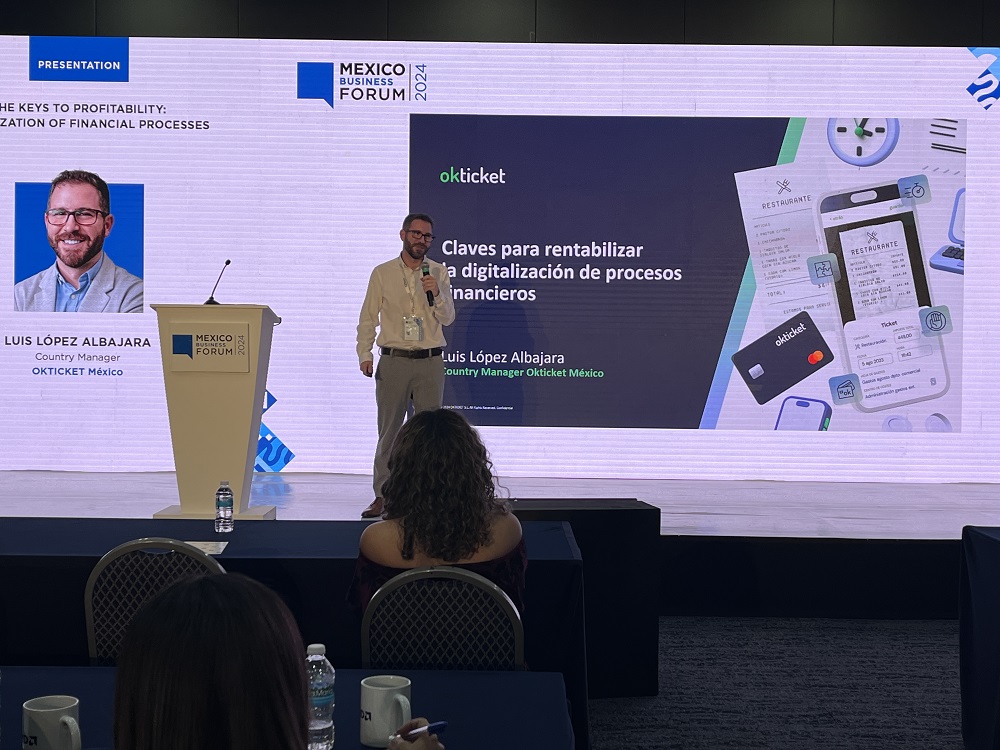
Employees spend about 5% of their work time navigating administrative and travel expense tasks, equating to 104 hours per employee annually and costing companies MX$21,000 (US$1,223) per employee per year, says López.
Furthermore, Mexico’s robust tax system requires that companies meet certain criteria to ensure all these expenses are tax deductible. There is also the issue of fraud and misappropriation due to the lack of adequate control systems to monitor expenses, as well as the absence of systems with criteria to raise alerts for non-compliance with tax regulations.
“Additionally, there is a diversity of corporate policies and tax regulations; each company has its own criteria and policy regarding travel expenses. When processes are manual, they can lead to errors. Employees also waste time on tasks such as reconciling expenses, dealing with bank transactions, and ensuring everything balances, which in turn takes away time from other tasks,” says López.
Reconciling bank statements poses significant challenges for financial departments, necessitating extensive file reviews to detect spending irregularities and resolve discrepancies. After marketing, billing is the second most digitized area in companies. This area can be supported by automation with a focus on user-centric design. "Implementing a control tool is not sufficient; it must be user-friendly and genuinely assist in the entire process, from expense reporting to administration," says López. This ensures that the technology is not merely an additional expense but a valuable aid in employees' daily tasks, enabling them to focus on more productive activities.
These tools must also be capable of accommodating various payment methods, ranging from card payments to cash advances, to align with diverse corporate spending policies. Automation should also be adaptable to support different payment scenarios, including requesting advances through the application and efficiently managing them.
Expense recovery is crucial, but time constraints and oversight can challenge the process of reclaiming invoices. Timely retrieval of invoices is vital for tax deductions, underscoring the importance of automating invoice reconciliation with reported expenses.
By integrating the appropriate software, companies can ensure the seamless alignment of their digital processes, greatly saving time and increasing productivity by taking non-essential tasks off their employees’ plates.
You May Like







Most popular