

Right Projects Exist but Not Yet Visible

STORY INLINE POST



Q: What is your view of the NIP and its progress?
A: Mexico should be proud as its advancement in engineering has benefited infrastructure around the 174 world. The NIP is a great opportunity for the sector. We acknowledge the challenges Mexico faces when it comes to infrastructure but the NIP is a complete program that has a long-term vision. Infrastructure of this size needs to be inclusive to function well. For instance, a port has to be designed in a manner that aligns with the rest of the country’s infrastructure. If it does not have a nearby highway or railroad, the containers cannot be delivered efficiently. The program has managed to encompass the country’s infrastructure as a collective system. The goal is to transform Mexico into a logistics platform as the country has a strategic position and can easily connect to South America’s Gulf ports.
Q: How is the government’s approach to the tender process for infrastructure projects impacting the industry?
A: I differ from other experts who believe Mexico lacks infrastructure projects. We believe that the right projects exist but they are not visible as the country is taking the time to analyze the risks associated with each one. They are complex projects with a large number of variables that need to be controlled and studied properly so it is more efficient to develop them at a slower pace. These projects are expected to impact the Mexican economy for the next 50-100 years and rushing the process to comply with a political agenda is not worth the risk. In this case, the government is adopting a responsible attitude by choosing to leave behind its political agenda and making sure the projects are being well developed. It is also a difficult time for Mexico as its economy was expected to grow at a faster pace.
Q: What can the government do to make PPPs more attractive?
A: The global economic situation is changing quickly and the biggest challenge for the industry is learning how to adapt to the new landscape. It is easy to highlight PPPs but turning them into reality is complicated. The PPP Law may have passed a couple of years ago but the lack of operating regulations left projects on the shelf for many years. The great advancement of the current administration was adopting a regulation that fits the needs of the private sector. A simple of rule thumb is to let projects find their own source of revenue. The private sector is interested in these plans because they can offer assurance that the investment will be repaid. Toll roads, for instance, have enough users to repay the investment difference. Other projects that do not have their own source of income such as the Mazatlan-Durango toll road need the help of the government. This region has many mountain ranges that make the project expensive and difficult. Mexico needed to connect the west to the east and the private sector was not willing to pay for the cost of the project. The Mazatlan- Durango project cannot collect enough money from end users to repay the investment.
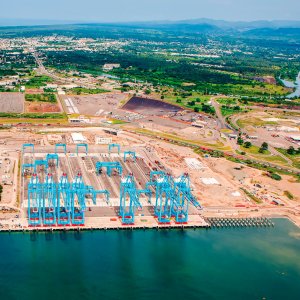
In a pure concession plan it would have never been possible to attract enough interest from the private sector so the government decided to build it as a public expenditure. The Mazatlan-Durango toll road is the most important and difficult road ever built in Mexico. The port of Mazatlan is still small compared to the rest in the country but its interaction with the country has increased significantly. It is more efficiently connected to the rest of Mexico and its neighboring countries. This is proof of the effect a well- planned infrastructure project can have on an area.
Q: How can the government replicate this success across other infrastructure projects?
A: There is a need for infrastructure in Mexico and the government does not have enough short-term capital. The secret is to engage the private sector so it can contribute the equity instead of the federal government. Authorities would only need to provide a guarantee of repayment for the infrastructure over 10, 20 or 30 years. The money the government pays the private sector can have positive benefits for the established infrastructure. If the project cannot acquire financing because the risk is too high, the project needs to be forgotten. The government needs to do whatever it takes to ensure project viability before making the concession public.
The more roads the federal government builds without concessions the more authorities have to pay for the cost of the aftercare and maintenance. The long-term interest of the private sector has to be aligned with the long-term interest of the project to be successful. The government acknowledges that it does not have enough capital to fund them. The private sector is being invited through concessions to invest all of the money a project requires as well as ensuring the quality of the asset. If the developer does not comply with the norms, the plan forces them to pay for the consequences. There are also positive incentives for those that are aligned to regulation. Noncompliance is punished by making developers pay for a deduction on the fixed amount that was originally requested from the government.
Q: How can a company boost its chances of winning a PPP tender?
A: The new PPPs bring out the best elements of the previous programs. Everybody places their bids and wins based on a points system. A great technical proposal is more likely to gain more points and obtain the concession. The idea is to incentivize the most economical and technical projects. Companies have to make sure to have well-developed plans. Depending on the amount of bids per concession, the government removes the cheapest and most expensive projects to maintain an average. Incentives are offered to projects that are closest to the average so they are more likely to win the maximum amount of points. Players want to be close to the average and make sure they offer similar prices. The first projects under this new points scheme were recently presented to Congress. We already have four projects that have been approved by the Ministry of Finance that will become the new generation of projects. The new mechanisms are bringing a flow of funding that can get a return as long as the projects are safe with contained risks.
Q: What role do you want to play in infrastructure?
A: Cultural infrastructure, hotels and the Mexico-Toluca railway are some of our priorities. We developed the last
two major museums in the country through PPP schemes in Merida and in Puebla. We build high-quality assets as
we receive payments based on quality. For us, the positive effect of cultural infrastructure is quite clear. We know that
visitors are more likely to stay longer in cities that have Interesting museums and theaters. Cultural infrastructure has a positive effect on the economy. We recently started participating in tourism as it has been performing well in Mexico. Tourism in Mexico combines beautiful beaches with prehispanic sites, culture and gastronomy. Sophisticated 175 tourists look for these combinations. We opened a hotel in the north area of Cancun two years ago and are planning to continue developing projects there.
Mexico’s supply of infrastructure in terms of airports and roads creates even more possibilities. The government is willing to tackle the mobility challenge by building the Mexico-Toluca railway. It will benefit thousands of people by shortening their trip to 40 minutes. It will ease the saturation of the Mexico City Airport as it will also include a shuttle to the Toluca airport that is hassle free. Any large city in the world has two or three airports and we are hoping to bring these types of mobility choices to Mexico City. We are also proud of participating in the New Mexico City International Airport (NAICM) and of providing the third runway thanks to our reputation and concession. We could submit a competitive offer thanks to our collaboration with four companies, our skills and complementary assets.
You May Like






Most popular





