


Sustainability Boosts Real Estate Value Amid Market Uncertainty
 By Eliza Galeana | Junior Journalist & Industry Analyst -
Wed, 06/18/2025 - 09:02
By Eliza Galeana | Junior Journalist & Industry Analyst -
Wed, 06/18/2025 - 09:02
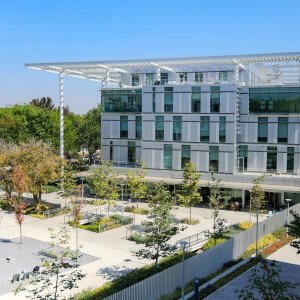
In the midst of global financial uncertainty, sustainability is becoming a key strategy to preserve and enhance the value of real estate, supported by market trends and investors who favor sustainable projects.
According to the international consulting firm JLL, the current climate of financial instability worldwide is leading to a slower adoption of sustainability initiatives in the real estate sector, as companies are more concerned about profitability. Jaime del Álamo, Director of ESG and Risk Advisory, JLL Americas, points out that this reluctance stems from the relatively slow return on investment associated with sustainability practices, posing a challenge for sustainability teams within companies to drive meaningful change. “A large majority of investors are currently more focused on increasing occupancy rates or lowering operational costs,” he notes.
Ruth Corona, Director of Sustainability Services, JLL Mexico, states that while not all investors are focused specifically on sustainable construction, there is growing implementation of actions aimed at making day-to-day operations more sustainable. “There is a strong push toward decarbonization efforts, as well as reductions in energy and water consumption,” she emphasized.
Alfredo Giorgana, Executive Director of Valuations, JLL Mexico, stresses that current trends in the sector show that buildings adopting practices to reduce water and energy use, as well as pollution, are seeing increased market value. “The more sustainable features a property includes, the more recognition it receives from the market, particularly in financial terms, which becomes especially relevant for investment funds,” he concludes.
From the investor perspective, Adrián Cuello Thomsen, Director of Sustainable Finance, BBVA, explains that banks today place great importance on sustainable real estate assets, as sustainability has become one of the most influential and relevant trends. “A large part of our investment portfolio is in real estate, and when analyzing global trends, we find that some developments lack sustainability certifications, which is concerning. We understand market demands and have a responsibility to guide our clients toward projects that align with these standards,” he states.
JLL’s data shows that property owners who incorporate sustainable practices gain significant market advantages. Research indicates average value premiums of more than 7% in North America, 10% in Asia Pacific, and over 11% in London. Conversely, properties that lack sustainability practices are losing value, resulting in reduced rental income and lower sales prices.
There is also strong evidence that implementing energy-saving technologies leads to long-term savings that often offset the upfront investment within three to five years. A report from the World Green Building Council estimates that green buildings can reduce energy use by 25% to 30% compared to conventional code-compliant buildings.
According to the US Green Building Council (USGBC), Mexico ranks sixth globally in total LEED-certified space, with 2.2M m2 distributed across 104 certified real estate projects. LEED is an international rating system that standardizes environmental criteria and certifies whether a construction project is sustainable. In Latin America, Mexico is the second-ranked country in terms of green buildings, just after Brazil, with a 52% growth in the inventory of office buildings bearing this certification over the past five years.
You May Like





Most popular








