


Flaring at PEMEX’s Deer Park Refinery
A flaring event at the PEMEX Deer Park Refinery in Texas drew attention to the Mexican state-owned oil company’s foreign operations. The flare, visible for miles, coincides with a multi-unit overhaul at the facility and underscores how maintenance, legacy incidents, and public scrutiny may affect PEMEX’s global refining strategy going forward.
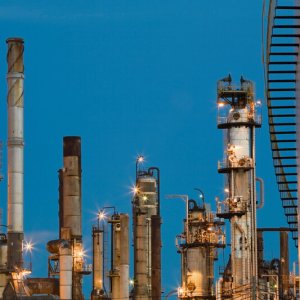
On Dec. 2, flames from the Deer Park refinery’s flare stack were recorded by a KHOU 11 tower camera more than 20 miles away, highlighting the scale of the operation. According to recent reports, PEMEX began a broad maintenance program at the facility in November, temporarily shutting down several processing units, including the larger crude distillation unit (CDU), catalytic cracking, and coker units, for what it calls a “Big Block Turnaround.” The work is expected to last around 60 days.
The Deer Park refinery, with a capacity of roughly 275–312Mb/d, is a central element of PEMEX’s refining output outside Mexico. However, the facility has a history of safety and environmental concerns. In October 2024, a hydrogen sulfide leak at the refinery resulted in two fatalities and prompted emergency shelter orders for nearby communities. Independent monitoring agencies have also repeatedly flagged the site for benzene emissions, with air-fence data indicating that the refinery topped US refineries in benzene levels as of mid-2024.
The current flaring and maintenance campaign occur just as PEMEX faces a broader challenge: reconciling its operational ambitions with fiscal constraints and growing scrutiny from regulators and investors. The company’s financial strain, driven by high debt, decades-old infrastructure, and recent national support, already complicates the viability of long-term investments abroad and at home.
PEMEX’s Refining Strategy Continues
As PEMEX proceeds with the overhaul, the outcome at Deer Park will likely influence not only refining margins and supply chains, but also investor confidence and regulatory oversight in both the United States and Mexico. Given the refinery’s strategic role in PEMEX’s export and processing portfolio, the implications of this flaring episode extend well beyond a single event.
PEMEX has begun rolling out its Strategic Plan 2025–2035, which aims to combine fiscal adjustments with operational efficiency measures across its upstream and downstream segments. According to government figures, the integration of the Olmeca refinery and the continued operation of Deer Park increased crude processing by 44% and fuel output by 40% in 2024. The strategy seeks to improve national fuel supply while aligning with Mexico’s emissions-reduction commitments.
A key element of the plan is stabilizing oil and gas production to meet domestic demand. Crude output has approached 1.8MMb/d and natural gas production has reached 5Bcf/d. Authorities report that refining activity has risen to 1.05MMb/d, boosting fuel output by 688Mb/d and reducing imports by 31%. Progress also continues on major coking projects: Tula is 87% complete and Salina Cruz is 74% complete.
At the same time, Deer Park remains a significant asset within PEMEX’s refining system. Through June, the Texas facility processed 88MMb/d of Mexican crude and exported 32MMb/d of refined products back to Mexico. The company positions these operational gains as the foundation for its longer-term goal of strengthening financial sustainability and reducing dependence on imports during the period covered by the 2025–2035 plan.
You May Like



Most popular








