


Mexico Unveils Roadmap to Achieve 30x30 Conservation Goal
 By Eliza Galeana | Junior Journalist & Industry Analyst -
Thu, 10/30/2025 - 14:26
By Eliza Galeana | Junior Journalist & Industry Analyst -
Thu, 10/30/2025 - 14:26
Mexico has presented its plan to meet the international goal of conserving 30% of its ecosystems by 2030. The main tools to achieve this target will include ensuring effective management and creating new areas dedicated to conservation.
The Ministry of Environment and Natural Resources (SEMARNAT), through the National Commission of Natural Protected Areas (CONANP) and in partnership with the World Wildlife Fund (WWF) and the Global Environment Facility (GEF), unveiled the Roadmap to achieve Target 3 of the Kunming-Montreal Global Biodiversity Framework.
The Roadmap includes 76 strategic short, medium, and long-term actions organized into five quantitative and qualitative elements: management effectiveness; equitable governance; surface area and zones of importance for biodiversity, their representativeness, and connectivity; contributions of Indigenous Peoples; and sustainable use. These actions involve various government sectors and social groups to strengthen the link and interdependence between productive activities, conservation, and economic development.
All actions are structured under three agendas that guide the implementation of the 30x30 Target. The first pillar, focused on Natural Protected Areas (NPAs), aims to ensure the effective management and financial sustainability of existing NPAs, as well as to guide the creation of new areas based on principles of connectivity, representativeness, and inclusion.
Since 1917, NPAs have been Mexico’s main public policy instrument for protecting biodiversity and maintaining ecosystem services. In addition, the Voluntarily Designated Conservation Areas (ADVCs) are federal NPAs established at the request of landowners who voluntarily designate their land for conservation. These areas allow sustainable resource use activities such as planting native corn, producing coffee and honey, and developing ecotourism projects, among others.
Currently, CONANP manages 609 ADVCs and 232 federal NPAs. Of these, 192 are located in terrestrial and freshwater ecosystems, 31 include coastal-marine areas, and nine are exclusively marine.
Meanwhile, the actions aimed at strengthening Other Effective Area-Based Conservation Measures (OECMs) seek to ensure the recognition, registration, evaluation, effective monitoring, and reporting of these measures. Unlike NPAs, whose primary objective is conservation, OECMs acknowledge management efforts that benefit biodiversity across different geographic contexts and may be governed for cultural, spiritual, or socioeconomic purposes. They also represent a major opportunity to recognize the contributions of Indigenous and traditional territories. SEMARNAT estimates that 10.2 million ha of land have the potential to become terrestrial OECMs, while 15.1 million ha could be designated as marine OECMs.
Finally, a set of actions has been identified to contribute integrally to both NPAs and OECMs; these are classified under the intersectoral agenda.
Ileana Villalobos, Deputy Minister of Environmental Regulation, SEMARNAT, stated that the roadmap strengthens governance, promotes environmental justice, and links conservation with people’s well-being. “One of the most powerful messages of this process is that the horizon of protection goes beyond an administrative document; it is the result of a broad and plural participatory process, led by SEMARNAT with the support of CONANP, WWF, and the GEF, as well as the participation of Indigenous Peoples, Afro-Mexican communities, academia, youth, civil society, and the private sector,” she said.
María José Villanueva, Director General, WWF Mexico, emphasized that having a roadmap to achieve Target 3 is essential to guide the country’s efforts. “Reaching the 30x30 goal is not just an environmental target; it is an opportunity to ensure the well-being of people and the planet,” she stated.
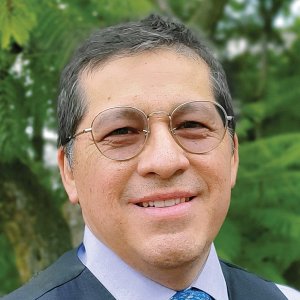
Pedro Álvarez-Icaza, Commissioner, CONANP, added that meeting international conservation commitments will require expanding protected areas by at least 15 million additional hectares across federal, state, and municipal levels by 2030.
Target 3, also known as the 30x30 Target, calls for the conservation of 30% of the country’s terrestrial, marine-coastal, and freshwater surface areas, with a landscape-based approach that emphasizes the preservation of ecological functions and services, management effectiveness, ecological connectivity and representativeness, and inclusive and equitable governance.
The presentation of the Roadmap follows the adoption of the Kunming-Montreal Global Biodiversity Framework (GBF) in December 2022 during the 15th Conference of the Parties to the Convention on Biological Diversity.
You May Like




Most popular








