


Future-Proofing Careers: Redesigning Jobs, Addressing Technology
 By Cinthya Alaniz Salazar | Journalist & Industry Analyst -
Tue, 11/28/2023 - 15:29
By Cinthya Alaniz Salazar | Journalist & Industry Analyst -
Tue, 11/28/2023 - 15:29
Humans find themselves amid a transformative period brought upon by disruptive technology and economic crisis, an intersection that once again demands adaptation. For organizations to successfully adapt and innovate, Chief Human Resources Officers (CHROs) will have to rely on enhanced data analysis to reinvent job roles, skill development programs, and career trajectories that bridge skill gaps so companies can realize the projects they envision, according to industry leaders at Mexico Business Summit 2023.
“Transformation instigated by technological and economic crises is not a novel phenomenon; rather, its distinctiveness lies in its profound impact on individuals. This transformation uniquely influences people at the individual level, evoking concerns among workers who fear potential displacement," says Raphael Spinelli, Director Enterprise Sales Latin America & Caribbean, Udemy.
It is anticipated that 3.7 million jobs would be displaced by automation, particularly in fields of food service, office support, and customer service. According to the recent study conducted by the Adecco group, two-thirds of respondents see their jobs changing significantly at least every five years because of technological advances. However, a discrepancy arises between employees' willingness to acquire new skills (claimed by 62% of respondents as their primary responsibility) and their initiative to develop new skills (59% expect their employer to provide training opportunities). The most cited obstacle by workers includes time constraints and costs. These limitations, paired with underinvestment, are forcing some companies to adjust jobs rather than proactively assisting in employee education.
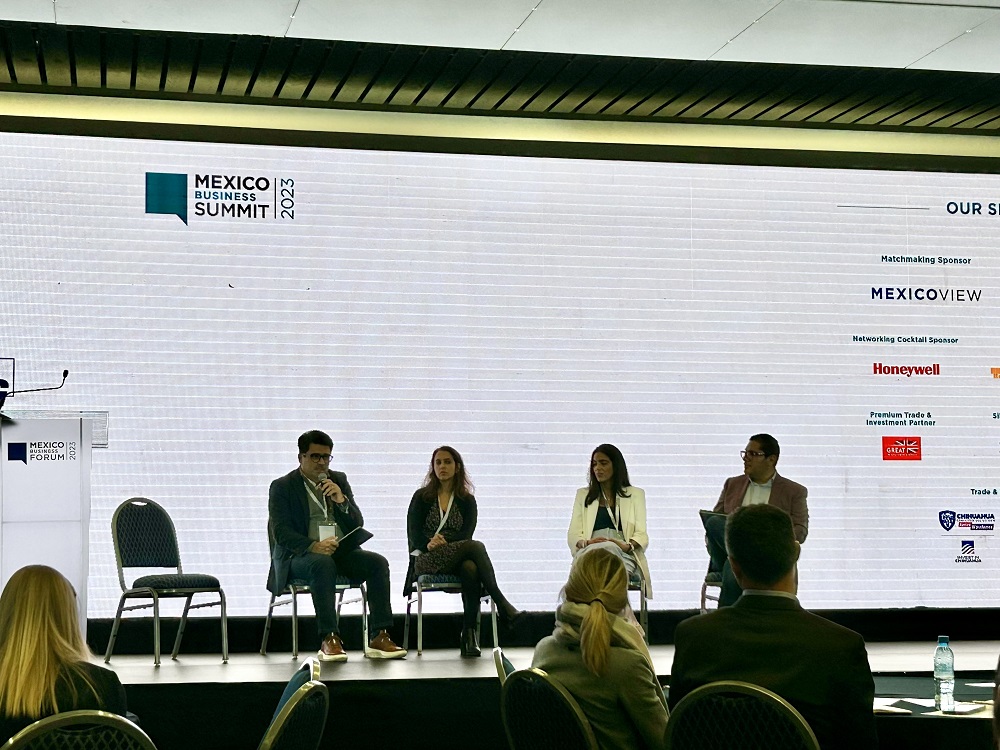
“Education models must undergo a comprehensive update to cultivate the skills demanded by the contemporary labor market. This places a substantial burden on companies, compelling them to engage in fierce competition and shoulder the responsibility of talent development,” says Gabriela Ceballos, Co-Founder, Hitch.
CHROs in organizations are being confronted with a critical imperative: prioritizing enhanced data analysis to overhaul job roles, skill development programs, and career trajectories, thereby bridging skills gaps and enabling companies to actualize their envisioned projects. However, comprehensive analyses within organizations are sporadic, creating a scenario where many existing roles become obsolete in the context of ambitious project objectives. To address this challenge, organizations must take a proactive stance, strategically redesigning jobs by integrating technology and creating innovative roles that leverage the potential of these advancements. This involves identifying tasks amenable to automation or augmentation by technology, while concurrently empowering employees to contribute to higher-value, more creative endeavors.
“Although strategic workforce planning is not novel, its execution is undergoing a transformation aligned with the capabilities of new technology. Once this blueprint is defined, career trajectories will also undergo augmentation, leveraging the additional capabilities afforded by emerging technologies,” says Karen Lellouche Tordjman, Managing Director & Senior Partner, Boston Consulting Group.
While executives recognize the significance of providing opportunities for employees to acquire new skills, many companies fall short in making sufficient investments and adopting long-term perspectives on skills development. The challenge stems from the uncertainty of the future and the reluctance to invest in reskilling without clear outcomes. However, delaying action until trends become evident can be detrimental, as the lack of planning and investment now may adversely impact businesses in the future.
A necessary shift in mindset is imperative, where both companies and workers perceive skill acquisition as a means of future-proofing organizations. To facilitate and enhance the cost effectiveness of this, companies should use data analysis and new technologies to strategically reinvent job roles, build skill development programs, and create career trajectories that bridge skill gaps so companies can realize the projects they envision, says Alejandro Bravo, Country Manager, Talan.
Organizations and CHROs stand to gain substantially by harnessing the power of new technologies, particularly AI and emerging tech, in informing talent decisions and priorities. Recognizing that these technologies will impact industry segments differently, HR teams must understand the need for varied skill sets aligned with specific business requirements. “It is paramount for HR teams to embrace the understanding that there is no one-size-fits-all approach to career roles for individual professionals,” says Lellouche. Additionally, the measurement of initiative impact becomes crucial; evaluating and quantifying the outcomes allows companies to discern what works effectively and, consequently, adjust priorities based on observed results.
“The integration of AI and technology not only enables HR managers to circumvent unconscious bias, but also prompts a critical examination of training data. This transition translates into fewer errors and reduced costs. Through adept data analysis, companies can develop and implement cost-efficient talent initiatives that align with organizational goals and future workforce needs,” says Ceballos.
You May Like








Most popular








