


Checking the OEM Pulse
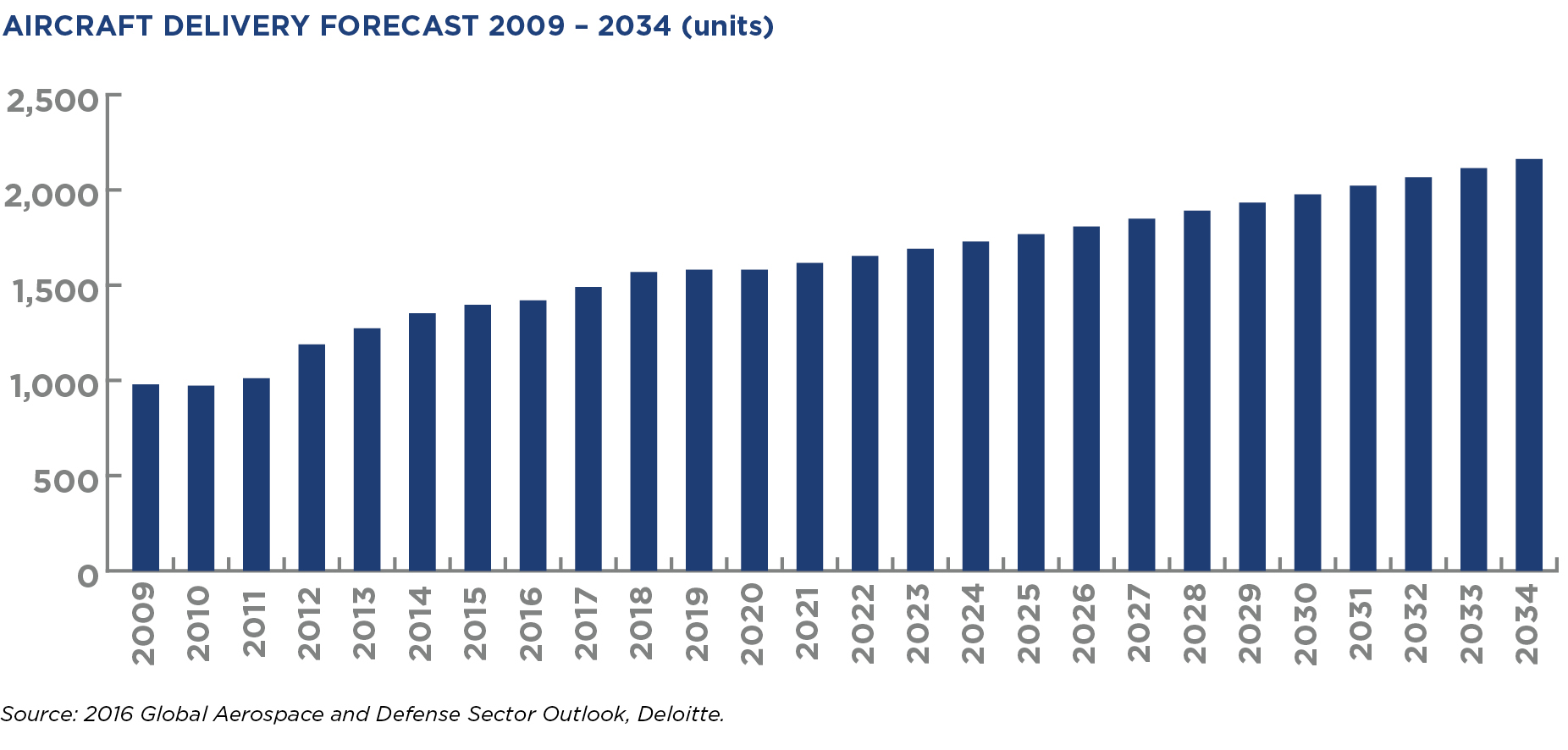
Led by a rise in tourism, increasing global connectivity and helped by lower oil prices, the commercial aerospace sector has enjoyed steady growth over the past five years and, while it faced several difficulties in 2015, expectations are for the industry to keep expanding.
“Across the globe, the industry’s motor is the market, which is evident in the backlogs at the world’s largest aerospace OEMs,” says Luis Lizcano, Director General of FEMIA. Some outlooks project a 5 percent annual growth rate for global air transport over the next 20 years, according to Lizcano.
The two top OEMs, Boeing and Airbus, have a nineyear backlog for airplane deliveries and demand is expected to keep pace. The growth in commercial aircraft production has translated to significant revenue increases for aerospace suppliers, according to Deloitte.
Boeing reported a revenue increase of US$1.49 billion to US$47.38 billion for the first half of 2016 over the previous year, which is a 3.2 percent gain on the previous year. That compares with a jump of 10 percent year on year, in the first half of 2015, although that figure retreated for the full year. For its part, Airbus reported a 0.48 percent decline during the first half of 2016 to €28.76 billion.
The softer figures are not a surprise as the sector appears to be leveling out after five years of record growth. While Boeing posted positive numbers with a year on year 6 percent increase in revenue to US$96.1 billion in 2015, companies based in Mexico were hit by the strong dollar, PwC said in a report. Airbus reported an increase in revenue to €64.5 billion (US$71 billion) in 2015 from €60.7 billion (US$67 billion) but factoring in the exchange rate translates to an 11 percent loss. Bombardier Aerospace, Dassault Aviation and Embraer also saw revenues contract in the same period, registering 6, 5 and 6 percent deficits, respectively.
The year was positive in other areas, however. Both Airbus and Boeing broke records for aircraft deliveries. Boeing delivered 762 aircraft while Airbus managed 635. Boeing also reported 768 new orders and Airbus 1,080. Those numbers were strong even if they did not reach the record-breaking levels of previous years.
Nonetheless, the industry is on solid footing. Driven by a continuous annual increase in passenger traffic and aircraft orders, the aerospace sector is undergoing its most profitable growth cycle, according to PwC.
Smaller aircraft manufacturers also faced a challenging period. Embraer, the third largest commercial aircraft manufacturer after Airbus and Boeing, reported a 6 percent drop in revenue, to US$5.9 billion in 2015 from US$6.3 billion in 2014.
Bombardier Aerospace crossed a rocky road after its bet on the C Series, a family designed for the 100 to 150-passenger segment and to compete with Airbus’ A320 and Boeing’s 737. While this series now has 365 orders, according to the airline, it is also two years behind schedule and more than US$2 billion over its projected US$3.4 billion budget. Company revenue also fell to US$11.2 billion from US$11.9 billion. These drops led the manufacturer to cut its payroll by 7,000 employees while it announced a US$1 billion bailout from its home province of Quebec, Canada in February 2016.
Textron Aviation, which sells Beechcraft, Cessna and Hawker aircraft, also saw its revenue shrink 6 percent.
Other major players in the aerospace sector include Safran, a turbine engineering company that ranks 11th in PwC’s Aerospace & Defense Top 100 aerospace companies for 2015, and Honeywell Aerospace, which makes engines and avionics, and holds the 13th spot on that same list. Both companies faced revenue reductions but at a much smaller 1 and 2 percent, respectively.
OEM AND TIER 1 GROWTH
One way in which aerospace companies reduce operating costs is by expanding their manufacturing chains and moving specific processes to low-cost destinations. In that sense, Mexico has proven to be attractive for the aerospace industry. Most aerospace OEMs operating in the country have expanded from having only a sales office located in the country to full-blown production. Safran, for example, now has 13 manufacturing plants in Mexico.
Safran's plants are divided between Queretaro and Chihuahua and it has announced plans for two more locations in Mexico, one of which will be responsible for manufacturing the CFM LEAP engine. “The LEAP engine project will put us at the forefront of the aerospace industry for the next 20 years,” says Daniel Parfait, President of Safran Mexico.
Honeywell Chihuahua manufactures parts for turbine and auxiliary power units, mainly rotary pieces including blades, impellers, couples and gears, and some static pieces such as the gear box. “Our facilities are home to more than 1,400 machines across four plants,” said Cecilio López, Plant Director of Honeywell Chihuahua.
Textron Aviation has seven facilities in Chihuahua, employing over 1,800 workers, one making wire harnesses, one for fuselage, three for sheet metal and two for special processes.
Despite its drop in revenue, Textron alongside many companies, was attracted to Mexico by lower manufacturing costs, a large pool of potential employees, an ideal location in the NAFTA region and a strong local market.
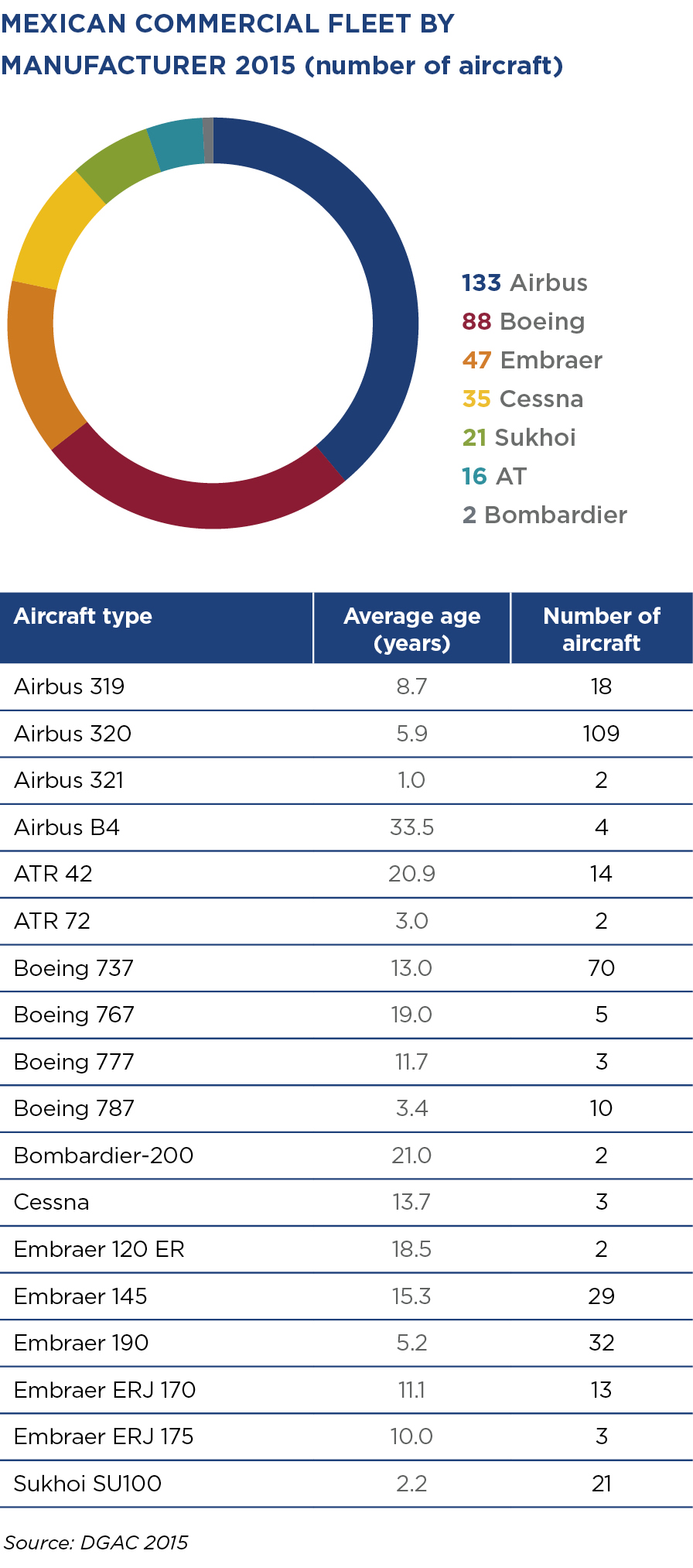
Mexico has the largest number of aircraft in the world after the US. The market is mostly dominated by Airbus, which is preferred by low-cost airline VivaAerobus. This company owns 14 Airbus A320, while Interjet owns 41 Airbus A320 and Volaris has 18 Airbus A319 and 38 A320 units. Aeroméxico on the other hand, the country’s largest and oldest operating airline, prefers Boeing and operates 50 Boeing 737, 4 Boeing 777 and 9 Boeing 787. It also operates a regional airline under the Aeroméxico Connect brand with a fleet composed entirely of Embraer models, 62 aircraft in total.
Other aircraft used by Mexican airlines includes Bombardier, Cessna and Sukhoi, according to DGAC.
You May Like


Most popular








