

Mexico Healthcare Strategy: Personalization and Segmentation


STORY INLINE POST


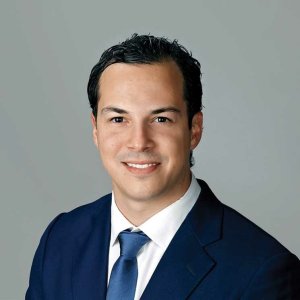



 By Fernando Lledó | CEO -
Mon, 01/19/2026 - 06:30
By Fernando Lledó | CEO -
Mon, 01/19/2026 - 06:30
It’s tempting to talk about Mexico’s comprehensive health market as if it were a single, homogeneous block that you only need to serve in order to grow; however, thinking about it this way is an oversimplification that, in practice, leads to strategies that are ineffective and that lose both impact and credibility. Mexico is not one market, it is a mosaic of demographic, economic, and cultural realities, shaped by needs that call for different solutions for different audiences.
This has a very concrete implication from a comprehensive health company’s perspective: if we design an “average” offering that doesn’t adapt to risks, access, and motivations, we will end up competing in saturated segments and, unintentionally, leaving behind the populations with the greatest need. Reaching different markets in Mexico requires three operational capabilities: differentiating demographics, deploying diverse strategies for diverse audiences, and making personalization the standard, not a luxury.
Differentiating Demographics: Diversity Among Mexicans
Useful segmentation in comprehensive health is not limited to age and gender. In Mexico, demographic differentiation must incorporate at least five layers: life stage, clinical risk, socioeconomic condition, geographic location, and accessibility.
· Life stage and aging: The country is aging, and that changes the market map. It is expected that by 2030 Mexico will reach a stage in which there are more older adults (14.96%) than young people.[1] For the health sector, this represents a structural market shift: it means greater demand for chronic-condition management, rehabilitation, mental health, support for caregivers, clinical continuity, and system navigation. It also creates a new accessibility challenge beyond digital channels, with patients who move at different paces and have different concerns and priorities.
· Clinical risk: Comprehensive health is more than a state of well-being, it is the conversation about prevention as something that is not optional, but rather the foundation for sustaining any long-term business model and an essential pillar of health-sector strategies. This is both an opportunity and a responsibility: there is a huge market for screening, ongoing support, and early care, but only if it is built on trust, accessibility, and continuity.
· Mental health: Building on the previous point, comprehensive health that does not include mental health is incomplete. In this sense, it is important not only to consider demand, since in 2025, 8.1% of the population reported psychological distress in the last 12 months,[2] but also stigma, access barriers, and specialist availability; communicating the importance of emotional wellbeing is not the same for young people as it is for older adults, or for urban versus rural populations.
· Digital divide and geography: Just like the message, the communication channel is not neutral; while digitization opens markets and its popularity has grown in recent years, it is not the only channel that must be considered. Accessibility and understanding are not the same across the country, so the commercial and operational strategy must be adaptive, not static.
How to Reach Different Audiences
A comprehensive health company that aims to reach different markets must give up on a single message and a single channel. In Mexico, strategic diversification must operate across three dimensions: channels, value proposition, and partnerships.
Although digital channels reach a new user peak every year, assuming they are the standard is a mistake; investing in digitization is more important than ever, but neglecting traditional channels harms other segments, widening the digital divide among patients even further.
Channel diversification also translates into strategic partnerships: designing a product is also a joint effort, and combining ideas makes it possible for users to access products that increasingly fit their needs, capabilities, and resources. When only 10% of the population has insurance,[3] it becomes imperative to create alternatives that meet more needs across different demographics. In Mexico, partnerships with pharmacies, laboratories, and community centers can be the difference between doing marketing and truly opening up a market.
The Importance of Personalization
Differentiation is not aesthetic, it is operational; personalization is the bridge between reaching people and keeping them, and in health it is also the bridge between providing care and improving outcomes. Mexico offers a compelling example of why personalization is not a luxury: customers are looking for more flexible, better-adapted policies, and this implementation by insurers will drive loyalty and a stronger market perception.
Thanks to these strategies, we can predict that personalization will deepen even further, with dynamic policies based on behavior and specific customer needs, offers adjusted in real time, and personalized preventive support. In this sense, at Bupa México we launched the new Global Choice Health Plan, a policy with an affordable premium that offers free choice of doctors and hospitals with a lower price since it is addressed to specific zones, in addition to the global coverage.
Finally, I must underscore one condition: personalization in health is only sustainable if it is done with ethics and governance. In Mexico, where institutional distrust can be a barrier as great as price, transparency about data use, informed consent, and information security are not add-ons, but part of the product.
Reaching different markets in comprehensive health in Mexico means understanding that the country lives with multiple realities at the same time: aging, chronic diseases, the digital divide, and accessibility challenges. That is why growth demands discipline, not slogans. The strategy from a responsible CEO is clear: segment rigorously, diversify strategies methodically, and personalize ethically. Whoever executes that triangle will not only grow, but they will also build a more resilient company and, above all, a more useful one for today’s Mexico.
[1] https://www.gob.mx/inapam/articulos/proyecciones-demograficas-de-un-mexico-que-envejece
[2] https://www.gob.mx/cms/uploads/attachment/file/1044513/ENCODAT_-_COMPLETO.pdf
[3] http://amisprensa.org/centrodeinformacionamis/public/documentos/presentacion-conferencia-accidentes-y-enfermedades-09abr2025-vf-solo-lectura-18-36.pdf
You May Like





Most popular








