

Emirates Aims High, With Expanded Networks, Enhanced Services


STORY INLINE POST



 By Óscar Goytia | Journalist & Industry Analyst -
Tue, 07/02/2024 - 09:30
By Óscar Goytia | Journalist & Industry Analyst -
Tue, 07/02/2024 - 09:30
Q: What are Emirates' plans for the Mexican market?
A: Emirates continues to expand its global network. We have over 140 destinations around the world and are always looking for new markets. We recently launched a new route to Bogota, Colombia, and also announced a new route to Madagascar, which will start in September. Besides the hub in Dubai, United Arab Emirates, our key destinations from Mexico to Istanbul, Turkey; Cairo, Egypt; India; and Thailand are also growing significantly.
In Mexico, we maintain a daily flight using a Boeing 777-200LR with capacity for 302 passengers – 38 in business class and 264 in economy. The route is Mexico-Barcelona-Dubai. From Dubai, passengers can connect to all destinations in the Emirates network.
While we do not plan to increase capacity or frequencies to Mexico in the near future, we aim to take advantage of our codeshare agreement with United Airlines and our recently signed interline agreement with Viva Aerobus. These agreements will not only make it easier for Mexican passengers to travel on Emirates via Mexico City and select points in the United States, but it will also allow inbound tourists to Mexico to also reach their final destination in a seamless manner.
Q: What are the main challenges Emirates faces to achieve its short-term goals?
A: One of the main challenges we face is expanding our fleet, which we want to do as soon as possible. This summer, we will receive nine Airbus A350s. These new aircraft will allow us to expand our route network, mainly in the Middle East and some points in the European Union.
In the long term, we plan to receive other types of A350s, which will give us the opportunity to operate long-haul flights to the Americas and some parts of Asia, where there are destinations we do not cover with our existing fleet.
Q: Emirates is one of the youngest and also fastest-growing airlines. What are the keys to this rapid growth?
A: One of the keys is the strategically located hub in Dubai, at the center of the world, according to the people of the United Arab Emirates. In just four hours, we can reach about 30% of the world's population. With an eight-hour flight, we can reach 60% and with a 16-hour flight, we can reach almost 90% of the world’s population. This central location greatly favors connections all over the world.
Dubai's location gives us a competitive advantage in the market. We also have the support of the government of the United Arab Emirates, which understands the value of promoting tourism and trade, and Dubai International Airport, which operates 24 hours a day. Dubai will also build a new airport, representing a US$35 billion investment. The new airport will have five runways and 400 boarding gates. The construction of this new airport, which will take about 10 years, will allow the continued growth not only of Emirates but also of aviation in the United Arab Emirates. For example, Dubai International Airport serves nearly 100 million passengers per year, while the new airport will be able to handle up to 260 million passengers per year.
Q: Why is demand for premium segment seats growing, and what are the reasons for this change in consumer behavior?
A: We see growth in demand because many people are willing to spend a little more to fly comfortably. Our flights are long-haul and, due to their duration, people seek comfort. Since the pandemic, there has been a significant increase in demand because people now have more resources to spend on travel and want to have a comfortable and luxurious experience. They want to enjoy life, which includes traveling in business class, staying in luxury hotels, and spending a little more on experiences.
Our onboard profile and product have always been among the most comfortable in the industry. Emirates was the first airline to put a screen in every seat and in every service cabin. Many people think of Emirates as a luxury airline, and it is, but we also invest a lot in our economy class. Two years ago, Emirates was recognized for having the best economy class by Skytrax. Our economy class experience is exceptional: all seats recline, and all passengers receive at least one hot meal, usually two on 12-hour flights, plus several beverages, including alcoholic drinks. They also have access to a catalog of 6,500 entertainment options, including movies, music, and live sports. Our passengers never miss important events as they can watch them live throughout the flight. This level of service is exceptional in the market, and people are willing to pay a little more for this onboard experience.
Q: What are Emirates' sustainability initiatives, and how does it meet demand for environmentally friendly options?
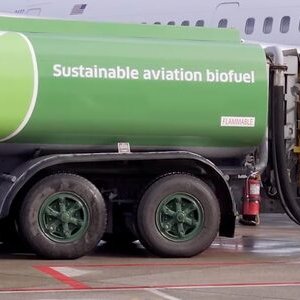
A: The International Air Transport Association (IATA) declared that by 2050 the industry should be carbon neutral. For Emirates, that means maintaining a modern fleet. We have one of the newest fleets in the entire industry, with a significantly lower average age than other airlines. This means that our aircraft use less fuel and are equipped with new-generation, more efficient engines. We are also buying and using sustainable aviation fuel (SAF) in several airports around the world. We expect its availability to grow over time, and we have plans to continue its implementation in the long term.
We have been taking measures to reduce our environmental impact for many years. For example, we completely eliminated single-use plastic items on board our flights and replaced them with more sustainable options, such as bamboo utensils. Although they may seem like small changes, when it comes to a fleet of 250 aircraft flying to multiple destinations daily, these changes have a significant impact on reducing plastic waste and our environmental footprint.
Q: How have you leveraged new technologies to improve the customer experience and the operational control of the entire fleet?
A: Emirates is looking to implement AI in various areas. For example, we could use it on our routes to fly more economically and efficiently, reducing fuel costs. We could also apply AI in crew planning to ensure it is as efficient as possible. In emergency situations, such as bad weather or cancellations, we could use AI to reschedule flights and assist our passengers.
Additionally, in collaboration with IATA and other airlines across the industry, we are implementing a program to reduce turbulence on flights. Aircraft share information with other units in the region, allowing them to avoid areas with turbulence. This is an industry-wide effort to decrease severe turbulence during flights. We work together to improve flight safety and experience in the industry.
Q: How has Emirates been affected by the security crisis facing Boeing and, in general, the increased scrutiny of the aviation industry?
A: Boeing has always been one of the main suppliers for Emirates. We now operate the largest fleet of Boeing 777s in the world. We will continue to work closely with the company in the long term, as it is extremely important to us. More than 130 aircraft in our fleet are Boeing and we have ordered the 777X, although there have been delays in their delivery. While they are going through a difficult period, we are confident Boeing will overcome these challenges.
Q: What goals does Emirates plan to achieve in 2024?
A: Our main goal is always to continue expanding our network, adding more destinations to the Emirates network, and introducing new onboard products for our passengers. For example, we are introducing Premium Economy in several markets and we plan to retrofit the Boeing 777 to achieve it. We also have plans to implement a new business class on the Boeing 777, with a 1-2-1 seat configuration, which will require a two-week process to update the cabin and seats.
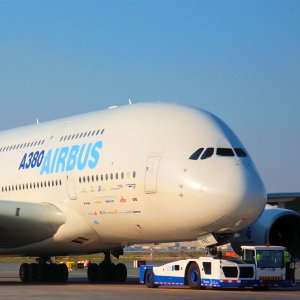
We will continue to offer our first class product on the A380, which includes 14 private suites and two spa showers on board. We also have an onboard lounge for business class passengers, where they can socialize, have a drink, and enjoy the flight. This is a unique product in the industry, and we plan to continue offering it on our routes for many years to come.
Emirates, an airline based in Dubai, United Arab Emirates, operates one of the largest and youngest fleets, composed mainly of Airbus A380s and Boeing 777s, serving over 140 destinations globally.
You May Like

Most popular





