


IATA Urges Realistic EU SAF Policies as Costs Climb
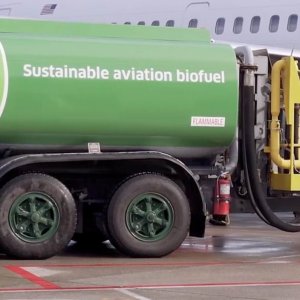
The International Air Transport Association (IATA) warned that the European Union’s ReFuelEU Aviation mandate is raising operating costs for airlines without sufficiently increasing sustainable aviation fuel (SAF) production. Speaking at IATA’s World Sustainability Symposium, Director General Willie Walsh called the regulation “not fit for purpose.”
Walsh noted that airlines are absorbing most of the mandate’s cost impact. While committed to achieving net-zero emissions by 2050, the aviation sector argues that policy must reflect current production realities. “Instead of increasing SAF production as regulators intended, the mandate has caused prices to rise without meeting production targets,” he said.
A report from the European Union Aviation Safety Agency (EASA) showed SAF accounted for only 0.6% of total aviation fuel at EU airports in 2024. The mandate requires 2% SAF blending in 2025 and 6% by 2030—levels Walsh said cannot be met under current production.
IATA estimates the transition to net-zero emissions will cost around US$174 billion per year, or nearly US$35 per passenger annually, far exceeding the current average profit of US$7 per passenger, increasing financial pressure on airlines.
Marie Owens Thomsen, IATA Chief Economist and SVP of Sustainability, emphasized that decarbonization remains essential but must be backed by policies that expand supply instead of raising costs. Walsh called for a redesign of ReFuelEU, stating: “If levies do not lead to a significant increase in SAF production, they are not meeting their purpose.”
He cited the United States as a model, where incentives have accelerated SAF development. EASA data shows SAF prices averaged US$2,400 per ton in 2024, compared with US$852 per ton for conventional jet fuel. Walsh criticized fuel producers, saying SAF prices “are set far above conventional fuel without justification tied to production capacity.”
IATA reiterated that public policy should focus on scaling production through investment incentives, regulatory certainty, and technological development to create a viable SAF market.
Most popular








