LATAM Group Posts 6.6% Passenger Growth in 2025
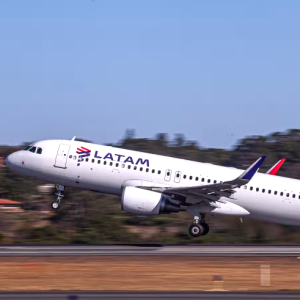
LATAM Group transported 87.4 million passengers in 2025, a 6.6% increase compared with 2024, according to the company’s December operational statistics. The expansion was driven by growth in Brazil’s domestic market and a recovery in international travel demand across Latin America and the United States.
In December alone, LATAM carried 7.9 million passengers, up 7.6% year on year. The group expanded consolidated capacity, measured in available seat kilometers (ASK), by 10.9%. LATAM Airlines Brazil recorded an 11.9% increase in domestic capacity, while international operations grew 13.9%.
The company said the capacity expansion reflects network adjustments aimed at aligning supply with demand trends in long-haul and intra-regional markets. LATAM also reported the launch of 10 new routes in December, including two long-haul connections—Santiago–Buenos Aires (Ezeiza)–Miami and Guayaquil–New York—which it described as part of a strategy to strengthen connectivity between South America and North America.
Consolidated passenger traffic, measured in revenue passenger kilometers (RPK), rose 10.5% compared with December 2024, while the group’s consolidated load factor reached 84.5% for the month. Cargo capacity, measured in available ton kilometers (ATK), totaled 731 million in December.
Across 2025, LATAM added eight destinations. Fernando de Noronha, Curaçao, and Tucuman expanded the group’s network in Caribbean and South American markets. As of year-end, LATAM served 160 passenger destinations across 27 countries.
The company said that its most active daily routes in 2025 were Cuzco–Lima; São Paulo (Congonhas)–Rio de Janeiro (Santos Dumont); Bogota–Medellín; Arequipa–Lima; and Brasília–São Paulo (Congonhas). LATAM stated that the concentration of flight frequencies on these markets reflects the relative strength of domestic and regional corridors.
The airline attributed its performance to market dynamics in Brazil and the continued normalization of long-haul demand. In its operational report, the airline said its network expansion “responds to sustained demand in domestic markets and adjustments in international itineraries to support connectivity and price competitiveness,” adding that its destination mix helps balance seasonal demand and optimize fleet utilization.
LATAM is also positioning itself as one of the region’s advancing sustainable aviation fuel (SAF) development. In July 2025, the carrier signed a five-year agreement with Colombia’s Fedepalma to promote SAF production from palm-based feedstocks and position the country as a regional supplier. The partnership includes engagement with policymakers, technical education initiatives, and visibility campaigns, while leveraging the palm oil sector’s sustainability credentials and economic footprint. LATAM has also operated SAF-powered flights and supported Colombia’s SAF roadmap as part of broader regional efforts to accelerate aviation’s energy transition.
Industry analysts note that LATAM’s growth aligns with broader consolidation trends in Latin America and the recovery of corporate and leisure travel. The expansion of long-haul connectivity is also viewed as a move to strengthen the airline’s competitive positioning ahead of 2026 planning cycles, particularly in trans-American and intra-South American markets.
You May Like






Most popular