


Mexico Faces Air Traffic Controller Shortage Amid Low Funding
 By Teresa De Alba | Jr Journalist & Industry Analyst -
Tue, 08/26/2025 - 15:55
By Teresa De Alba | Jr Journalist & Industry Analyst -
Tue, 08/26/2025 - 15:55
A nationwide shortage of air traffic controllers in Mexico is being driven by insufficient federal budget allocations to the air navigation sector, according to José Alfredo Covarrubias Aguilar, Secretary General, National Union of Air Traffic Controllers (Sinacta).
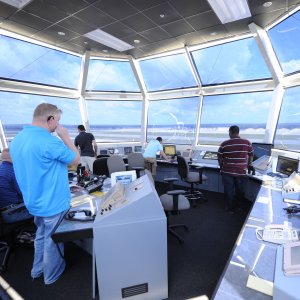
“There is not enough budget dedicated to this fundamental sector responsible for ensuring air traffic safety, order, and flow,” Covarrubias said in an interview. He added that the staffing deficit has led to excessive workloads, with shifts extending beyond the standard seven-hour workday. Across many towers in the country, staffing remains far below operational needs.
“Some towers are operating with only eight to ten controllers, but only half are on duty due to the lack of available staff,” he said. “We estimate that most airports are operating with at most 80% of the required controllers.” Currently, 1,050 certified controllers oversee operations at more than 60 airports in Mexico. According to Sinacta, at least 500 additional professionals are needed to meet operational safety and efficiency standards. Only 100 new hires have been made this year.
Covarrubias emphasized that this is not a new issue, stating, “This is not a new request — we have made the same demand over past administrations.” In Tampico, for example, only four controllers are available to cover two operating positions over an entire week, without scheduled rest. He warned that this environment creates unacceptable safety risks. “People are overworked, already at their limit. It’s not that we’ll strike—this system will collapse on its own,” he said.
Training new controllers is not a quick fix. Covarrubias noted that becoming fully operational can take up to four years, including two years of academic preparation and two years of supervised field training. In the meantime, existing staff must shoulder the burden.
Despite the resource shortages, Covarrubias said flight operations remain technically safe. “Operations are safe insofar as we are able to carry out the work. No controller is going to put themselves at risk,” he said. However, he warned that continued underfunding could gradually erode this margin of safety.
While the Ministry of Infrastructure, Communications and Transport (SICT) and the Airspace Navigation Services of Mexico (Seneam) have expressed support for Sinacta’s assessment, Covarrubias said the Ministry of Finance has so far refused to increase funding. “We are calling on the Ministry of Finance and the Ministry of the Interior to release resources,” he said. “Increasing risks indiscriminately can lead to accidents. According to national security laws, controllers are essential for monitoring and managing airspace.”
In addition to personnel shortages, Covarrubias highlighted chronic infrastructure issues. Many of Mexico’s control towers still rely on outdated radar and communications systems that have not been modernized with newer technologies such as automation or artificial intelligence. Controllers are forced to manage flights using manual processes, particularly during high-stress situations. Authorities have acknowledged these limitations but cite budget constraints for the lack of investment, even as national air traffic grows at a rate of 5% annually.
The strain extends to training systems as well. Seneam’s training programs have seen reductions in simulation hours and live-practice sessions due to financial limitations. As a result, new hires often enter the workforce with fewer than the 200 hours of training recommended by international standards. Internal evaluations have called for the government to establish partnerships with foreign training institutions to improve controller readiness, particularly for responding to emergencies such as severe weather or equipment failure.
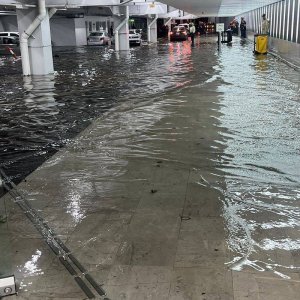
Conditions at Mexico City International Airport have drawn specific attention. Covarrubias reported that during severe storms in early August, air traffic control staff were forced to redirect flights under difficult visibility conditions. As a result, 120 flights were delayed, affecting approximately 19,500 passengers. “When operations are suspended, we coordinate directly with pilots to divert aircraft to alternate airports according to flight plans,” he said. “If those terminals reach capacity, we must search for other available aerodromes. Then we wait for conditions to improve before gradually allowing flights to land. These are workload spikes that aren’t visible to the public.”
Workplace conditions compound the broader operational risks. Many controllers are working shifts longer than 12 hours and have not received a wage increase in six years. “There’s growing dissatisfaction,” said Covarrubias. “People are tired. Many are underpaid and overworked.” In 2023 alone, analysts estimate that delays attributed to air traffic control deficiencies cost the aviation sector roughly US$500 million in lost revenue and passenger disruption.
Staffing challenges are even more acute in peripheral regions. While airports in cities like Monterrey and Guadalajara are understaffed, smaller regional airports in northern and southern states often operate with severely reduced crews. In many cases, controllers must take on multiple roles simultaneously. This decentralization of limited resources weakens the national airspace system and increases dependence on foreign aviation expertise. Experts have warned that more robust domestic investment could reduce this reliance and enhance system resilience.
You May Like


Most popular








