


UAEMEX, AEM Launch Educational Program on Satellite Integration
 By Óscar Goytia | Journalist & Industry Analyst -
Mon, 03/25/2024 - 16:47
By Óscar Goytia | Journalist & Industry Analyst -
Mon, 03/25/2024 - 16:47
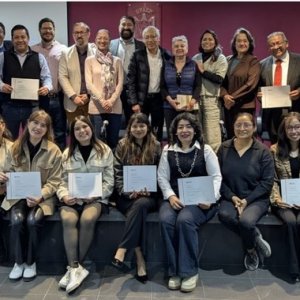
The Autonomous University of the State of Mexico (UAEMEX), in partnership with the Mexican Space Agency (AEM), has initiated an educational program aimed at cultivating the first group of specialists in satellite integration, utilizing its educational Nanosatellite "AtlaCom-1."
Francisco Zepeda Mondragón, Secretary of Extension and Collaboration, UAEMEX, expressed gratitude for the support from Dean Carlos Eduardo Barrera Díaz, enabling groundbreaking initiatives like the "Train the Trainers" program, solidifying the institution's role as a national leader in the space sector.
"We firmly believe that the State of Mexico, through UAEMEX, will play a crucial role in propelling Mexico into the nanosatellite industry, which globally represents an average revenue of US$4 billion," emphasized Zepeda.
Aligned with the United Nations Sustainable Development Goals (SDGs), specialists from the National Laboratory of Earth Observation (LANOT) at the Faculty of Geography and the Atlacomulco University Center of UAEMEX are actively engaged in this collaboration.
Salvador Landeros Ayala, Director-General, AEM, underscored the significance of UAEMEX's integration into the space era under Dean Barrera's leadership, noting its distinction as the second state public university nationwide to possess LANOT satellite data and images.
Additionally, AEM is extending support to Guerrero's Autonomous University (UAGRO) by offering the same nanosatellite integration course, enhancing their capacity to assist civil protection efforts during natural disasters.
Guillermo Castro Sandoval, Director of Interinstitutional Relations, AEM, commended Dean Barrera's forward-thinking initiatives, positioning the institution at the forefront of national advancements in artificial intelligence for nanosatellite control and power systems design.
Participants in the specialist training course are already involved in employing artificial intelligence techniques for various complex tasks in nanosatellites, such as voltage regulator adjustments and altitude regulation using PID controllers and genetic algorithms.
These specialists will further educate aspiring individuals in nanosatellite development using equipment like the "FlatSat-AtlaCom-1," donated to UAEMEX, facilitating complete system and software emulation for future satellite missions and launches.
You May Like


Most popular








