


Mexico Launches GXIBA-1 Nanosatellite to Track Volcanoes in 2025
 By Reneé Lerma | Journalist & Industry Analyst -
Wed, 12/18/2024 - 10:29
By Reneé Lerma | Journalist & Industry Analyst -
Wed, 12/18/2024 - 10:29
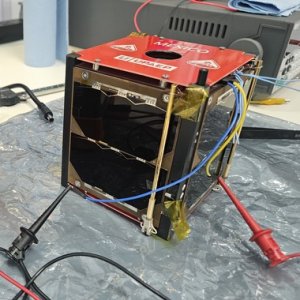
In 2025, Mexico will advance further in space exploration with the launch of its second nanosatellite, GXIBA-1. The mission, conducted in partnership with the Japan Aerospace Exploration Agency (JAXA) and the United Nations Office for Outer Space Affairs (UNOOSA), will take place from the International Space Station (ISS). This follows the successful deployment of AztechSat-1, Mexico's inaugural nanosatellite, in 2019.
The core objective of GXIBA-1 is to monitor active volcanoes, with a particular focus on Popocatépetl, one of Mexico's most volatile and hazardous volcanoes. The satellite will study volcanic gases, including carbon dioxide (CO₂) and sulfur dioxide (SO₂), to enhance early warning systems for eruptions.
Equipped with cutting-edge sensors, the nanosatellite will detect and analyze these gases in real-time, providing vital data to improve eruption prediction accuracy.
What sets GXIBA-1 apart is its integration of artificial intelligence. By utilizing machine learning and deep learning, the satellite will process volcanic gas data to identify patterns that may signal an impending eruption. This advanced technology will enable scientists to better predict eruptions, improving the timeliness of evacuations and emergency response efforts.
This mission is part of the Monitoring and Exploration of Active Volcanoes (MEVA) program, which aims to bolster Mexico’s ability to monitor and predict volcanic activity. The long-term goal is to protect the communities living in close proximity to active volcanoes by providing more accurate behavioral insights.
In 2022, GXIBA-1 was selected as part of the KiboCUBE program, a global competition managed by JAXA and UNOOSA. The launch of GXIBA-1 also continues the achievements of AztechSat-1, Mexico’s first nanosatellite. Recognized by NASA for its innovative design, AztechSat-1 was a landmark achievement in Mexico’s space exploration journey.
The development of GXIBA-1 was led by the Popular Autonomous University of the State of Puebla (UPAEP), in collaboration with the Mexican Space Agency (AEM). The satellite's name, "GXIBA," comes from the Zapotec language, meaning "universe" or "stars."



Most popular








