


Mexico City Declares Agricultural Terraces Cultural Heritage
The government of Mexico City formally declared the Agricultural Terraces of the Hill Zones of Xochimilco, Tlahuac, Milpa Alta, and Iztapalapa as Biocultural Heritage of the city, according to a decree published in the Official Gazette on June 6, 2025. The declaration, signed by Mayor Clara Brugada, gives legal recognition to these centuries-old agricultural systems, acknowledging their role in sustainable food production and the preservation of traditional knowledge held by local communities.
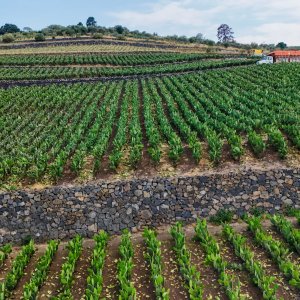
These terraces, built without mortar and using volcanic rock from the Teuhtli region, date back to pre-Hispanic times. Their construction involves the strategic placement of stones on sloped terrain to create flat farming areas. This technique helps retain soil moisture, control erosion, and maintain fertility, allowing for continued agricultural use in mountainous landscapes.
The move also aims to protect the terraces through a collaborative management plan, which is currently under development by the Ministry of Indigenous Peoples and Communities, in coordination with the Ministry of Culture, the Ministry of the Environment, the Commission of Natural Resources and Rural Development (CORENADR), and local producers.
The terraces’ designation as Biocultural Heritage grants them the status of public interest assets, making them eligible for public funding, educational programs, tourism promotion, and participatory management strategies across sectors.
Economically, these terraces support food production in hard-to-reach areas. Culturally, they reflect a deep-rooted identity preserved by local communities. Environmentally, they contribute to biodiversity conservation.
The declaration follows efforts by the city’s environmental authority, SEDEMA, and its Directorate General of CORENADR, which have spearheaded the conservation of these systems. Through the Altépetl Bienestar program, authorities have restored over 1,800m of terraces on the slopes of the Teuhtli volcano, conducted community workshops, and published a book on the historical relevance of the terraces.



Most popular








