


US Unveils US$12 Billion Aid Plan for Farmers
 By Eliza Galeana | Junior Journalist & Industry Analyst -
Wed, 12/10/2025 - 16:19
By Eliza Galeana | Junior Journalist & Industry Analyst -
Wed, 12/10/2025 - 16:19
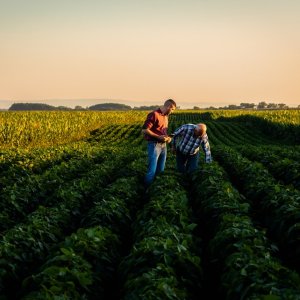
The US government has announced a multi-billion-dollar aid package for American farmers. Over the past year, key producers have been hit hard by the ongoing trade war with China, growing tensions with Mexico, and persistent inflation. During a roundtable with agricultural sector representatives held on Monday, President Donald Trump, together with Brooke L. Rollins, US Secretary of Agriculture, announced that the US Department of Agriculture (USDA) will make US$12 billion available in one-time bridge payments to American farmers in response to temporary trade market disruptions and rising production costs.
Regarding the origin of the funds, President Trump explained that they will come from tariff revenue. “I am delighted to announce this afternoon that the United States will be taking a small portion of the hundreds of billions of dollars we receive in tariffs… and we are going to be giving and providing it to the farmers in economic assistance. And we love our farmers,” the president said.
Of the total amount allocated, up to US$11 billion will be used for the Farmer Bridge Assistance (FBA) Program, which supports producers of barley, chickpeas, corn, cotton, lentils, oats, peanuts, peas, rice, sorghum, soybeans, wheat, canola, crambe, flax, mustard, rapeseed, safflower, sesame, and sunflower. The remaining US$1 billion will be designated for commodities not covered by the FBA Program, such as specialty crops and sugar.
This financial package is intended to address market disruptions, elevated input costs, persistent inflation, and market losses caused by foreign competitors. “The plan we are announcing today ensures American farmers can continue to plan for the next crop year. This program will allow farmers to leverage strengthened price-protection risk-management tools and the reliability of fair trade deals so they do not have to depend on large ad-hoc assistance packages from the government,” Rollins said.
The aid comes at a time when the US–China trade dispute has hit soybean farmers especially hard over the past year. Traditionally, China has been the world’s largest soybean importer, while the United States ranked among its main suppliers. However, tariff measures imposed by the US government led to a drop of nearly one-fifth in Chinese purchases from the United States.
In this context, following a meeting between Trump and Chinese President Xi in late October, the two countries announced a framework trade agreement in which China committed to purchase 12Mt of soybeans during the final two months of this year and 25Mt in 2026, 2027, and 2028, volumes comparable to levels before the trade war. However, USDA data indicates that so far, China has only purchased about 2.2Mt of US soybeans since the end of October.
This loss of demand has pressured soybean prices and cost American farmers billions of dollars in lost sales. Between January and July, total US soybean exports fell by 8% in volume compared with the same period a year earlier. In 2024, the United States exported nearly 27Mt of soybeans to China, worth US$12.64 billion, and 10 Mt to the European Union and Mexico, its second- and third-largest buyers.
Earlier this week, Trump also threatened to impose an additional 5% tariff on Mexico in a dispute over water supplies to US farmers. The conflict centers on the 1944 Water Treaty, a binational agreement that regulates how both countries share water from border reservoirs. “...The longer Mexico takes to release the water, the more our Farmers are hurt. Mexico has an obligation to FIX THIS NOW,” Trump posted on social media.
In response, Roberto Velasco, Deputy Minister for North America, Ministry of Foreign Affairs, explained that between 2022 and 2024 it was impossible for Mexico to deliver water to the United States due to the severe drought that affected northern Mexico. “According to the treaty, when this occurs, our country may supply the missing volume during the next cycle,” Velasco noted.
President Sheinbaum added that Mexico has increased deliveries whenever rainfall has allowed during 2024–2025 and remains committed to settling outstanding volumes during the next cycle, as the treaty permits, without compromising the human right to water or domestic agricultural production. She further assured that Mexico is committed to fulfilling its treaty obligations, but warned that demands for immediate, large-scale releases ignore the reality on the ground.
You May Like


Most popular








