


GM Develops LMR Batteries for Silverado, Escalade EVs by 2028
General Motors (GM) is advancing lithium manganese-rich (LMR) battery technology, targeting deployment in full-size electric trucks and SUVs, such as the Chevrolet Silverado and Escalade IQ, by 2028.
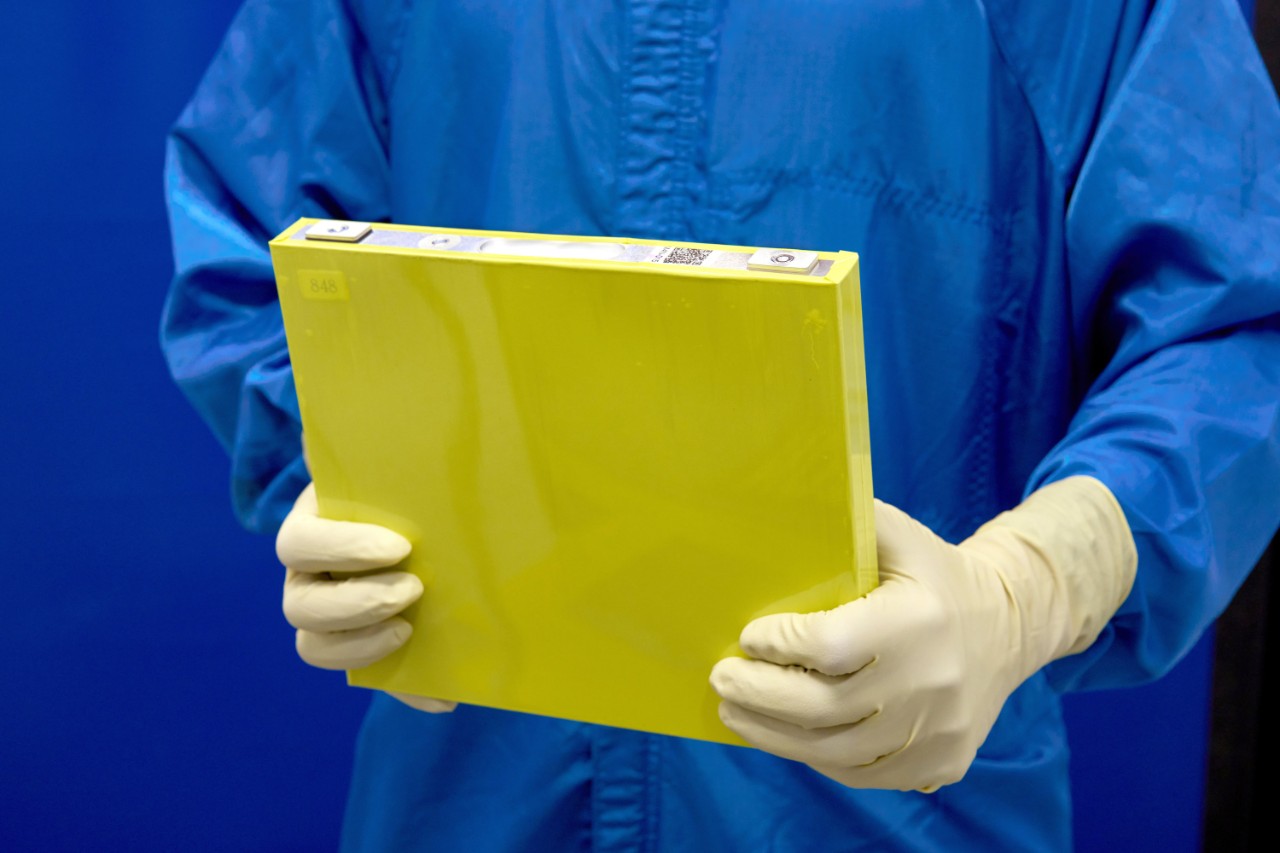
The new LMR prismatic battery cells will be manufactured by Ultium Cells, a joint venture with LG Energy Solution. Commercial production is slated for 2028, with preproduction beginning in late 2027. This initiative marks a departure from GM’s current reliance on high-nickel pouch cells in the U.S. and cylindrical cells in China.
“We are going through a massive growth phase in our EV side of the business. We are really building an electrification powerhouse,” said Kurt Kelty, GM’s Vice President of Battery, Propulsion, and Sustainability.
LMR batteries aim to replace or supplement GM’s existing lithium-ion technology by incorporating higher proportions of manganese, significantly reducing dependence on expensive and ethically contentious materials like cobalt.
“We like to joke that it’s as cheap as dirt,” remarked Andrew Oury, a GM battery engineer, referring to manganese’s abundance.
Research into manganese-rich lithium-ion batteries began at GM in 2015, with increased investments and prototyping in recent years. To date, around 300 full-size LMR battery cells have been developed. The prismatic design of these cells enhances space utilization, resulting in lighter battery packs. GM expects this design to cut hundreds of pounds from large EVs, reduce parts by 50%, and simplify battery module components.
LMR batteries are projected to offer a 33% increase in energy density compared to lithium iron phosphate (LFP) cells, enabling a range of up to 400 miles per charge—an improvement over the 300–320 miles typical of GM’s high-nickel batteries.
“The EV growth rate is really dependent on how quickly we can bring costs down. Batteries account for roughly 30–40% of vehicle costs, so reducing these costs significantly, as we are doing here, makes EVs more affordable for consumers,” Kelty explained.
While GM did not disclose precise production costs, Kelty highlighted a US$60 per kilowatt-hour (kWh) cost reduction over the past year. Analysts like Sam Abuelsamid, VP of market research, Telemetry, estimate LMR battery costs at US$80–US$90 per kWh, compared to US$125 per kWh for high-nickel batteries. BloombergNEF reported an industry average of US$115 per kWh in 2024.
“LMR unlocks premium range and performance at an affordable cost. It is a game-changing battery for electric trucks,” said Kelty.
You May Like






Most popular








