


GM Plans Production Relocation from Mexico to US by 2027
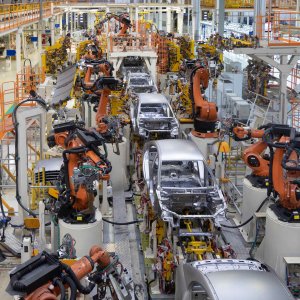
General Motors (GM) announced a US$4 billion investment plan to expand production capacity across three US plants, signaling a partial shift in manufacturing of the Chevrolet Blazer and Equinox SUVs from Mexico to the United States beginning in 2027.
The company emphasized that the reconfiguration will not lead to plant closures or workforce reductions in Mexico. “GM informed me that its plants in Ramos Arizpe, Silao, San Luis Potosi, and Toluca will continue operating normally with their personnel intact. There are no plans for closures or layoffs. GM remains committed to Mexico,” stated Marcelo Ebrard, Mexico’s Minister of Economy.
Currently, the gasoline-powered Chevrolet Equinox and Blazer are assembled in San Luis Potosi and Ramos Arizpe, respectively. Starting in 2027, these models will also be produced in the United States to meet rising domestic demand. GM noted a 30% year-over-year increase in Equinox sales in the United States during 1Q25 as a key factor driving the expansion.
"The Kansas City plant will begin producing the gasoline-powered Chevrolet Equinox in mid-2027,” GM announced. Meanwhile, the Spring Hill, Tennessee facility will add production of the gasoline-powered Chevrolet Blazer alongside its existing lineup, which includes the electric Cadillac LYRIQ and VISTIQ, as well as the gasoline-powered Cadillac XT5.
At the Orion Assembly plant in Michigan, GM plans to produce large SUVs and light-duty pickups with internal combustion engines starting in early 2027. This marks a change from the plant’s previous plan to focus on electric pickup production beginning in 2026.
This strategic adjustment reflects GM’s evolving approach to electric vehicle (EV) rollout timelines. While the company initially aimed to phase out internal combustion engine (ICE) vehicles by 2035, current market conditions have prompted a more balanced strategy, maintaining both gasoline and electric models in its portfolio.
“These investments are not a relocation of production but part of a strategy to strengthen North America as a whole. Our operations in Mexico remain vital to our flexible manufacturing footprint across the region. We continue to evaluate future investment opportunities within our global manufacturing network,” GM representatives in Mexico told El Economista.
In parallel with its US investments, GM reaffirmed its commitment to EV production in Mexico. In 2024, the company invested over US$1 billion in its Ramos Arizpe plant to convert it into a dedicated EV facility. This site now produces the Equinox EV, Blazer EV, Cadillac Optiq, and Honda Prologue. With the gasoline-powered Blazer shifting to Tennessee, production capacity in Coahuila will focus exclusively on EVs.
GM’s manufacturing expansion in the United States is supported by additional investments in powertrain facilities. The company recently allocated US$888 million to its Tonawanda plant in New York to support the next generation of V8 gasoline engines. Combined, these investments will enable GM to manufacture over 2 million vehicles annually in the United States.
“No president has shown greater interest in reviving the US automotive industry than President Trump, and GM’s investment adds to historic commitments to build in America,” said Kush Desai, White House spokesperson. This statement follows increased tariffs on imported vehicles and proposed federal policies to limit zero-emission mandates from states like California.
According to sources cited by Reuters, GM CEO Mary Barra met with President Trump earlier this year, requesting regulatory flexibility on fuel efficiency and emissions standards in exchange for US production expansion. A forthcoming federal law is expected to override California’s zero-emission vehicle sales mandate set for 2035.
Despite these shifts, GM affirmed Mexico’s ongoing role in its global supply chain. “Our Mexican plants will continue their production schedule through that time and remain an integral part of our global manufacturing footprint,” the company stated.
You May Like






Most popular








