


Mexico’s INA Tackles Talent Gaps Amid Electromobility Shift
 By Óscar Goytia | Journalist & Industry Analyst -
Wed, 07/23/2025 - 17:58
By Óscar Goytia | Journalist & Industry Analyst -
Wed, 07/23/2025 - 17:58
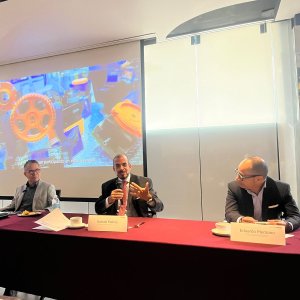
The National Auto Parts Industry Association of Mexico (INA) has announced a series of coordinated initiatives aimed at tackling two pressing challenges in the country’s automotive sector: the shortage of specialized talent during the shift to electromobility and the lack of dependable data in the aftermarket segment. These efforts were unveiled at the INA PAACE Automechanika México 2025 event.
“Mexico doubled its electric vehicle production in 2024, and the domestic market is expected to reach US$5 billion by 2029,” stated Francisco González, INA President. He highlighted a McKinsey report forecasting electric vehicles to comprise 42% of the global market by 2030, with batteries accounting for about 40% of the vehicle’s total cost.
INA reveals that 70% of auto parts companies in Mexico face difficulties filling technical roles. “This talent gap impacts not only manufacturing but also sales, digital marketing, and supply chain operations,” González emphasized. Key positions in demand include electrical engineers, automation and robotics experts, automotive software developers, data analysts, machine learning specialists, and robotics maintenance technicians.
According to Mexico’s Ministry of Public Education (SEP), 30% of students enrolled in automotive-related fields drop out during their first year. Additionally, data from ManpowerGroup indicates that 70% of companies in the industry struggle to recruit technical talent. “The transition to new technologies is inevitable. INA is committed to co-developing a new training model tailored to the automotive sector’s transformation,” said Gabriel Padilla, INA’s General Director.
In collaboration with industry bodies such as the Mexican Association of the Automotive Industry (AMIA), the National Association of Bus, Truck, and Tractor Producers (ANPACT), and the National Association of Universities and Higher Education Institutions (ANUIES), INA has outlined four strategic areas to modernize technical education:
-
Modular, Agile Curricula: “With rapid industry changes, programs need flexible three-to-six-month modules that can be updated and combined to match real-world needs,” explained Padilla.
-
Hybrid and Digital Learning: “Students in Hermosillo deserve the same quality education as those in Bajío. Blending digital platforms with hands-on workshops is essential,” he added.
-
Certification and Microcredentials: INA is piloting a certification system with partners to validate both technical and soft skills.
-
Focused Technical and Socioemotional Training: Priority will be given to fields like automotive mechatronics, battery technology, autonomous systems, artificial intelligence, power electronics, and ethics related to vehicle autonomy.
Padilla underscored the importance of multi-sector collaboration: “We are witnessing unprecedented cooperation among clusters, academia, and government. If these proposals are adopted as public policy, we can collectively create a national asset.”
Additionally, INA launched a Market Intelligence Committee in partnership with the National Association of Representatives, Importers, and Distributors of Auto Parts (ARIDRA) to tackle the aftermarket’s data deficiencies. This initiative aims to standardize performance indicators and consolidate market information to support data-driven decision-making.
You May Like




Most popular








