Renewables Saved US$57 Billion in Fossil Fuel Costs in 2024
 By Andrea Valeria Díaz Tolivia | Journalist & Industry Analyst -
Tue, 07/29/2025 - 14:12
By Andrea Valeria Díaz Tolivia | Journalist & Industry Analyst -
Tue, 07/29/2025 - 14:12
The global push toward clean energy delivered tangible economic gains in 2024, with newly installed renewable capacity helping avoid fossil fuel costs worth about US$57 billion, according to the International Renewable Energy Agency (IRENA). That savings came on the back of a record 582GW of new renewable capacity, 91% of which was more cost-effective than any new fossil-based generation alternative.
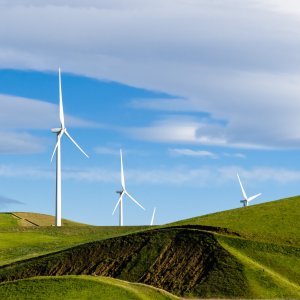
Solar and wind remained the driving forces behind those savings. Solar photovoltaic (PV) projects commissioned in 2024 were, on average, 41% cheaper than the lowest-cost fossil options, while onshore wind came in at 53% cheaper. Onshore wind was once again the world’s most affordable source of new electricity, with an average levelized cost of US$0.034/kWh, followed by solar PV at US$0.043/kWh.
Mexico contributed to this trend with an estimated US$2.4 billion in avoided fossil fuel expenses last year. That figure places the country behind only Brazil in the Latin American region, where the power matrix is nearly 90% renewable. Brazil not only led Latin America but surpassed the United States in fossil fuel cost savings, reaching US$28.3 billion compared to US$24.1 billion in the United States. China led the global rankings with US$179.8 billion saved.
“The economics of renewables have decisively turned in their favor,” says Francesco La Camera, Director General, IRENA. “But this progress is not guaranteed. The energy transition is now irreversible, yet its pace and fairness depend on the choices we make today, especially in the Global South.”
La Camera warns that geopolitical uncertainty, tariffs, and supply chain bottlenecks risk undermining recent cost declines. He calls for international collaboration and stable investment environments to maintain momentum.
While renewables are becoming more affordable, integration challenges continue to slow deployment. In both developed and emerging markets such as Mexico, wind and solar projects face grid connection bottlenecks, delayed permitting, and weak local supply chains. Grid infrastructure investment is increasingly critical, especially as electricity demand grows alongside clean energy additions.
Financing remains another key challenge. While power purchase agreements (PPA) have helped unlock capital for projects, uneven policy frameworks and procurement processes in many countries continue to deter investment. In the Global South, high capital costs, driven by macroeconomic volatility and perceived risk, are still inflating the levelized cost of electricity (LCOE) for renewables.
Cost Breakdown by Energy Source
Hydropower projects commissioned in 2024 saw their global weighted average LCOE fall to US$0.057/kWh, a modest 2% drop from the previous year. Yet that cost remains around 30% higher than in 2010. Installed costs for hydro fell 21% year-on-year to US$2,267/kW, largely due to deployment shifts from North America to Asia and South America. Globally, 9.3GW of new hydropower capacity (excluding pumped storage) came online last year.
Geothermal energy also expanded, albeit modestly. Roughly 320MW of new capacity was added, bringing the global total to 15.4GW. Costs trended downward: the LCOE dropped 16% to US$0.060/kWh, and installed costs declined to US$4,015/kW. The top five geothermal markets remained unchanged, led by the United States, followed by the Philippines, Indonesia, Mexico, and New Zealand. Despite growth, geothermal still represents just 0.35% of total renewable installed capacity.
Bioenergy showed a more erratic cost trajectory. The LCOE for newly commissioned bioenergy projects in 2024 rose to US$0.087/kWh, up 19% from the previous year and 1% higher than in 2010. Total installed costs also rose 16% year-over-year, reaching US$3,242/kW. Around 5.1GW of new bioenergy capacity was installed, representing just 1% of total global renewable additions.
Beyond generation technologies, battery storage continues to reshape the renewable energy landscape. The cost of utility-scale battery energy storage systems has plummeted 93% since 2010, hitting US$192/kWh in 2024. Capacity additions have soared accordingly, from just 0.1GWh in 2010 to 169GWh last year. IRENA attributes this progress to economies of scale, improved materials, and increasingly efficient production methods.
Despite record-breaking progress in 2024, IRENA’s report makes clear that the affordability and scalability of renewables are not guaranteed, and access remains uneven across the globe. Policy coherence, investment certainty, and grid readiness will be crucial to maintain the pace of deployment and ensure equitable energy transitions, particularly in emerging economies.
“We must reinforce international cooperation, secure open and resilient supply chains, and create stable policy and investment frameworks,” says La Camera. “The transition to renewables is irreversible, but its pace and fairness depend on the choices we make today.”
Most popular