


Finance Summit Highlights Evolving Role of Modern CFOs
 By Aura Moreno | Journalist & Industry Analyst -
Wed, 09/17/2025 - 08:58
By Aura Moreno | Journalist & Industry Analyst -
Wed, 09/17/2025 - 08:58
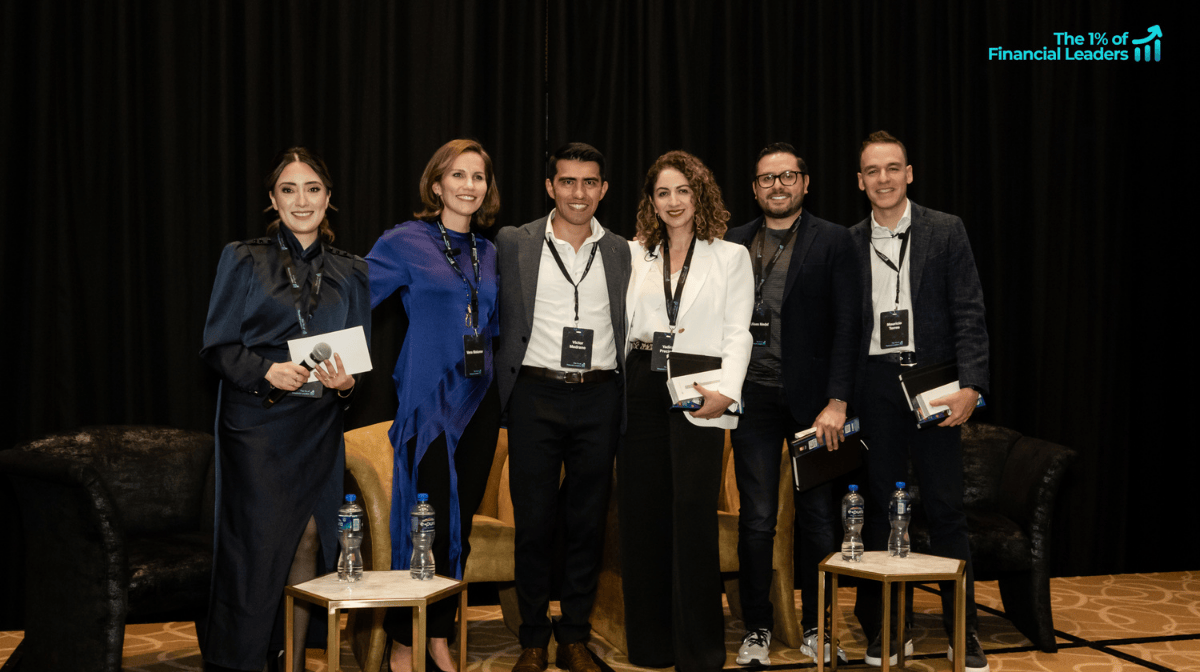
The evolving role of CFOs in Latin America took center stage at the Finance Transformation Summit on Thursday Sept. 11, where over 150 financial leaders gathered to explore leadership, culture, compliance, and technology. Hosted by The 1% of Financial Leaders under the theme, Time to Rise, the event examined how finance executives can balance technical expertise, human influence, and organizational purpose amid regulatory and technological change.
A major theme was the strategic role of Global Business Services (GBS) in driving efficiency and trust. Panelists noted that while centralizing repetitive processes enhances scalability, flexibility remains critical for non-standardized tasks. Liliana Becerril, SSC Vice President Global, Bimbo, highlighted the importance of communicating the value delivered by GBS to shift perception from a cost center to a strategic partner, emphasizing that transparency about successes and errors is key to building credibility. Erika Beltrán, Vice President America and Europe Control SSC, PepsiCo, added that GBS teams must have visibility into processes and costs, which “reinforces trust and supports informed decision-making.” Héctor Alderete, Head of GBS Americas, Kerry, emphasized that structured career paths, training programs, and young talent development not only reduce turnover but also provide a pipeline for operational units. He noted that collaboration begins with trust and, when roles and responsibilities are clear, GBS functions as an extension of the business.
Culture and its financial impact was another central discussion. CFOs stressed that intangible aspects of culture can carry measurable costs if ignored. Yadira Preciado, CFO, Rolex, explained that tracking employee engagement and attrition at every management level helps ensure that people focus on innovation and value creation rather than internal distractions. Mauricio Torres, Senior Vice President Finance, Colgate-Palmolive, described talent mobility programs that allow employees to rotate across regions, noting that such initiatives help homogenize company culture while respecting local nuances.
Further, Vera Makarov, Co-CEO, Apli, highlighted that metrics such as absenteeism, innovation velocity, and client satisfaction may not appear on financial statements but have direct implications for revenue and operational efficiency. Panelists agreed that CFOs act as connectors between cultural initiatives and strategic outcomes, guiding investment in training, technology, and leadership development.
AI and technology adoption were emphasized as tools for strategic transformation. Ulises Medel, Head of Finance for Mexico, Central America, and the Caribbean, Google, explained that automating routine finance tasks allows teams to focus on analysis and decision-making. He described programs where finance professionals experiment with AI and automation tools, then share findings with colleagues, fostering a culture of peer-driven learning. Medel also noted that AI adoption is not limited to internal efficiency: the organization integrates machine learning into reconciliation, reporting, and dashboard development to enable finance teams to act as business partners. Other panelists agreed that integrating AI into financial workflows requires careful change management, ethical frameworks, and ongoing training to ensure measurable impact on efficiency and strategic support.
Regulatory compliance emerged as a pressing challenge for Latin American finance leaders, particularly in Mexico. Héctor Gutiérrez, CEO, Grupo Konesh, outlined the increasing cost of compliance, projected to reach 30% of revenue by 2026 due to intensified enforcement and complex reporting requirements. He noted that the CFO’s position allows coordination across legal, operational, and shared services functions to monitor risk, ensure adherence, and leverage historical CFDI data for actionable insights. By integrating compliance with business strategy, CFOs can transform regulatory obligations into competitive advantages, enabling faster decision-making and reducing exposure to penalties.
Throughout the summit, discussions underscored that modern CFOs must integrate technical, human, and strategic dimensions. From optimizing GBS and developing talent to managing culture, AI adoption, and regulatory oversight, finance leaders are expected to act as orchestrators, aligning operational excellence with strategic and cultural priorities.
By combining data-driven insights with human-centered leadership, panelists concluded, CFOs in Latin America can deliver measurable impact while navigating increasingly complex business, technological, and regulatory landscapes.

A Leaders' Summit Without Labels
The Summit's atmosphere was characterized by a "leadership without labels" approach, where presentations avoided clichés and focused on genuine conversations. The event reflected the daily agenda of a CFO: intense, direct, and results-focused.
Víctor Medrano, CEO and Founder of The 1% of Financial Leaders, expressed in his closing remarks: "Three years after this event, the Finance Transformation Summit has established itself as the most impactful event in the financial sector. Here, the focus is on people, not logos. The objective is clear: for each leader to take away at least one idea that they can immediately apply in their life and organization."
The event concluded with a closing cocktail party, where club members strengthened their bonds of friendship and camaraderie. Medrano thanked the attendees, speakers, and strategic partners such as Konesh, Palmar Productions, Danpex, Vinieren, Líderes Mexicanos, El Financiero, and Mexico Business News for their support. Finally, he invited the members to continue working on their strategic objective of CREE and to attend their next meeting, the Finance Xperience in Bosque Real.
You May Like








Most popular








