

Financial System Must Change



STORY INLINE POST








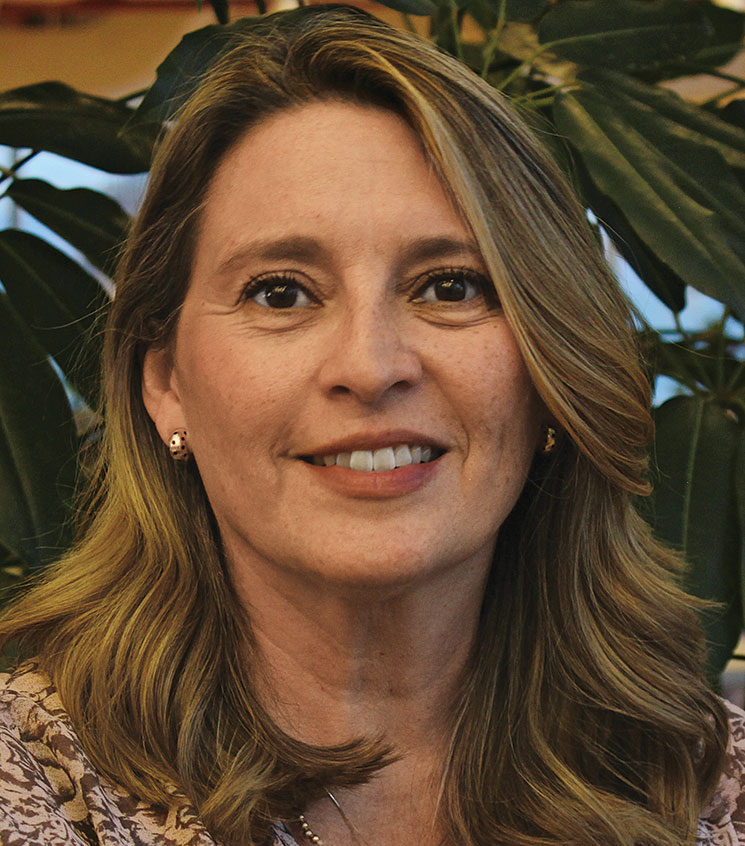 By Alba Aguilar | Director General -
Wed, 01/08/2025 - 08:00
By Alba Aguilar | Director General -
Wed, 01/08/2025 - 08:00
The global community, our region, our country, and our environment urgently need a dramatic change that transforms our mindset and our collective efforts to confront the great disruption that a new world order represents.
As the last Nobel Prize-winner in Economic Science remarked, it is necessary to preserve institutions that benefit the entire population and to take care of democracy that will ensure growth and prosperity for all.
Today more than ever, this thought applies to our reality, where humanity faces great challenges not previously imagined that threaten the financial stability and the survival of future generations: extreme weather events, biodiversity loss and ecosystem collapse, rapid technological change, misinformation, and economic uncertainty.
We are witnessing a warming planet with political conflict and societal polarization, and we can be assured that the environmental risks could hit a point of no return, as the WEF-Global Risk Report pointed out in 2024. We can expect that a planet with a temperature increase greater than 1.5°C would show us a different reality than the one we know today, where it is difficult to measure the human costs, involuntary migration, and the capital mobilization needed.
In this context, what can we expect from our institutions and the national agenda on sustainable finance? Have we made progress? What is the current role of financial intermediaries and the real economy?
Today, after more than 10 years working on green and sustainable finance, I can say that Mexico has a financial ecosystem that drives a new plan with a very broad group of economic actors pursuing a common goal.
A coordinated effort between the public and private sectors has been key. The sustainable finance agenda led by the Ministry of Finance and Bank of Mexico, together with regulators and financial associations, is advancing with firm steps to build the market infrastructure that allows the greening of the financial system and closing the social gaps that our country faces.
The market is preparing, and capacity and new talent are being created in all types of corporations and in all financial guilds. As sustainable finance becomes more professional, new tools and methodologies are developed to efficiently measure and manage environmental and social risks. Also, sustainable taxonomy, technical indicators, and standardization of criteria are being implemented.
Now, we need to consider that the sustainable development agenda is a competitiveness agenda, with great opportunities to take action. It must be an innovation agenda that aims to turn climate and other nature-based solutions into investment assets or transformative financial vehicles that allow industries to be decarbonized, inequality gaps to be reduced, our ecosystems to be restored, or the loss of biodiversity to be halted, for example.
The impact of sustainable finance must be reflected in the inclusion of environmental, social, and corporate governance issues throughout the investment chain, in risk analysis, and the allocation or reallocation of capital, with all of these being common practices among financial actors.
I believe that the next step, which cannot be postponed, is ensuring that no one is left behind in the transition to a low-carbon economy, with a focus on climate, environmental and social justice. In the coming years, it will not be enough to have only a sustainable strategy for corporations and investors, it will be necessary to develop transition strategies. This pathway requires very clear goals, technical expertise and measurable commitments that lead us to transform business models, credit, and investment portfolios, with more sustainable and resilient assets that pursue value creation in the long term.
A joint effort for sustainable and transition finance will require critical mass, the active participation of all of us who make up the finance ecosystem, new commitments, and greater involvement with other related parties, not only with shareholders, but with customers, suppliers, employees, communities, and regulators.
That is why we must maintain a continuous dialog. I believe that this is the formula to move along the same path. Isolated efforts will never have the required impact. Today more than ever, the coordinated effort of the public and private sectors is crucial, with the conviction that every year we delay action will be a more costly year.
In the coming decades, we can see a fragmented world under pressure, with doubts on climate action and disruptive solutions. I invite all of you to rethink and continue building bridges, preserving our institutions to ensure prosperity for all, and be an active part of the national sustainable finance agenda.
You May Like
Most popular








