

Automation Eases Frustrations in Pharma Lab Cleaning Processes



STORY INLINE POST


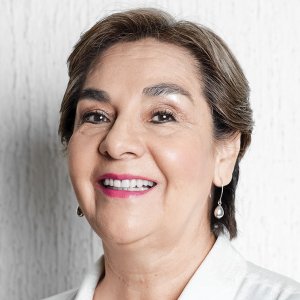

 By Deyanira Chiñas | Commercial Director -
Fri, 09/29/2023 - 12:00
By Deyanira Chiñas | Commercial Director -
Fri, 09/29/2023 - 12:00
For more than 15 years I have had the opportunity to participate in symposiums, seminars and validation of diploma courses in higher educational institutions and colleges within the pharmaceutical sector in Mexico. In all cases, I have heard many comments, frustrations and even complaints because the medicines produced today are pharmacologically more active and specific (for example, biotechnological medicines, such as monoclonal antibodies), and, therefore, require a more detailed and exhaustive cleaning process to ensure there is no cross-contamination between different products due to a poor cleaning process.
Part of the frustration is due to the cleaning process at the end of the production of a batch taking much longer than the actual manufacturing process of the medicines. Obviously, actions must be taken to correct this situation, which in the end, has led to l pharmaceutical processes that are much more complex, and above all, take longer. We cannot lose sight of the fact that the pharmaceutical industry dedicated to the manufacturing of medicines and medical devices has a very important social role in that it addresses the population’s health, but it is also a business that must be productive and profitable for all involved.
It is for this reason that one of the best options is to ensure that the cleaning processes related to the manufacturing and packaging equipment, as well as the analytical laboratory materials, are carried out with the support of automated washing equipment. Thanks to these technologies, the cleaning processes require significantly reduced execution times, and lower consumption of materials and services. I can personally verify that cleaning process times have been reduced from 15 hours of manual labor with two operators (who do their best to clean a piece of equipment in the best possible way) to a maximum of two hours using an automated cleaning process, which can either be integrated or adapted to the equipment itself – known as CIP, or Clean In Place – or automated washing equipment installed in an area close to the production equipment itself –known as Clean at Place). In this latter process, detachable parts need to be cleaned, but only those that have been in direct contact with the manufactured products.
Of course, there are other benefits integrated into an automated cleaning process; specifically, the reduction in water consumption, both potable and purified, since the processes are carried out through a series of cleaning phases that integrate a small amount of water, and the reduced use of the chemical product used for cleaning, which normally involves two products: one alkaline and one acid chemical product.. This process is executed with recirculation and at different temperatures, hence the consumption of these two materials – water and detergents – are very low. It has been calculated that the consumption of water and cleaning agents are reduced to one-tenth of current consumption, compared to manual washing processes. Once again, I can confirm that the combination of mechanical, chemical and thermal activity are what determine the success of an automated cleaning process.
I recently had the opportunity to actively participate in an audit carried out by the regulatory authorities in Mexico at a multinational pharmaceutical company. The auditors raised several issues: the first was the use of automated cleaning equipment, in which the validation process had not been completed. A second was that the dosage of the neutralizer was not clearly defined or verified, so it was not considered useful and applicable for cleaning processes. The third was that the analytical method used to quantify cleaning residue was the TOC (Total Organic Carbon) analysis, which does not correspond to a specific analytical method. The auditors considered it important to analyze the residues using a specific analytical method (for example: HPLC, ELISA or UV-Visible Spectrophotometry).
The criteria and explanations of scientific rationale were presented to the auditors as follows:
a) From the APIC guide: "It is considered that a specific analytical method (HPLC or ELISA) for pharmaceutical products or APIs is not the appropriate technique to determine if a cleaning process was effective."
b) From the PDA TR 49 guide: "Due to the degradation of the active ingredients during the cleaning process in manufacturing equipment, since an alkaline chemical agent is applied to them with the ability to break and/or degrade all organic molecules, the most common practice is to use TOC as the analytical method that confirms the removal of active ingredients, cleaning products, excipients and degradation by-product residue.”
c) From the PDA and ISPE guidelines: "Other non-specific methods, such as conductivity and pH are accepted for cleaning validation."
d) From chapter <1051> of the USP "Cleaning Glass Apparatus:" It is recommended that the cleaning validation of the general material of the laboratories be evaluated by default with the analysis of TOC, pH and conductivity in the final rinse water.
e) From an article in the Journal of Pharmaceutical and Biomedical Analysis: “The best washing process is where a first washing phase with a basic product + water is used, followed by a second washing phase with acid product + water. With this process, consistent and reproducible results are achieved,which is exactly what automated washers do.”
f) From the same reference article (subsection e): "Regarding the analytical methods, a comparison of the analytical methods for determination of residues was made between HPLC-UV and TOC for both large and small molecules, confirming in both cases high degrees of recovery.”
The following reference bibliographies were presented:
• APIC Guidance for Industry: Q7 GMP guidance for Active Pharmaceutical Ingredients (API´s), Q&A, April 2018
• PDA Technical report 49 and 29 “Points to consider for Cleaning Validation, 2010 & 2012.
• ISPE Guide Cleaning Validation lifecycle, 2021
• USP chapter <1051> “Cleaning glass apparatus”
• Journal of Pharmaceutical and Biomedical Analysis, “Cleaning Verification: exploring the effect of the cleanliness of surfaces on sample recovery”, Dec 2016.
With this perfectly supported information, the three issues highlighted by the auditors were resolved; the use of automated cleaning equipment was fully justified. It was also confirmed that including a neutralizing agent or acid into the washing process in a second washing phase resulted in consistent and reproducible results. Finally, it is confirmed that the use of non-specific analytical methods, such as TOC, conductivity and pH,, are perfectly acceptable in the pharma world guidelines and regulations, since it is the best way to confirm the removal of active ingredients, cleaning products, excipients and degradation by-product residue.
To all my pharma colleagues involved in the validation of cleaning processes: I can confirm that you are the real experts in the manufacturing of your products, so you must also be the experts in cleaning them. This means the entire product.
You May Like


Most popular





