


IMSS Expands Healthcare Access in Indigenous Rural Areas
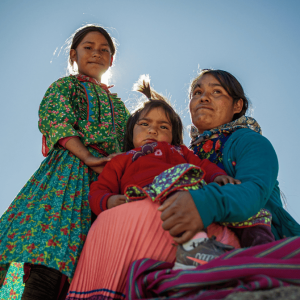
The Mexican Social Security Institute (IMSS) reports that over 2 million medical consultations were provided to indigenous populations during 1H25, reflecting ongoing efforts to strengthen intercultural health care in rural communities.
These services were delivered through Rural Medical Units, mobile brigades, obstetric centers, and hospitals under the IMSS-Bienestar program, says Froilán Esquinca, Coordinator of Community Action, IMSS. He highlights that from January to June 2025, the institute conducted 2.04 million consultations for members of indigenous groups nationwide.
“These shelters are crucial to maintaining the customs, traditions, and culture close to the region,” says Esquinca, referring to the 129,000 lodging services provided in community shelters mainly to pregnant women and their families.
The model integrates vaccination campaigns, sanitation, waste management, reforestation, and the recovery of agro-food knowledge, supported by partnerships with institutions such as UNAM, CONABIO, CONANP, INPI, and INALI, says Esquinca.
Health information has been translated into 32 to 36 indigenous languages and disseminated through the Indigenous Cultural Radio Network, reaching speakers of languages including Náhuatl, Maya, Tzeltal, Mixteco, Tzotzil, Zapoteco, Otomí, Totonaco, Chol, and Mazateco.
IMSS employs 1,954 workers fluent in at least one of 43 indigenous languages, with 1,414 serving in rural units. Among them, 1,511 are women and 443 are men. The institute also collaborates with 3,868 volunteers, including 719 traditional doctors fluent in at least one of 26 indigenous languages, and maintains ties with 4,184 recognized midwives who speak indigenous languages, all reinforcing culturally sensitive care.
In 2024, IMSS delivered over 4 million consultations to indigenous populations, including 185,000 first-time visits. Additionally, the institute provided 277,846 lodging services in community shelters.
Training in intercultural care continues as IMSS works with federal and state agencies to strengthen the Health Care Model for Well-being (MAS-BIENESTAR), aiming to provide respectful and culturally relevant services. Since 2013, over 1,000 workers have been trained as intercultural health promoters to sensitize operational staff across 20 IMSS-Bienestar regional offices.
You May Like




Most popular








