

New Strategy for Funding, Providing Prosthetics
STORY INLINE POST
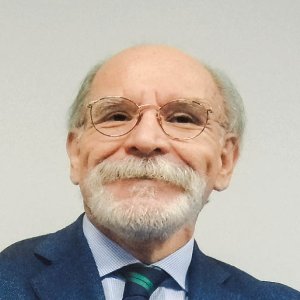


As the number of amputees grows, the gap between those who require a prosthesis and those who receive one is widening, mainly because public institutions lack the necessary funding. Francisco Ugartechea, Director General of Ottobock Mexico, is implementing a new strategy not only to reduce this gap, but to introduce higher-technology prosthetics for those who need them.
Ugartechea cites the country’s growing number of diabetics for the increased rate of amputations. “There is not enough information for doctors to help patients reduce their glucose levels. For this reason, when a patient loses a foot due to diabetes, it is likely that he will lose the other in a few years. About 35 percent of diabetics need an amputation and about 80 percent of those amputations are performed by the public sector.” Since most of these patients receive attention in the budget-strapped public sector, a large number of them cannot acquire a prothesis. According to Ugartechea, 70 percent of all amputation cases are of lower limbs and the remaining 30 percent of upper limbs.
Ottobock participates in tenders from the public sector, mostly for Integral Family Development (DIF) units and the Health Regulatory Commission (CRES), but these institutions often face severe budget restrictions that affect the service they provide. “Many DIFs in remote locations do not have even a single prosthetist,” says Ugartechea. The company found itself needing to change the way it addressed these patients in order to provide them with prosthetics. “This year, we will focus on indirect patient care by providing doctors with equipment that will allow them to take measurements and send them to us, so we can work remotely. We send them test sockets, they send us their feedback and we send the final socket and prothesis.” Previously, Ottobock worked with prosthetists. However, this approach created a barrier between the company and the patient and did not translate into benefits for the latter. “Getting closer to the patient allows us to gain better knowledge of their needs,” Ugartechea says.
To make these changes, Ottobock began performing medical evaluations at its installations with the support of two prosthetists employed by the company. But bringing patients to its office will not place the company in direct competition with other prosthetists. “We will not compete with prosthetists; we will help the patient understand what Ottobock can do for them. We are also carefully entering hospitals to approach patients before amputations are performed. The amputation of a limb is a great physical and emotional loss so we want to support the patient even before surgery.”
Prothesis have widely different price points depending on the technology and the patient’s needs. “While some prosthetists recommend high-tech products, the specifications of the prosthesis must match the specific needs of the patient. Sometimes the best combination is much less expensive,” Ugartechea says. Ottobock also supports patients with financing schemes. “Some may think that Ottobock is the most expensive option, but we have products for every budget,” he adds. Ottobock wants to introduce a midlevel product that has more technology but at a reasonable price.
Ottobock Mexico closed 2017 with MX$65 million in sales and the company aims to raise that number to MX$90 million this year, explains Ugartechea. In 2018, the company plans to grow its orthosis division, mostly for neurological, trauma, post-surgery and rehabilitation purposes. “The market for orthosis products is five times bigger than that of prothesis,” says Ugartechea, “but there is much more competition. While we might not be too competitive in the commodities division as we compete with national and Chinese products, we offer one-of-a-kind products like Malleo TriStep.” This product is for patients who suffer a bone fracture and lose muscle tone due to immobilization of the limb.
You May Like




Most popular








