Regulatory Expertise Matters in the Mexican Market



STORY INLINE POST







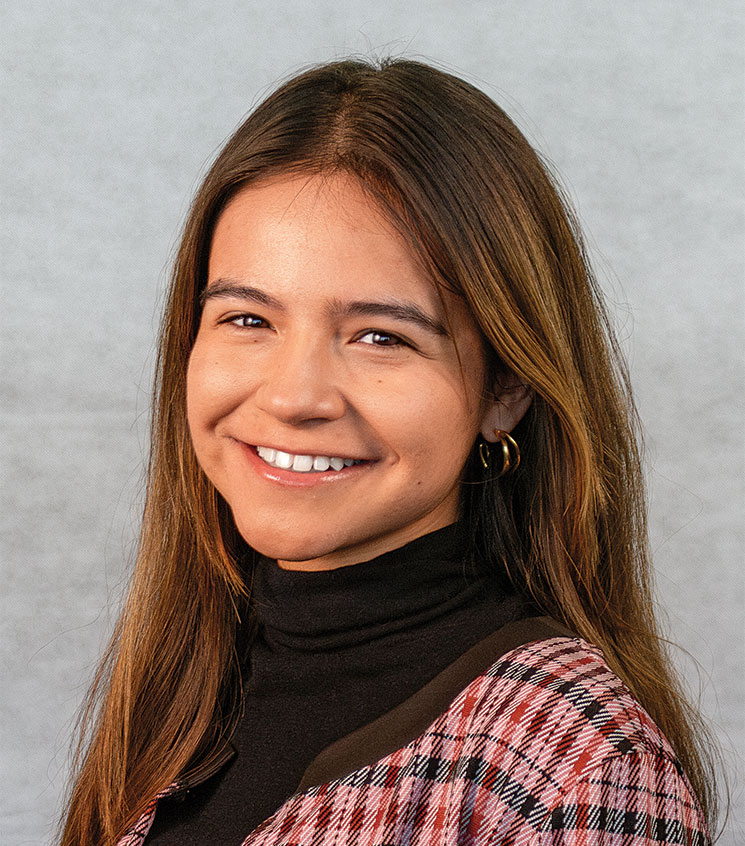 By Sofía Garduño | Journalist & Industry Analyst -
Fri, 07/11/2025 - 09:08
By Sofía Garduño | Journalist & Industry Analyst -
Fri, 07/11/2025 - 09:08
Q: How has the value proposition of Insumos para la Salud (IPS) changed in recent years?
A: IPS has undergone a transformation and updated its institutional image. Through this change, we aim to send a clear message that we are evolving and transforming to position ourselves as one of the leading consultancies in Mexico. We are also expanding and diversifying our services. In addition to the medical device industry, which we know well, we also serve the cosmetics and dietary supplement industries.
To further empower our clients, we’ve solidified our network over the past five years. We actively collaborate with various associations and key stakeholders, who play a key role in enabling products to be commercialized in the country. These collaborations enrich our team with invaluable insights, allowing us to provide even more precise guidance to our clients. Our refined value proposition isn't just about navigating regulations; it's about guaranteeing our clients achieve unwavering compliance and seamless market access in Mexico.
Q: What kind of help do startups need to thrive in the life sciences sector, and how can IPS help them?
A: Startups face challenges such as a lack of resources and require close guidance, especially during the development phase. We can support them once they have a validated product that is ready to enter the market. Our ideal client is typically a company that already has products being commercialized in other countries and is looking to bring those products into Mexico. We also work with domestic players that have identified products they want to bring into the country.
Q: How does IPS support the development of future professionals in the medical device industry?
A: "We're committed to developing future professionals by employing talent from UNAM, IPN, TEC, and UAM. As active members of the Colegio de Ingenieros Biomédicos (CIB), one of our consultants serves as the chair of the regulatory affairs commission. This role enables us to conduct workshops on regulatory affairs and post-market surveillance. In fact, this year, CIB invited us to present a regulatory workshop to UNAM students titled 'ABC regulatorio para obtener el registro de un dispositivo médico.'"
Q: How is IPS expanding its consulting services outside of Mexico, and which types of clients is the company targeting abroad?
A: We opened a commercial office in Chicago that operates within the Matter ecosystem, a health-focused coworking space that brings together startups and global medical device companies, creating a dynamic environment that fosters innovation and entrepreneurship in healthcare.
The city hosts important industry events such as those organized by the Association for Diagnostics and Laboratory Medicine (ADLM) and the Radiological Society of North America (RSNA). Ultimately, we aim to build a strong network in the United States to better serve our clients, whether they are looking to enter the Mexican market or are Mexican or Latin American companies aiming to expand into the United States. Our goal is to connect them with the right stakeholders to explore and access this highly competitive environment.
Q: How has COFEPRIS evolved in recent years, and what further changes are necessary to continue promoting investment?
A: COFEPRIS is constantly evolving. We advise clients that Mexico requires patience, as regulatory timelines can vary depending on political factors. Ideally, COFEPRIS would have stable, institutionalized processes, but that is not yet the case. Since 2020, delays and backlogs have been common. In 2024, a new commissioner prioritized procedures from 2025 onward, leading to improved response times. Where approvals once took seven months to two years, we now see average times of about 60 business days. The organization is also enhancing digitalization, but full digital integration has yet to be achieved.
Further improvements are planned as part of Plan México, which aims to strengthen COFEPRIS and other government bodies to ensure regulatory certainty and attract investment.
Q: What are the top regulatory or commercial challenges your clients face today?
A: Clients who view Mexico as a regulatory challenge are often those who do not fully understand or engage deeply with the country’s regulatory requirements. Clients rarely approach the regulatory process with enthusiasm, but see it as a necessary step to commercialize their products. This is why they rely heavily on our expertise in regulation. The main challenge is to stay well-informed about new regulations and remain up to date, so we can provide better consulting services by applying the latest knowledge and strategies to our clients’ projects.
For example, the recent decree on equivalencies is expected to reduce COFEPRIS’s approval timelines. Equivalencies that previously applied to the United States, Canada, and Japan now extend to other countries that are members of the International Medical Device Regulators Forum (IMDRF) Management Committee and the Medical Device Single Audit Program (MDSAP). This change will benefit more companies entering the Mexican market, as the decree mandates decisions within 30 business days.
There are also topics where, even though software as a medical device (SaMD) is a defined medical device category, the application of its rules is inconsistent. This leads to varying interpretations among COFEPRIS reviewers, creating significant uncertainty. We urgently need homogenized criteria for reviewers and clear guidance from COFEPRIS to ensure predictability for all stakeholders.
Q: What challenges limit the introduction and commercialization of software as a medical device in Mexico?
A: There is still much work to be done to introduce these new technologies into the country. The commercialization model is different because the product is not a physical item crossing the border but rather software installed on a computer. This changes the approach to marketing and distribution. Distributors and companies bringing these technologies have an important role in educating healthcare professionals on how to use them effectively.
Many of these products assist healthcare professionals in performing their work more quickly and efficiently. With the support of these technologies, doctors can detect health issues faster and more accurately, potentially saving lives. Additionally, wearable devices such as smartwatches are also classified as software medical devices. Mexico has a great opportunity to design and develop these types of products domestically. This industry is still in its early stages and requires strong support to introduce these technologies to healthcare professionals. Often, the software must work alongside other medical equipment as part of a comprehensive system within healthcare centers or hospitals. Software is just one component of this workflow. This sector is still nascent but holds large potential in Mexico.
Q: What are the main strategic goals IPS is pursuing in the short and medium term?
A: We will continue to support our clients. We are highly client-centered and committed to assisting them throughout their projects, including those under review by COFEPRIS. Although we have seen promising improvements in 2025 regarding regulatory procedures, there are still pending applications that require resolution. Ensuring consistent follow-up with COFEPRIS to obtain regulatory approvals and finalize registrations remains a top priority for us.
We also aim to increase our participation in the cosmetics and dietary supplements industries. We are also developing new solutions. For example, we established a market intelligence division that helps identify and connect distributors with manufacturers, facilitating direct B2B relationships. We also organize trade missions to Mexico, allowing companies unfamiliar with the market to better understand it and connect with distributors and key industry players who can support their businesses.
Looking ahead, the future is incredibly exciting! We are selecting a few cosmetics companies to participate in the Korea Business Match event in September. This initiative underscores our commitment to not only facilitate market entry into Mexico but also to actively support Mexican businesses in exploring and seizing international opportunities
Insumos Para la Salud (IPS) is a leading regulatory affairs consultancy for medical devices, cosmetics, and dietary supplements in Mexico, designed to eliminate costly market delays and compliance risks, so your products achieve seamless and secure market entry.
You May Like




Most popular