

Applying Distributed Plant Intelligence to Urban Sustainability



STORY INLINE POST




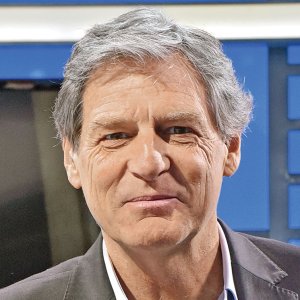



 By Federico de Arteaga | Head of Project -
Thu, 09/21/2023 - 12:00
By Federico de Arteaga | Head of Project -
Thu, 09/21/2023 - 12:00
As expressed in the Senseable City Laboratory, "As layers of networks and digital information cover the urban space, new approaches to the study of the built environment emerge. The way we describe and understand cities is being radically transformed, as are the tools we use to design them." In this sense, the growing concern for urban sustainability and the need to address environmental challenges have prompted the search for creative solutions. One of these emerging solutions should be the adaptation of distributed plant intelligence in the urban environment.
Can Cities Be as Smart as Plants?
Distributed intelligence in the context of plants refers to their ability to process information and make decisions at the local level. Stefano Mancuso said about plants: "The distributed intelligence of plants is what cities must incorporate,” adding that, "plants are the quintessence of modernity: a modular, cooperative, distributed architecture without command centers, capable of perfectly resisting catastrophic and continuous depredations without loss of functionality."
What does this have to do with cities?
That we have not known how to look.
Antonio Muñoz Molina, in his lecture, Rondas del Prado: en el Jardín de las Imágenes (Rounds of the Meadow: In the Garden of Images) tells us that we can look statically, but we can look with imagination, without imposing our gaze and maintaining rigor without undermining clarity.
There are many ways of looking at a city. Urban planning must also integrate nature into land-use planning in order to develop environmental awareness. During childhood, the city must provide spaces for the child to experience the benefits of interacting with the natural environment.
As we have not known how to look at plants, we do not know how to look at cities. And we talk about smart cities but we do not explain what intelligence is and we do not recognize its capacity to learn. If intelligent behavior is a complex, adaptive phenomenon that has developed to allow organisms to cope with changing environmental conditions, cities must revise their physiology to adapt.
And no one has calculated the learning curve of cities, because the basis of something intelligent is to learn and memorize. Extrapolating, unconsciously, is what we are doing with sensors; for example, to measure air pollution, or more specifically when we begin to estimate ex-ante the concentration of greenhouse gas emissions (GHGs), we are assimilating the intelligence of plants, their sensitivity, but also their capacity for learning and memory, which is where sensors can contribute to sensitivity analysis for lucid decision-making.
In this era of real-time information, cities must be viewed holistically as a map of distributed systems that move while being and communicate by transforming. If we used to throw stones before and now release birds, we must incorporate an ancient sensitivity, the one that makes the root not collide but turn when faced with an obstacle, because if the animal flees, the plant withstands.
Surely, the great contribution of plant logic is resilience, and this intersection between biology and technology holds the promise of cities that are more resilient, efficient and in harmony with nature. There are also several ways in which this plant-city integration can have a positive impact: i) In water management: plants are experts in water management, absorbing and releasing moisture according to environmental conditions. In a city, this knowledge can be used to improve stormwater management and prevent flooding. Drainage systems inspired by the intelligence of plants could automatically adjust their absorption capacity according to the amount of rainfall, reducing the risk of flood damage; ii) In energy efficiency: Plants use photosynthesis to convert solar energy into nutrients. Inspired by this process, buildings could incorporate photovoltaic facades that mimic the ability of plants to capture and use solar energy. In addition, shading systems based on the orientation of the sun could optimize indoor temperature, reducing the need for artificial air conditioning; iii) In environmental monitoring: Plants have the ability to detect subtle changes in their environment. By integrating sensors into urban vegetation, it is possible to create a real-time environmental monitoring network. These sensors could measure air quality, soil moisture and other key indicators, providing valuable information for informed urban decision-making; iv) In climate change adaptation: The intelligence of plants allows them to respond to external stimuli and adapt to new conditions. Designing urban green spaces with a variety of plant species could foster genetic diversity and the ability of plants to survive in changing conditions, which is essential in a world affected by climate change.
Adapting the distributed intelligence of plants in the urban context is a step toward designing more sustainable and resilient cities. By harnessing the inherent capacity of plants to adapt and respond to their environment, new avenues for innovation in urban design and environmental management are opening up.
In short, as Octavio Paz said: "If geography is the mother of history," plants must be the family tree of cities.




Most popular








