


Canada's Mineral Wealth: A Reason for Trump’s Annexation Threats
 By Paloma Duran | Journalist and Industry Analyst -
Tue, 02/11/2025 - 13:09
By Paloma Duran | Journalist and Industry Analyst -
Tue, 02/11/2025 - 13:09
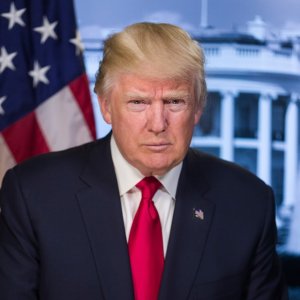
Canadian Prime Minister Justin Trudeau has raised concerns regarding US President Donald Trump's repeated remarks about annexing Canada, viewing them as a credible issue, primarily driven by the nation's abundant reserves of critical minerals.
Canada boasts an abundant supply of critical minerals, producing over 60 minerals and metals that are vital for modern technology, including nickel, potash, aluminum, and uranium. These resources are strategically distributed across the country: Ontario is rich in nickel, chromite, and copper; Quebec holds valuable deposits of lithium and rare earth metals; British Columbia is home to significant quantities of copper and molybdenum; and the prairie provinces, Saskatchewan and Manitoba, supply high-grade uranium and potash. In 2023, the United States emerged as Canada's largest buyer of these critical minerals, with trade in these resources valued at approximately US$13 billion, underscoring Canada's crucial role in global supply chains.
“They (the Trump administration) are acutely aware of our resources and the value they hold, and they seek to benefit from them. However, Mr. Trump perceives that one of the simplest ways to achieve this is by absorbing our country. And this is a genuine concern,” Trudeau stated during a meeting with business leaders in Toronto. The session was convened to discuss strategies for diminishing Canada’s economic dependence on the United States amid Trump's growing tariff threats.
Since taking office, Trump has repeatedly suggested that Canada could avoid tariffs by becoming the 51st state. Initially dismissed by Trudeau’s government as a joke, Trump’s remarks have evolved into a more serious concern following his January pledge to employ economic force to unite the two nations, calling the border an “artificially drawn line.”
On Feb. 1, President Trump signed an executive order imposing 25% tariffs on most goods from Canada and Mexico, disrupting long-standing trade agreements. In response, Trudeau’s government vowed to impose reciprocal tariffs. While Canada and the US also agreed to a 30-day delay in implementing the tariffs, the broader risk of a trade conflict remains. One of Trump’s first executive orders after taking office mandated a comprehensive review of US trade relationships, with results expected by April 1.
"If those tariffs are implemented, or if the investigation into commerce tariffs scheduled for April proceeds, we must be prepared to respond decisively," Trudeau stated.
You May Like







Most popular








