

Major Mining Projects Will Soon Take Off: TAKRAF Group



STORY INLINE POST




 By Perla Velasco | Journalist & Industry Analyst -
Thu, 05/16/2024 - 09:56
By Perla Velasco | Journalist & Industry Analyst -
Thu, 05/16/2024 - 09:56
Q: What problems has TAKRAF Group addressed in the mining sector in 2024, and how do its solutions contribute to overcoming these challenges?
A: We focus on optimizing efficiency in the spaces where our clients already operate. We work with clients in the development of their projects, supporting them from the conceptual stage through to engineering and supply. We also are able to maintain and refurbish equipment and components that will be used temporarily while clients await the installation of larger systems.
We are anticipating the start of major projects in Mexico by the end of 2024, especially after the presidential elections. The outcome of the elections is of great interest to the mining industry, which has been waiting for certain projects to move forward. Projects that have shown promising results in feasibility study phases have been delayed due to various constraints. We expect that these projects will start to move forward this year. If these projects do not happen in 2024, they will likely be prioritized in early 2025 due to the rising demand for copper and minerals needed for the energy transition. Expansion projects will also be crucial, so we are hopeful for positive developments later this year and next year.
Q: What specialized mining systems and equipment does TAKRAF Group offer, and how do these solutions contribute to improving the efficiency and productivity of mining operations?
A: All our products align with the crucial need to improve safety and efficiency for reduced consumption and operational improvements. Specifically on the water conservation side, we offer a broad equipment portfolio under the DELKOR brand, including equipment that facilitates the recirculation and reuse of water within operations. We strive to maximize the use of operational water and reuse it in certain processes. We encourage clients to adopt dry stack tailings instead of using tailings dams due to their significant negative safety, environmental and social impacts. The dry stack tailings approach is far safer and more sustainable compared to traditional tailings ponds, which have led to disasters in other countries due to dam breaches.
The dry stack tailings process involves thickening the tailings to increase the solid percentage, then passing them through filters (belt filter and/or filter press depending on what’s required), whereupon the tails are sufficiently solid enough to be conveyed, and safely deposited. This results in piles of dry material that can be compacted, making it safer for everyone involved. While this approach may be more costly for miners initially, it leaves the mining site much better preserved for the future, making it a more environmentally friendly and of course much safer method.
Q: How does TAKRAF Group's offering of crushing stations and In-Pit Crushing and Conveying (IPCC) systems help mining companies become more efficient?
A: The increase in population, ongoing urbanization and demand for products of all types is raising the demand for minerals, leading to the development of larger machines and conveyors with higher capacities. We offer a full solution for this, including crushing stations that can be placed in steel structures, allowing for easy relocation within the mine. Instead of having a permanent building for the crusher, which was common in the past, our approach allows the crusher to be housed in a steel structure that can be moved to different areas of the mine. This mobility enables the crusher to be used in one location for about 20 years before being relocated using dedicated transport crawlers that we also design and manufacture. The entire building and its components can be reused, making it a cost-effective and sustainable solution.
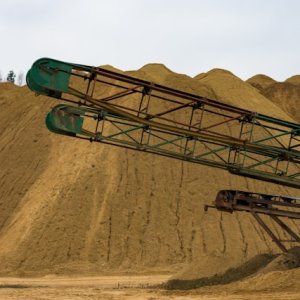
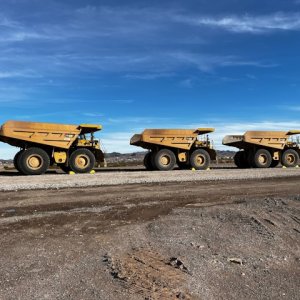
A typical IPCC system comprises fully-mobile, semi-mobile or fixed in-pit crushing stations connected to a network of conveyors and spreaders (for waste) or stackers (for ore) to efficiently transport material out of a mine. A mining operation’s capital and operational costs depend directly on the material transport system. Conventional truck haulage, as today´s predominant means of material transport in open pit surface mines, is well established, with these systems providing excellent flexibility however, they can also contribute up to 60% of the overall mining cost. IPCC thus represents a viable, safer, more efficient and less fossil fuel dependent alternative. Furthermore, a reduction in the number of mobile equipment in and outside of the pit increases the overall safety of the operation. Also, the personnel requirement of an IPCC system is, in most cases, significantly less than a competing system, considering that for example 4 drivers are necessary to operate one haul truck around the clock. This can be an important cost factor in high salary countries.
We work closely with clients from the conceptual stage to ensure that the solutions we propose meet their current and future needs, providing a comprehensive and customized approach to mining operations.
Q: How does TAKRAF Group's expertise enrich your engineering solutions and what distinguishes your portfolio?
A: We have implemented a successful strategy that allows us to leverage our workforce from different countries across different projects. For example, if projects in Mexico are slow due to permitting issues or lack of investment, we can deploy our personnel to projects in South America or the United States. This approach helps us balance our resources effectively.
Mexico is an important jurisdiction for our Group, where we currently manage significant projects, such as the installation of a 6.5km underground conveyor and a radial stacker.
Q: What is TAKRAF Group’s approach to client relationship management?
A: We establish relationships with potential clients and analyze their operations, even if they are not using our equipment. We try to find ways to increase safety, improve efficiency and provide expert advice, especially if they cannot afford to replace their equipment entirely. We remain close to our clients and assist with various problems or maintenance issues that may arise over time. We offer services such as courtesy visits and expert advice to ensure our (or other OEM) equipment continues to work safely and effectively.
When companies start considering increasing production, they often approach us for help conceptualizing their ideas. Our team works closely with them to explore different options and provide design criteria and data sheets. This information is valuable for them to make informed decisions and even compare with other competitors. We approach these consultations as a study because we provide a detailed document at the end, which helps the client thoroughly understand their options.
Q: How do TAKRAF Group's high-capacity and long-distance conveying solutions benefit mining operations?
A: While conveyors require a larger capital expenditure (CAPEX), the operational expenses (OPEX) are significantly lower. While we primarily provide material handling solutions, focusing on conveyor belts, we evaluate each project individually. Sometimes, our studies may show that using trucks for hauling is a better solution especially due to the flexibility they provide. If the mine's life expectancy is short, it may not make sense to invest in a large conveying system for a mine that will only operate for another five years. The choice between trucks and conveyors depends on various matters, and our dedicated TAKRAF Mining Technology Center (TMTC) carefully considers these aspects for each project.
We are a major provider of high-capacity and technically challenging conveyors worldwide. We are often contacted by companies looking for conveyors with capacities of 6,000t/h, 8,000t/h, or even 12,000t/h and more. In some cases, and of course depending on client and project requirements, we may also look at the specific drive technology of the conveyor too. We remain one of the only conveyor suppliers globally with actual references of large gearless conveyor drive installations in operation.
Q: What sets TAKRAF Group’s offer apart from competitors?
A: We treat every project as unique, and engineer everything according to our client's needs. This flexibility is one of our advantages. We continuously improve through our R&D departments, striving to enhance our projects based on past experiences.
Another of our strengths is our highly capable and specialized engineering teams. What sets us apart is the expertise of our teams, which boast a deep knowledge of our systems and have successfully completed projects across various commodities and across various locations around the world. These colleagues bring proven experience and an understanding of both global and local potential challenges, allowing them to iterate and optimize solutions effectively. As a global company, we leverage our diverse talent to deliver exceptional results. This approach has been instrumental in our success as an OEM supplier.
I believe that our DELKOR liquid/solid separation solution offering is also pretty unique and allows us to offer capabilities across various parts of the value chain, from excavating and primary crushing through material handling to liquid/solid separation and wet processing.
Q: What are the company's goals for 2024? What new projects or collaborations is TAKRAF Group involved in and what can the industry expect from them?
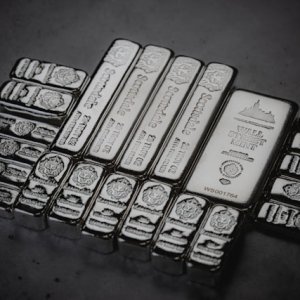
A: We are working on numerous proposals and pre-feasibility studies, with the strong belief that a number of these projects will come to fruition. There is a significant copper project in Sonora on the horizon, and we are optimistic about its future. We are also expecting a major silver project in Chihuahua, potentially one of the largest silver mines in the region, to come to fruition. We continue to focus on our in-house engineering and R&D, ensuring that when these projects do develop, we are ready with the best technology and solutions.
TAKRAF Group, through the TAKRAF and DELKOR brands, provides innovative technological solutions for the mining and associated industries.
You May Like








Most popular








