

Mentoring an Important Tool to Boost Gender Equality, Confidence



STORY INLINE POST








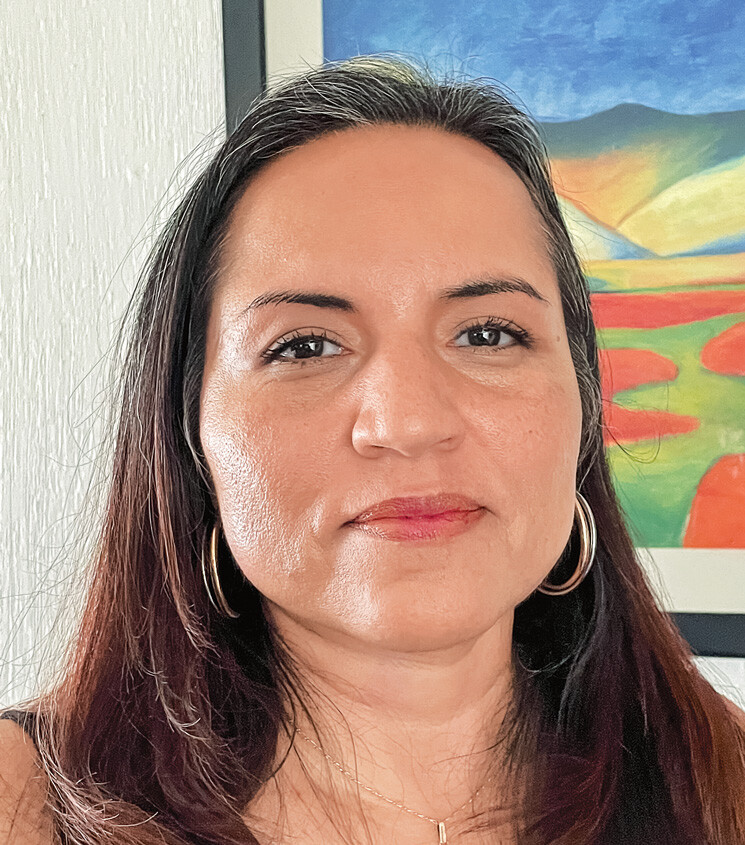 By Ana Laura Muñoz | Director General -
Wed, 04/12/2023 - 09:00
By Ana Laura Muñoz | Director General -
Wed, 04/12/2023 - 09:00
One of the best pieces of advice I have received in my professional career was that, "You don’t need to know how to do it, the important thing is that you have the phone number of someone who does know how to do it." This implies that you must have the ability to create work support networks, internal and external. This skill is not taught at universities. When we study a career, yes, they talk to us about teamwork and we carry out many projects in this modality but they are usually with people in the same career, which already implies having several points in common. In the workplace, one has to continue working as a team, but with people of different beliefs, values, objectives, dreams and sometimes cultures. This, sometimes coupled with a competitive labor market, can be a challenge to develop our potential as leaders and deliver good results for our companies that allow us to climb the ladder.
A few months ago, I had the opportunity to participate in an initiative from International Woman in Mining (IWiM) where the objective was to have an inventory of the mentoring programs for women that were being offered in the different Women in Mining associations around the world. Thanks to this work, I was able to get to know an area that was new to me: mentoring. Mentoring programs offer an opportunity for both mentors and mentees to elevate and expand their careers. In these programs, mentees can develop their confidence and effective leadership skills and remove the obstacles that prevent them from achieving the goals they have set. Mentors reap the benefits of bridging generational gaps, learning about new trends or technologies, strengthening their leadership skills and sometimes redefining their own professional goals.
Women in Mining associations around the world have programs for women at intermediate and managerial levels as well as for recent female graduates. These programs aim to advise, train and guide women working in the mining sector to perform better by sharing good practices with mentees to ensure an appropriate work-life balance. This is intended to increase mentees’ confidence in themselves so they can feel better prepared for the challenge of continuing to climb the ladder in their professional career.
Before the COVID-19 pandemic, these types of programs were 100% face-to-face like most jobs and a virtual model was unthinkable and not considered. In most mentoring programs, the use of technology was limited to the use of programs to match mentor and mentee. As a result of the pandemic, the door was opened to the use of platforms l like Zoom or Teams that allowed this type of support to be brought to many more people, especially in this sector where the distances between one mining unit and another or to the cities where face-to-face networking sessions were held are large and require a lot of travel time.
Another change we also saw in the research was the tendency to involve more men mentoring women. In the beginning, in the mentoring programs offered, only women were invited to be mentors. It was felt that in order for the participating mentees to feel confident and have the necessary accompaniment for their professional development, it was important that only women serve as mentors. As participation grew, the need for men as mentors became apparent. Today, the mentoring programs of the Women in Mining associations involve the participation of men and women as mentors, understanding the important contribution that men make with their experience and professionalism that are of great teaching opportunities to promote the professional development of mentees. Also, involving male mentors in these processes helps to bolster the inclusion of women in the field and to reduce the gender gap.
Last year, I had the opportunity to participate as a listener in the mentoring program of WIM South Africa. It was an enriching experience to hear not only the theory and knowledge they provided us but to see the community of support that was formed among all the participating minds and to witness how they were growing and ,above all, exposing their doubts, fears and conflicts in a place of support to understand that the problems exist, that they are not the only ones to face them and most importantly, that there is a way to fix them and move forward.
There are people who believe there is an oversupply of mentoring for women; however, I believe that at least in Mexico, this type of program should continue to exist, with the need to create new ones that give opportunities to more women to access one of these programs. According to a new survey by the Mexican Institute for Competitiveness (IMCO), housework and lack of self-confidence are the main barriers women face in their professional careers. As Dr. Karen Schmidt, a consultant and business mentor, commented during a webinar for Mujeres WIM de Mexico recently, that you learn many academic things at school, you can have one or two bachelor’s degrees, diplomas, a master’s, but you need to learn how to move within the company. So, if you are thinking about asking for a promotion, applying for a master’s degree scholarship, or improving your own business in the mining sector, maybe you should think about becoming part of one of these mentoring programs.
You May Like







Most popular





