

Overcoming the Syndrome of Proven Technology

STORY INLINE POST







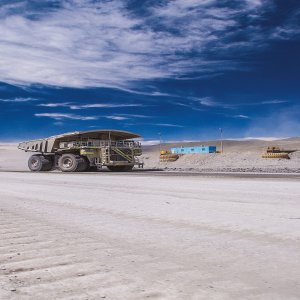
Mines are often in hard-to-reach areas and far from urban hubs. This can cause issues when it comes to retaining talent as trends show that more and more people are choosing to live and work in cities thanks to the higher quality of life on offer. “The fact that mines are often in remote locations is a big challenge for the mining industry given that young people prefer to be in cities,” says Jari Moilanen, Director of Digital Plant at Outotec. “Digitalization can help as smart plants and operations reduce the number of operators required.”
But with digitalization comes issues. On one hand, technology companies have to guarantee their clients that they will have the technical support they need even in the most remote areas. “A technology company cannot be too far from the operation,” Moilanen says. “Support personnel need to speak the local language and understand the culture. You cannot simply bring a foreigner in to fix the problem.” The provision of local services and connecting them with experts around the world is becoming a larger priority for companies. Outotec’s objective is to use technology to enable a global network of service support. It provides the mining industry with sustainable minerals processing solutions through a comprehensive offer that delivers state-of-the-art process equipment, intelligent automation and control systems, as well as complete plants.
Like others in the industry, Moilanen recognizes a general resistance from the global mining industry to adopt new technologies. “I call this the syndrome of proven technology,” he explains. “All companies want to benefit from new technologies but no one wants to be the first to try them.” The syndrome is rooted in owners trying to minimize risks by choosing traditional methods they are familiar with.
Moilanen also finds that operators do not know how to define what they need in terms of technology. “They know that digitalization can greatly benefit the industry but they are not quite sure how,” he says. “We make sure to speak directly with our customers to create a common understanding of the problem and, step-by-step, to start building a solution that will provide continuous improvement.”
As a technology company, Outotec is developing smart equipment that can provide solutions for these main issues in the industry through the autonomous monitoring of operations based on a series of algorithms and artificial intelligence. This enables machines to predict failures, allowing operators to prepare and acquire the spare parts beforehand. Moilanen believes that the industry is heading toward the usage of smart and connected equipment that can autonomously create technical service reports. “The idea is to incorporate digitalization throughout the whole value chain to also gather integrated data,” he says.
Moilanen sees many areas of opportunity in the industry for this technology as it is starting to recover from its downturn. He foresees the rise of brownfield projects over greenfield developments, which will require the improvement, expansion and modernization of existing infrastructure. Beneath this expansion is the growing demand for social licenses to operate. Moilanen says that digitalization will play an important role in these trends as its incorporation can greatly ease and expedite processes. But companies will have to overcome the syndrome of proven technology to fully benefit from new solutions and break traditional paradigms.
Outotec is focusing on strengthening its organizational capabilities, skills and talent to constantly improve project execution and avoid wasting opportunities. “It is paramount to bring new thinking and operational models into the mining industry, even if it comes from adjacent industries, so we can create a more integrated and thriving business ecosystem,” he says. “This ultimately allows companies to deliver better products to the customer by boosting collaboration not only within the industries but from other sectors as well,” he adds.
You May Like


Most popular





