

Thoughts on the Pursuit of Happiness, Business Version 1.0




STORY INLINE POST








 By Felipe Martinez | International Business Director -
Wed, 04/05/2023 - 09:00
By Felipe Martinez | International Business Director -
Wed, 04/05/2023 - 09:00
As we know the mining and construction industries share some commonalities in the way these are served by their suppliers and partners, the channels that supplying companies in these industries use to reach out to their customers and to maintain their business with them have established a set of way of working that is very much embedded in the culture of B2B (business to business) operations.
When it comes to mining and construction, Mexico and the US have their good share of experience serving companies for these industries. Here are some thoughts and recollections that one can identify in their way of working.
For instance, market research is intelligently used to gain insights into their customers' needs, and for data collection and analysis; for example, to identify consumption patterns, trends and preferences. From an industrial point of view, this can represent knowing what inventories to keep in stock and the amount of investment allocated for this. That can easily represent the difference between thousands of dollars and multiple millions in sitting inventories that heavily impacts the working capital of any company.
Should company A, a vehicle manufacturer, keep $10,000 worth of inventory for every X units sold or should it be $200,000? How should these inventories be distributed between manufacturer, supplier and end-user? These are not trivial questions to answer and they might need to be reformulated, but they are certainly worth the effort to answer and nail down as accurately and efficiently as possible. And quite simply, these are examinations that virtually every supplier of physical products will face throughout the life of their business.
Knowledge-sharing, and training people, from training your own employees to colleagues from your partner companies or perhaps customers to improve knowledge level and the quality of the support and intercompany collaboration is an investment that aims to strengthen their overall relationships with customers.
If you're running a company that provides specialized products or services, it is typical to work with customers on both sides of the experience spectrum. What this means is that although you might already have a customer base that is knowledgeable on how to use and access your offering, they might need refreshers to stay up to date with your latest technologies and to stay sharp on which way market demand is leaning. On the other side of the spectrum are the prospects and potential customers that first need to be educated on your value added proposition and how you can help them solve a problem or fulfill a supply need for them. This would require hours of training for people and spending time with the target prospects to showcase to them and walk them through why they should work with your organization and steer away from your competition.
In the same light of customer relationships, allowing multiple channels for customers to reach out for support, and implementing systems for tracking and resolving customer concerns and issues goes a long way to establishing support routes to quickly address product or service problems that need your team's expertise to assess and address. In other words, to get out there as soon as you can and fix the problem for your valuable customer.
When companies invest in customization and tailor their products and services to individual customers' needs and preferences, it starts with market and data analytics to identify and define niche segments, feasibility and sustainability of bespoke products, to either keep promoting these to more customers or to continue servicing a select niche.
A consulting firm might be required to provide services that are somewhat outside a company’s current expertise, but they can assess the risk reward of hiring subject matter experts to cover that gap and expand to that market. They might decide to do this temporarily or even indefinitely.
A strong marketing engine is the perfect combination to go alongside a robust sales engine. Today's technological advances, digital channels, industry-specific media, social media platforms and e-commerce websites can help companies reach customers wherever they are. And these channels can effortlessly be optimized for customer engagement and ease of use.
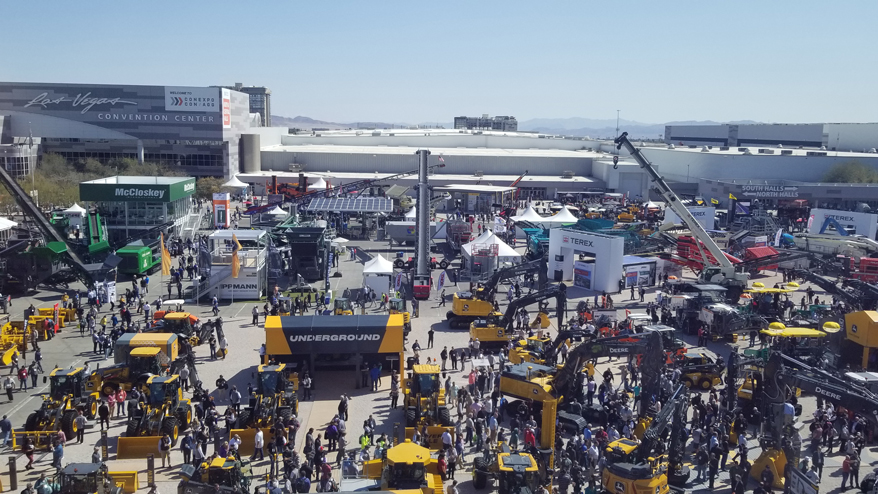
To attract and retain customers, several companies also create a community around their market. Building and engaging with business groups and exhibitions or trade associations and shows can help companies foster a sense of belonging among their customers. This can involve creating forums, social media groups, and other spaces for customers to connect with each other and with the brand. This happens too in the exhibitions and trade shows space. All this to get closer to their customers and build stronger, more loyal relationships with the industry and individual companies over time.
There's a good number of exhibitions in the US and Mexico alone that really bring in a large community of consumers, end-users, supplying and partnering companies, related academics, industry experts and professionals., Here are just a few examples:
-
American Exploration & Mining Association; AEMA Annual Meeting
-
Association of Mining Engineers, Metallurgists and Geologists of Mexico; AIMMGM International Mining Convention
-
ConExpo-Con/Agg; North America’s largest construction trade show
-
Elko Mining Expo; Annual Mining Expo
-
Society for Mining, Metallurgy & Exploration; SME MineXchange Annual Conference & Expo
As a general rule, mining and construction conventions are events where professionals, researchers, and companies from the industry come together to share their knowledge, expertise, and ideas about the latest trends, technologies, and challenges in the field.
At the XXXV International Mining Convention Mexico 2023, to take place in Acapulco in October 2023, attendees can expect to learn about the latest developments in mining technology, as well as strategies for improving sustainability, safety, and efficiency in mining operations. There may be presentations on topics like environmental regulations, mineral exploration and production, mineral processing, and social responsibility.
Participants in these exhibitions have the opportunity to network with other professionals in the same or related industries, exchange ideas, and forge new business relationships.
Companies typically measure the success of attending exhibitions through a variety of methods, including lead generation, company and brand awareness and sales generation.
Exhibitions can be a great way to generate new leads for a company's products or services. Companies can measure the success of an exhibition by tracking the number of leads generated, the quality of those leads, and how many of those leads convert into paying customers.
Companies participate in industry conventions to increase their brand awareness among their targeted audience. Companies can measure the success of an exhibition by tracking the number of people who visit their booth, the engagement of end-customers with the brand, and the level of interest generated in their products or services.
And finally, these connections and engagement with customers can lead to increased sales, both during and after the event.
By implementing these and other strategies, companies can win more customers and achieve sustainable growth over time. It's important to develop a comprehensive strategy that takes into account the company's unique strengths, weaknesses, and competitive landscape.
You May Like








Most popular








