


PEMEX Plan Targets Financial Relief but Faces Operational Hurdles
 By Perla Velasco | Journalist & Industry Analyst -
Thu, 08/14/2025 - 10:12
By Perla Velasco | Journalist & Industry Analyst -
Thu, 08/14/2025 - 10:12
The recently introduced PEMEX recovery plan aims to address concerns over the sustainability of the NOC’s operations and finances, but industry stakeholders warn that structural and operational issues remain unresolved.
Production remains a central challenge. In the first half of 2025, PEMEX averaged 1.622MMb/d of liquid hydrocarbons, below the government’s 1.8MMb/d goal. Output fell from 1.829MMb/d in January 2024 to 1.618MMb/d in December, an 11% decline over 18 months. Production has since stabilized just above 1.6MMb/d.
Service providers continue to feel the strain of delayed payments. Grupo México’s drilling arm, Perforadora México (Pemsa), suspended operations on four offshore jack-up platforms in Chihuahua, Zacatecas, Campeche, and Tabasco due to nonpayment. Pemsa reported a 64% year-on-year revenue drop to US$42 million and an 89% fall in EBITDA to US$7 million.
The plan also includes raising natural gas production to 5Bcf/d by 2028, reopening discussion on unconventional resources, and advancing gas pipeline projects including Jáltipan–Salina Cruz and the Puerta al Sureste–Mayakán connection.
During a National Energy Forum in the Senate, Víctor Rodríguez, CEO, PEMEX, addressed previous speculation that the company would reverse the prior administration’s opposition to fracking. The new plan, he said, will instead leverage advancements in technology to explore complex geology in traditional, conventional sand deposits. This approach requires greater investment and technical expertise but avoids the use of fracking for shale. Rodríguez noted that the definition of traditional resources has evolved over time, with what was once considered "extraordinary" now being classified as conventional.
Debt Concerns
Under the plan, President Claudia Sheinbaum’s administration projects that PEMEX will no longer require federal support by 2027. A new investment trust of MX$250 billion, funded equally by state-owned Banobras and private banks, will finance profitable projects, potentially including mixed ventures with private sector participation. However, concerns remain about whether part of these funds will be diverted to pay down PEMEX’s supplier debt.
The Mexican Institute for Competitiveness (IMCO) warns that much of these resources will initially serve to reduce the MX$430 billion debt to contractors and suppliers, limiting funds for new growth projects.
Mexico’s Association of Oil Service Companies (AMESPAC) criticized the plan for lacking measures to address PEMEX’s debt with suppliers for work completed in 2024 and the first half of 2025. AMESPAC President Rafael Espino told Reuters that without a defined payment schedule, debts could remain unpaid, affecting production. PEMEX officials have committed to speeding up payments and avoiding invoice delays beyond two months. The company’s total supplier debt stands at about US$23 billion, while its financial debt is near US$100 billion.
Financial institutions see some near-term relief. Carlos Serrano, Chief Economist, BBVA México, said the recent issuance of pre-capitalized notes will help PEMEX manage debt maturities in 2025 and 2026. “These measures alleviate short-term maturities, but a structural solution will require increasing oil production and making changes to the business model that have yet to be announced,” he said. The successful issuance was accompanied by a rare upgrade in PEMEX’s credit rating by Fitch Ratings, moving from “B+” to “BB,” the company’s first upward rating revision in over a decade.
Analysts caution that financial aid alone will not resolve underlying inefficiencies. John Padilla, Managing Director, IPD Latin America, noted that government support during the previous administration failed to yield significant operational improvements. Suggestions from industry analysts include shutting down aging refineries, selling non-core assets, and reducing PEMEX’s workforce.
PEMEX Stands Still on Refining Plans
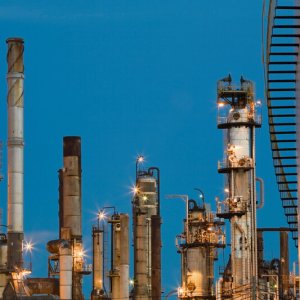
Refining remains a major loss-making segment. Company data suggest losses of around US$12/b refined, raising questions about the viability of continuing the activity without reform. “The plan in itself does not give PEMEX a way to stop losing money,” said Alejandro Schtulmann, head of research at Emerging Markets Political Risk Analysis. “We know the company can make money from extraction and development, but the part that loses money is refining.” Critics argue the plan lacks clear strategies to reverse refining losses, rationalize operations, or address structural inefficiencies. Additionally, Mexico’s self-sufficiency plan is aimed at reducing oil exports, a major source of income for both the NOC and the country’s public finances.
You May Like



Most popular








