


Hurricane Otis: Connecting the Dots With Climate Change
 By Eliza Galeana | Junior Journalist & Industry Analyst -
Tue, 10/31/2023 - 17:14
By Eliza Galeana | Junior Journalist & Industry Analyst -
Tue, 10/31/2023 - 17:14
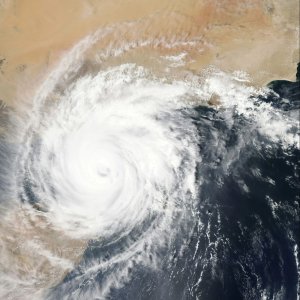
Following the devastating impact of Hurricane Otis in Acapulco, specialists warn about the intensification of natural disasters as a result of climate change. Otis is now considered the most destructive event of its kind in the history of this region.
On Oct. 25, 2023, Hurricane Otis struck the southwest Pacific coast with maximum sustained winds of 265 km/h, as reported by the World Meteorological Organization (WMO). In record time, Otis escalated to Category 5, the highest level on the Saffir-Simpson scale, which had significant repercussions for the tourist port of Acapulco and the nearby communities along the Costa Grande region of Guerrero, as reported by MBN.
Otis’ rapid intensification has raised concerns among international climatology experts. In less than 12 hours, what initially seemed to be a tropical storm transformed into the most powerful hurricane to make landfall on the Mexican Pacific coast. The United States' National Hurricane Center has characterized it as an explosive event.
According to information from the National Disaster Prevention Center (CENAPRED), international forecasting models initially did not anticipate the evolution of the hurricane as it occurred. In Acapulco, the usual scenario was the occurrence of Category 1 hurricanes, such as Hurricane Paulina in 1997, which brought heavy rains and floods. Until now, the most potent hurricane ever recorded in Guerrero and Michoacan had been Hurricane Madeleine in 1976, which was classified as a Category 4 storm.
Jorge Zavala, Director and Researcher, Institute of Atmospheric Sciences and Climate Change at UNAM, emphasized that hurricanes of Otis's magnitude are extremely rare and abnormal. "Typically, hurricanes reach their maximum strength far from the coast and weaken when they make landfall. However, Otis was exceptional for how quickly it transformed in such a short period," he explained during an interview with Wired.
Cuauhtémoc Turrent, Researcher, Meteorological Forecasting Laboratory at the Center for Scientific Research and Higher Education of Ensenada (CICESE), pointed out that it is not possible to firmly attribute Otis to direct consequences of global climate change, as there is not enough data to make such a conclusion. However, Turrent emphasized that there's no denying that climate is changing rapidly and, as a result, such phenomena may become more frequent in the future.
More than 20 Mexican civil organizations, including the Mexican Alliance Against Fracking, the Mexican Center for Environmental Law (CEMDA), and Greenpeace Mexico, released a joint statement demanding immediate action from the Mexican government to address climate change. They also called attention to the lack of policies aimed at preventing and reducing risks in the face of natural disasters.
"The climate crisis and its consequences, exemplified by Hurricane Otis, are a direct result of the extraction and burning of fossil fuels and the degradation of ecosystems that sustain life as we know it. The allocation of the Mexican state budget continues to support an obsolete model that exacerbates the crisis, at the expense of the necessary climate commitments and actions," claimed the signatory organizations.
At a global scale, Latin America and the Caribbean are considered one of the hotspots for climate change. According to data from WMO, the region is witnessing increasingly warmer winters, with temperatures exceeding 40oC in countries like Argentina, Bolivia, and Paraguay during the spring. Moreover, the Caribbean has also experienced extreme heatwaves and late-season tropical storms. Additionally, the El Niño phenomenon is expected to further raise land and ocean temperatures, potentially leading to heavy rainfall flooding and droughts in some areas.
Are you ready to set yourself up for success in 2024? Join us at Mexico Business Summit 2023, the must-attend B2B conference for Mexico’s business leaders!
Taking place on Nov. 28-30, 2023, at Expo Santa Fe in Mexico City, this high-level multi-industry conference offers unmatched opportunities to get inside perspectives on key industry trends, access actionable business intelligence, generate pre-qualified leads and identify new opportunities in a unique cross-industry networking environment.
Mexico Business News offers you an exclusive MX$2,000 ticket discount by using this code: MBS2023MBN2000.
Don't miss this opportunity and get your tickets here: https://mexicobusiness.events/MBS/2023
You May Like







Most popular








