Mexican Congress Moves Toward Green Future
 By Eliza Galeana | Junior Journalist & Industry Analyst -
Fri, 02/14/2025 - 14:39
By Eliza Galeana | Junior Journalist & Industry Analyst -
Fri, 02/14/2025 - 14:39
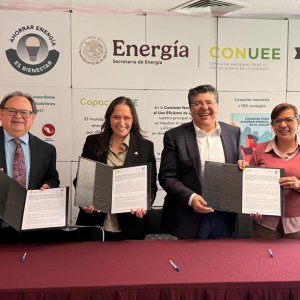
The World Resources Institute Mexico (WRI Mexico) and the Chamber of Deputies have signed an agreement to advance the decarbonization of the Legislative Palace of San Lázaro and develop a legislative environmental agenda with a participatory approach.
The agreement between both entities seeks to transform the Congress facility into a model of sustainability through the implementation of energy efficiency strategies, water management, and plastic waste reduction. Sergio Gutiérrez, President of the Chamber of Deputies, stated that to achieve this goal it is essential to assess the current state of the building regarding energy management, waste, emissions, air quality, water use, sustainable procurement and contracting, mobility and transportation, environmental education and training, as well as monitoring and evaluation.
“We want the San Lázaro Palace to be recognized as the most sustainable building in the country. This alliance with WRI Mexico is crucial to reducing our carbon footprint and ensuring a more sustainable future,” said Gutiérrez.
In the project's initial phase, both parties will work together to develop a diagnosis to evaluate the building's condition and review the legislative agendas that will accompany the process, noted Laura Ballesteros, Secretary of the Congress’ Board of Directors. “These assessments will help identify areas for improvement, reduce energy consumption, transition to green energy, determine where water savings can be made, and how to implement rainwater harvesting systems,” she stated.
Additionally, the initiative aims to lay the groundwork for an environmental agenda that will facilitate the development of long-term policies to comprehensively address climate change. To this end, Gutiérrez stressed the importance of developing a work plan and a protocol of actions aligned with the UN’s Sustainable Development Goals. Francisco Barnés, Executive Director, WRI Mexico, specified that 26 clear actions will be implemented to reduce carbon dioxide emissions by 2050, which will also generate jobs, reduce inequality, and promote green businesses.
This effort seeks to set a precedent for other institutions on the path to sustainability. In this regard, Adriana Lobo, Global Presence and Local Action Director, WRI Global, highlighted that Congress’s commitment to sustainability sends a strong signal for more companies and local governments to take on this challenge. “The transformation of buildings not only reduces emissions but also improves air quality and people’s lives,” she said.
Ballesteros emphasized that at COP29, Congress presented a climate change agenda with the goal of securing a better future for future generations. Among the commitments made by the Mexican government at the conference is the target of achieving net-zero carbon emissions by 2050. Moreover, the Mexican delegation joined various initiatives, including the Declaration on Reducing Methane from Organic Waste, the COP29 Multisectoral Action Pathways (PAM) Declaration for a Resilient and Healthy Society, the COP29 Water Declaration for Climate Action, and the Baku Global Climate Transparency Platform.
Aliza Klip, Secretary of Administrative and Financial Services, Chamber of Deputies, emphasized that fulfilling the Paris Agreement depends on the willingness of individuals, citizens, organizations, and institutions to take action. “The San Lázaro Legislative Palace and the people who work here must be an example of transformation,” she concluded.
You May Like





Most popular