

Nearshoring: Trump Is Back in the White House, Now What?


STORY INLINE POST




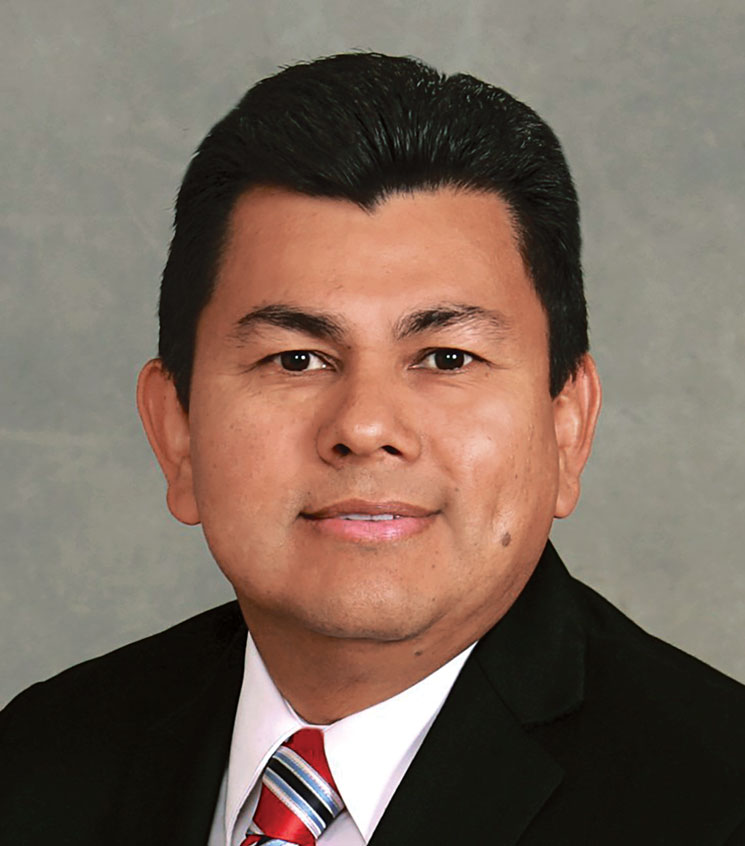
 By Javier Zarazua | VP of LatAm -
Fri, 02/07/2025 - 09:00
By Javier Zarazua | VP of LatAm -
Fri, 02/07/2025 - 09:00
As we all know, Donald J. Trump has become the 47th president of the United States. It is worth noting that he won the election in a big way: not only did he win the popular vote and all seven swing states, but he won against all odds by defeating the powerful democratic machine, the entertainment industry, the corporate media, big tech, and big money. This means he is more emboldened for his second term in office.
But what does this mean for global supply chains in general, and for the nearshoring industry, particularly related to Mexico? And what can potentially affected CEOs do about it?
Let me start by saying that I truly believe that if it had not been for Trump imposing a 25% tariff on Chinese products back in 2018, chances are, despite how traumatic the pandemic was on global supply chains, we wouldn't be talking about nearshoring, reshoring, friendshoring and the global supply chain realignment. I believe the pandemic provided the burning platform, but the 25% tariff on Chinese products provided the incentive.
Trump is a deal-maker! He knows he has a lot of power and is not afraid to use it. I believe everything he says and does has a purpose. Let’s take the 25% tariff threat he issued on Canada and Mexico, and which came into effect on Feb. 1, as an example. Everyone is up in arms. News organizations continue reporting on how disruptive a 25% tariff on Mexico and Canada will be; economic experts are trying to predict how deep the inflation and recession are going to get. There is a lot of chaos and uncertainty, which I believe is all by design, as part of his deal-making strategy. But all that chaos is just a means to an end. In the case of the tariffs on Mexico and Canada, what does he really want? He wants Mexico and Canada to make substantial efforts to stop illegals and drugs at the border. He did exactly the same thing in 2019 and got what he wanted. Why? Because everyone knows he is willing to keep his promises if he doesn’t get his way, no matter how crazy it sounds. Let’s take a more recent example: Colombia first said it would accept US deportation flights; then the country’s president changed his mind. Trump reacted by announcing 25% tariffs and other deep sanctions; reaction: The president of Colombia not only accepted the flights but offered the presidential plane to carry the undocumented immigrants. Tariff threats are a means to an end.
With that being said, I’m convinced his policies on tariffs and the economy will have a huge impact on industrial manufacturing around the world. What is his plan? As of the writing of this article, nobody knows! But based on what he has done and said, I’m going to venture to make my own predictions:
-
He will impose small, blanket tariffs on all imports to the United States (5% to 10%)
-
He will impose additional tariffs on China higher than 5 to 10% and will increase those gradually
-
He will lower taxes on companies who manufacture products in the United States and provide a lot of incentives to companies who move new manufacturing to the country
What does this mean for global supply chains? I recently attended an event with a semiconductor expert who stated that this industry reinvents itself every 18 months. You heard right: every 18 months! Geopolitical risks across the world (Taiwan, Russia, Israel, trade wars, among others) right now coupled with the arrival of Donald Trump to the White House will push us into a speed and depth of change with no parallel in recent history. We can only be certain that there will be a lot of change, chaos, and disruption, which will cause a major realignment of the global supply chains, again. Big corporations, medium and even small companies will have to adapt or perish. The good old days of cheap prices overseas are gone, giving way to a new era seeking resilience, reliability, risk management, and regionalization of supply chains.
What does this mean for Mexico? First, I’m thrilled with the proactive stance the new president of Mexico has taken on nearshoring. President Claudia Sheinbaum has not only recognized this opportunity but is declaring it a cornerstone of her administration. Nearshoring and industrialization policies have become central topics under her leadership. Here are a few examples:
She created a Council of Advisers focused on industrial policy, an uncommon initiative in Mexico. This council comprises top businessmen and businesswomen with outstanding track records.
She has also spearheaded a series of strategic actions designed to boost, facilitate, and capitalize on the nearshoring phenomenon in Mexico, including:
-
Critical Infrastructure:
-
Opened the energy sector to private investment.
-
Announced a US$23 billion public investment for energy transmission, generation, and distribution.
-
Committed US$1.6 billion to modernize seaports.
-
Allocated US$7.5 billion to upgrade and expand highways.
-
Announced plans to develop 3,000km of new railroad tracks for both cargo and passenger transportation.
-
-
Targeted Sectoral Growth:
-
Prioritized key industries, including textiles, automotive and electromobility, pharmaceuticals, chemicals and petrochemicals, agriculture, semiconductors, energy, and aerospace.
-
-
Other:
-
Launched programs to support micro and small businesses through bank credits and additional financial mechanisms.
-
Focused on promoting technical high school education to meet industry demands.
-
Simplified regulations (IMMEX 4.0) to encourage foreign investment in nearshoring projects.
-
Aimed to drive industrial growth in historically underdeveloped South Mexico.
-
Each of these initiatives is a critical component of a larger strategy to position Mexico as a global hub for nearshoring, fostering economic growth, and attracting international investment.
What does all this mean for CEOs and what they can do?
If we listen to all the noise and uncertainty in politics and geopolitical risk globally, there is no safe place to relocate manufacturing to today. China is much less safe compared to 2018 and worsening; South Asia and Mexico were the most common go-to places in the last six years, but these regions are also on Trump’s radar for tariffs, so what can CEOs do, particularly those in manufacturing businesses:
President Eisenhower said “Plans are nothing. Planning is everything”, so be prepared:
-
Understand your situation. Make sure you understand what problem you are trying to solve and what questions need help answering.
-
Perform a SWOT analysis. From a resilience standpoint (how fast you can adapt, recover, and grow stronger in the face of steep tariffs, unexpected war, or another situation like the pandemic) and reliability (Ability to consistently deliver to your customers).
-
Country and site selection. Determine what countries would be ideal to relocate your manufacturing to or sourcing options for key products should you be forced to act. Have a few cities pre-selected within those countries in the case of making; have a few potential sourcing options in the case of buying.
-
TCO. Develop potential cost of manufacturing or sourcing from the pre-selected countries. Take into account full cost (piece part, tariffs, transportation, and inventory cost + lead time, and how difficult or easy it will be to do business with a potential new country or supplier compared to existing one(s)).
-
Customs analysis. Based on the rules applied to the countries you selected, determine the current probability of more or less tariffs if you were to move manufacturing operations to that country or source from there.
-
Scenario Planning. It can be a bit more expensive and take some time, but do worst-case scenario planning. It is prudent to be ready with these scenarios.
-
Bottom line, have a plan and be ready to act.
You May Like

Most popular








