Senate Proposes New Circular Economy Law Focused on Biogas
 By Eliza Galeana | Junior Journalist & Industry Analyst -
Fri, 06/20/2025 - 08:36
By Eliza Galeana | Junior Journalist & Industry Analyst -
Fri, 06/20/2025 - 08:36
Mexico’s Senate has introduced a legal reform initiative focused on the circular economy and the integrated management of solid waste. The new legislation aims to promote the separation of organic waste for its use as a source of biogas and other forms of energy recovery.
The proposal involves the creation of the General Law on Circular Economy and Integrated Waste Management for Greenhouse Gas Emission Mitigation, which would replace the current General Law for the Prevention and Integrated Management of Waste. Its main goal is to guarantee the human right to a healthy environment and to establish mechanisms for coordination among the federal, state, and municipal governments for the proper management of solid waste.
Promoted by lawmakers from the Green Party (PVEM) and MORENA, the initiative also aims to foster research, scientific development, technological innovation, and investment in infrastructure to adopt production processes that keep materials in use for as long as possible, reducing reliance on virgin raw materials.
A key component of the proposal is the promotion of renewable energy. In this context, Guillermo Gómez, CEO, G2H consultancy firm, emphasized that biogas produced from waste utilization represents a clean alternative, capable of capturing the energy value of waste, mitigating greenhouse gas emissions and partially replacing the use of fossil fuels.
Gómez noted that the initiative not only updates the current legal framework but also promotes a structural transformation in how Mexico produces, consumes and manages waste. “This model also creates green jobs and strengthens local economies, especially in rural and peri-urban areas,” he said.
According to the Mexican Natural Gas Association (AMGN), biomethane derived from renewable sources such as organic waste (biomass) is a clean and efficient energy alternative that can be seamlessly integrated into the country’s existing natural gas infrastructure. The organization stressed that Mexico generates a significant amount of organic domestic waste, accounting for 46% of total solid waste, and possesses vast agricultural resources that could be leveraged for biogas and biomethane production.
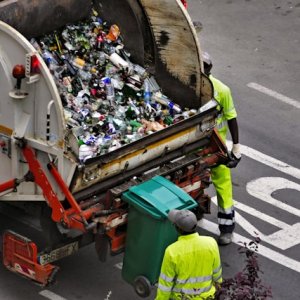
Using organic waste that would otherwise end up in landfills could also help reduce methane emissions, the second most important greenhouse gas after carbon dioxide. A global assessment by the Climate and Clean Air Coalition (CCAC) and the United Nations Environment Programme (UNEP) suggests that human-caused methane emissions could be reduced by up to 45% over the next decade. Such reductions could help avoid nearly 0.3°C of global warming by 2045 and support the goals of the Paris Agreement to limit global temperature rise to 1.5°C.
The initiative highlights international experiences that have been successful with similar projects. Countries such as France, Spain, Germany and Brazil have spent decades implementing models based on extended producer responsibility, traceability, energy recovery and differentiated waste collection. “Mexico can no longer remain on the sidelines. It is time to adopt what works, adapt it to our context and build a modern and effective law through consensus,” the proposal states.
The presentation of this legal reform coincides with the creation of a Circular Economy Park in the state of Hidalgo, where two organic waste treatment plants will be established using gasification and carbonization processes. This effort aligns with Mexico’s national goal of reducing greenhouse gas emissions by 35% by 2030.
You May Like






Most popular